
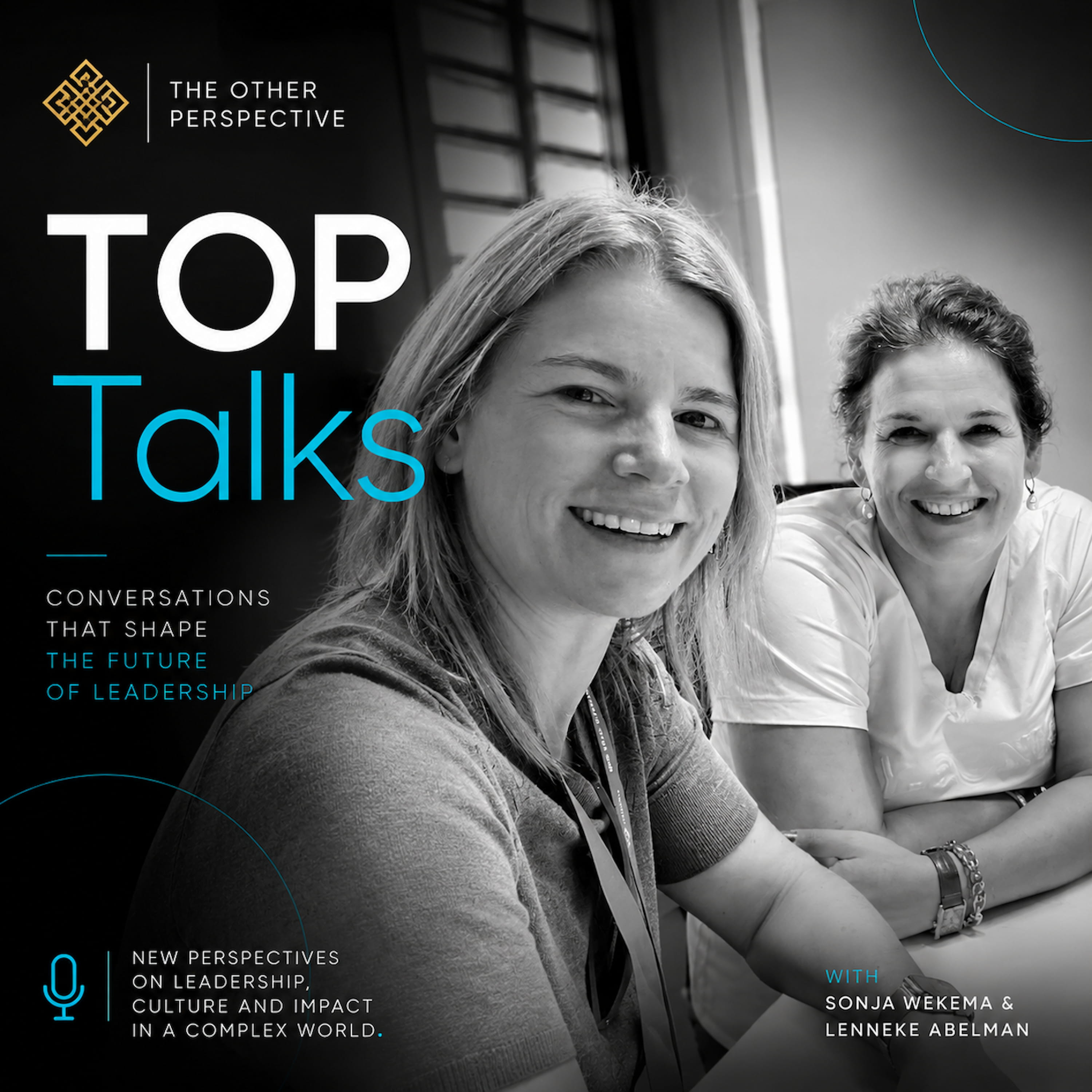
#1 Waarom leiderschap groeit in gesprek, niet in isolatie met Sonja Wekema & Lenneke Abelman
Lenneke Abelman
Partner, The Other Perspective
Over deze aflevering
In deze eerste aflevering van TOP Talks blikken Sonja Wekema en Lenneke Abelman terug op hun leiderschapsreis door consulting, Shell en organisatietransformatie. Een gesprek over nieuwsgierigheid, intercultureel leiderschap, cultuurverandering, kwetsbaarheid en het belang van menselijke verbinding in complexe organisaties.
Luister verder
Aanbevolen afleveringen over verwante thema's
 00217:03·NL
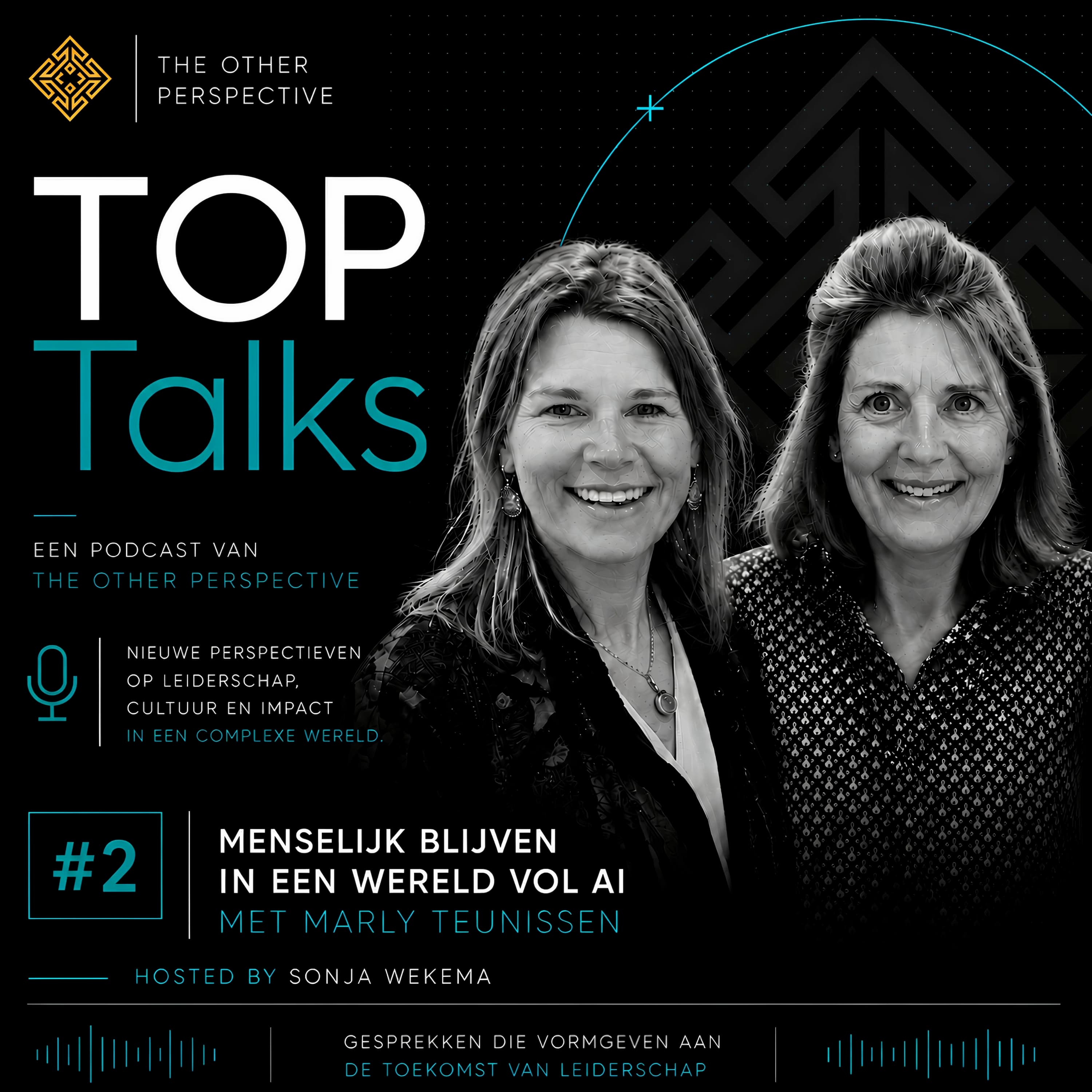
#2 Menselijk blijven in een wereld vol AI met Marly Teunissen
AI is allang geen toekomstmuziek meer — het verandert nu al hoe we werken, leren en leidinggeven. Sonja Wekema gaat in gesprek met Marly Teunissen over de impact van AI op organisaties, medewerkers en leiderschap. Niet vanuit hype of angst, maar vanuit nieuwsgierigheid, kritisch denken en menselijke ontwikkeling. Over relevant blijven, samenwerken met AI zonder blind te volgen, en de menselijke kant van technologische verandering.
AILeadershipNLLuister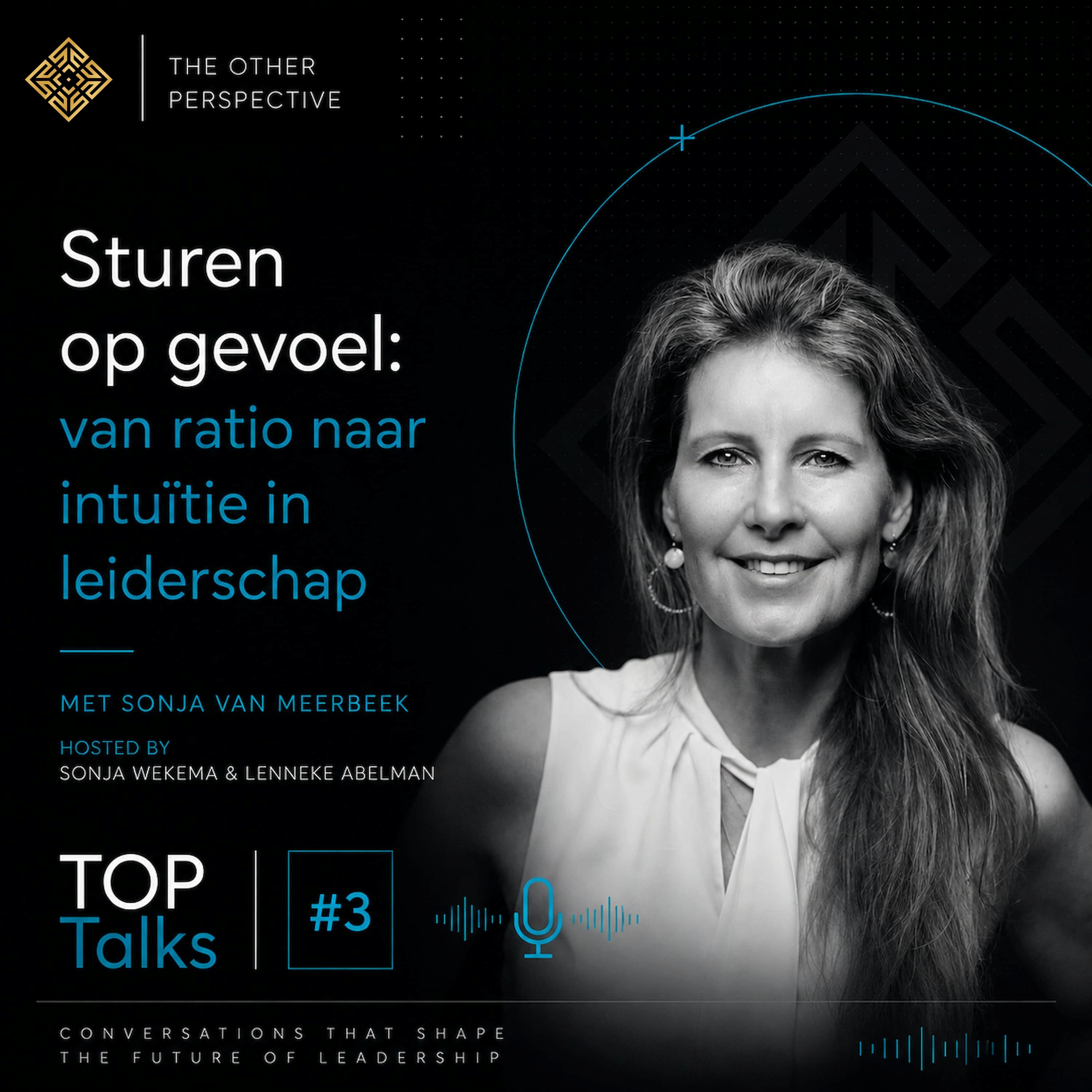 00325:35·NL
#3 Sturen op gevoel: van ratio naar intuïtie in leiderschap met Sonja van Meerbeek
Intuïtie als kompas in de bestuurskamer. Bestuurder en commissaris Sonja van Meerbeek deelt met Sonja Wekema en Lenneke Abelman hoe purpose, passie en innerlijk werk haar leiderschap vormgeven — en waarom het lichaam vaak eerder weet dan het hoofd.
LeadershipIntuitionNLLuister
Transcript
Sonja Wekema and Lenneke Abelman look back on their careers in consulting and at Shell. Topics: curiosity as a leadership skill, working across cultures, culture change and vulnerability.
Full transcript available in Dutch and English.
ENRead the full conversation
Leadership grows in conversation (EN)
Sonja Wekema and Lenneke Abelman look back on their careers in consulting and at Shell. Topics: curiosity as a leadership skill, working across cultures, culture change and vulnerability.
Sonja Wekema Welcome to TOP Talks, the podcast by The Other Perspective. Could you tell us a bit about you?
*Curiosity*
Lenneke Abelman Well, my name is Lenneke Abelman and I know you Sonja Wekema from already a long time ago... 20 years. I think. Still counting of course, but to go back a little bit in time. I grew up with my family in the Netherlands. And I was actually very intrigued to become a doctor. Both my mother and my sister work in the healthcare sector, and I always wanted to become a doctor. Unfortunately, in the Netherlands, you have a numerus fixus. I was rejected three times from medical school, which means that I went to study law. And during my law studies, I learned that my interest was really related to the background of the suspect. So why does somebody do something that is actually not allowed. And what has happened in their lives before that moment that made them feel that this was the only choice or way forward? And that principle I actually took with me when I went further into my career, working in a big corporate like Shell. It was always interesting to see how come a certain organisation is behaving the way that they behave, and what has happened prior to that moment of choice, and how can I help them to make different choices by putting different perspectives on the table, asking questions that everybody has, but are a bit afraid to ask. So that was my role in Shell. And after 15 years as a little bit of an odd one out, I decided to take these capabilities outside because I thought maybe not only Shell, but more organisations need this different perspective. Not always, but sometimes. And that's what I've been doing now for the last four years, with a lot of big smiles on my face. And you?
Sonja Wekema Yeah. Like you, I worked for corporates as well. I studied in Groningen, international relations and communications, but I didn't know what I wanted to do and what I wanted to become, because apparently that was really important. People always ask students: what do you wanna become? And I never had any answer to that question. And I think that's also quite helpful because it helps you, or me in my case, to really be open-minded and curious. And some people call me like: you are addicted to learning, and I think that might be the case. After my studies, I went to Utrecht, a city here in the Netherlands, to work for a management consultancy. I worked for Capgemini at the time, did that for six years. And what was quite good, I think, with regards to the culture of that organisation is that they spent quite some time developing their graduates and their people overall. So I had plenty of time and also energy spent on understanding who I am, as a person, but also as a consultant. So how do you deal with situations which are going really well, how do you celebrate — which I also still see that quite a lot of organisations forget to celebrate even the small milestones — but also how do you deal with setbacks, with adversity? What words can you use for it? What is empathy really? And how do you create space also for these more difficult moments and conversations? And I think having that as my basis, really my starting point of my working career, is a huge asset and I still tap into that knowledge and experience today. After Capgemini, I also started working for Shell, not because I wanted to work for Shell, but because it was part of the top five of best employers in the Netherlands. And to be really honest, I just didn't have a clue what this organisation was all about. So like with other things in my life, I just jumped and went to this assessment and apparently did well because I stayed there for 10 years, had two children in the meantime and did five different roles. And one of the reasons for me moving from Capgemini to Shell was that I wanted to work on more complex, international assignments, and I got the chance. My first role in Shell was not really international. It felt a bit like that because I started at a local refinery. One of the, it was really complex. It was a complex refinery of the organisation. After that role, I got the opportunity to move to London to do a huge IT transformation and I was the OD lead trying to also get the knowledge from the consultants that were still in that team, moving that to the Shell organisation. But that was during the credit crunch. So also: what do geopolitical developments, what impact do they have on organisations and also on consultancy firms who work for big corporates? So these dynamics I've always found really interesting, and it already started with Capgemini because that was after the Enron situation where Capgemini and Ernst & Young Consulting were merged. And if you want to really merge two completely different cultures, and if you want to have an example of that, that was the case. But when I joined, I was 23, so I didn't have a clue and I didn't have words for these situations. But also these elements have always really sparked my interest in how, as a leadership team, but also as people working in an organisation like that, how can you really create impact and how can you create a shared purpose? And I think that's also part of what we are trying to do in this podcast. Are there any really good examples of organisations who tackled this? Because what we hear a lot is that when organisations go through transformations, cultural transformations or whatever transformations, now also the more technical or technology transformations, there's this number of 70% of failure. Do you know where that comes from?
Lenneke Abelman No.
Sonja Wekema So I keep hearing this and because I'm addicted to learning and to checking out, I did do some checks. And now also with AI tools, and I also made sure that they didn't hallucinate too much. At least that's what I then hope. But this number of 70% — there is not really a great amount of evidence that it's really 70%. Because when do you measure, what do you measure? Do you measure short-term benefits or KPIs? And that's also the question with culture change especially: you cannot measure a culture change in six months. So maybe Lenneke, what do you see? What does it take to really change a culture in an organisation? How much time is needed?
Lenneke Abelman Well, there is way more time needed than we have today, but it definitely is a year-on-year type of exercise. And I see it now also happening with clients that I visited a couple of years ago. They're still working through some of the difficulties that they face in their day-to-day work. They're trying to create a context around them so that they can actually behave in a new way and have different kinds of outcomes. But it really takes time. And time is something that is an underestimated value, because we assume that we can change very quickly with the same outcomes from the business perspective, with the same performance, and underestimate the amount of impact it has when you need to think three times before you're going into a difficult conversation, for example. So time is of essence, but I wanted to get back to your personal story Sonja. You said you worked on a major IT transformation for a couple of years, and what happened next?
Sonja Wekema That situation was quite interesting because I worked in a team of 14 different nationalities, and for me, that was the first time that I was part of a setup like that. So that context really did something to me and I needed to find out: how do I work in a situation like this? How can I be myself? And I noticed that I adapted my behaviour quite a bit. So yeah, sitting between a lot of Brits, but also with the Filipino manager and with people from all over the world. So who are you when you are in this position? So yeah, at that moment I just jumped in and did my work as best as possible, but later I reflected on this and tried to understand who I am as a person. And also I needed to be a leader in that situation, but what does that mean?
Lenneke Abelman And how did you get feedback on your adaptability?
Sonja Wekema Well, I didn't really get that much feedback at that time, so I read a lot of books and I watched videos and stuff, but it was quite hard. And also because it was my second role in Shell and I was outside of the HR pool that I was hired into for whatever reason, because my background was much more project management and change. Yeah, so I struggled quite a bit and then at that moment, there was also a huge reorganisation taking place. And I didn't know exactly what that meant because nobody could tell me. So I was quite happy that the person who hired me into the refinery sent me to a lot of internal courses to build my network. And I think that is what helped me at that time, that I got to know quite a lot of people, not too well because it was just a course, but I could ring up some people. So I asked them: how does this work? What kind of process is this? And what I noticed, or what I found out, is that almost all the roles in HR would be open and the vacancies would be posted somewhere online. And it might well be that three, four years from that moment there would be no roles available at all.
Lenneke Abelman No movement at all. So what happened? What did you land?
Sonja Wekema Yeah, that was quite interesting. So I didn't have a clue of course. There were just titles and a little bit of description, and I didn't know too many people. So at some point I thought: okay, there are three roles that might sound quite nice. So I called one of the job owners as we called it then, and it was a role where I could be the chief of staff of one of the executive vice presidents of HR. And I thought: do I dare to call him? He's really a hotshot, high level hierarchy. I didn't know how that works in this organisation. So I thought: okay, maybe I can give it a try. So I set up a meeting and gave him a call and just had a conversation with him, but no idea if he would like me or if he would give me a chance, yes or no. And then I think a few weeks later, I got this message, an email that I landed this role, and then I asked him: okay, so why did you go for me, this unknown person in this organisation? And he said: yeah, the whole thing that you just had the guts to call me and the enthusiasm that you put across, just over the phone. Yeah, that really made it. And I was like: ah, finally I landed something. So me and my boyfriend, we moved back to the Netherlands and then I ended up in that role, which you took over afterwards.
Lenneke Abelman Yes, yes, yes. What happened then, afterwards?
Sonja Wekema Afterwards, yeah. I did some other roles. In my last role, I can say a lot about this, so I also did a talk on quite a difficult moment in my life while working there. And as I mentioned, I became a mother and after my second son was born, I really had a difficult time. I also created a story about that period in my life, after I already left Shell. And what I noticed there is when you hit rock bottom, because that's how it felt. If you are not seen anymore for what you're worth, if you feel like: I don't know what's happening, but it feels like it might take forever. And what am I doing here? Yeah, I think that feeling, I can still go back to it, so I even feel it now in my whole body, but I needed to get out of it. So there were quite some people, also my network, they stood up and you were one of them and there were more who helped me land another role. And that was the role in Shell Chemicals. And that's also what I say on stage, when I told my story in 2019: I entered the lift. I went to I think the third floor. And then when I got out of that lift, there was my dear colleague Kalyan Ram who stood there and he said: oh, finally after a year we can fill our vacancy with such a nice person that you are. And he hugged me and I really felt welcome. That was the first time I think in my whole life that I have felt that welcome.
Lenneke Abelman Yeah. And it still touches you.
Sonja Wekema Yeah. You see the tears in my eyes. But to really see and feel the kindness, the true kindness of someone else who really also wants the best for you. Yeah. And that's also after experiencing something like that. I notice I feel it like in the energy of the room or in energy between people if things might be off.
Lenneke Abelman So is that also what you took away from your career in Shell and now working as a leader in your own company and how you help other organisations to transform? Is that one of the big lessons that you take with you?
Sonja Wekema Yeah, I think one of the things that I'm really happy about is all the chances I got and all the people I got to know and also the experiences I gained. But for me personally, and I did my master's in executive coaching also after I left Shell, and there you really need to do what's not reflection, it's reflexion with an X. So reflexivity. So that means that you go much deeper than just reflection. You move much more in your emotions, testing different ways of behaving and learning from that. And I think my biggest learnings from that is that I can only take care of myself if I understand my context, if I feel safe, because when I feel safe, I'm really creative and I can create a lot of impact. But if that is not the case, people might say: oh, you are really quiet.
Lenneke Abelman Yeah.
Sonja Wekema Well then there's something.
Lenneke Abelman Something else. Yeah. Yeah. So we are looking for those stories in these talks. Trying to figure out what is going on in the organisation and how can we help from a little bit of a different perspective and help people to find their true self, to reflex maybe, and also to get the right feedback also from the system to make sure that they can thrive and change. So looking forward to those conversations.
Sonja Wekema Yeah. And helping people to be a bit more conscious about what they do, what they say, what decisions they make, and also what impact that might have and consequences on others.
Lenneke Abelman Curiosity. Thank you very much and see you all for the next TOP Talks. If you have any questions or comments or items you would like to discuss, you can always find more information on the website.
Sonja Wekema And we really want to make it interactive with all of you listeners as well. We do have some people already on the list that we will have as guests. So who these people are, we won't tell you yet, but you will see that passing by. If you are someone or if you have someone that we really should be interviewing, please let us know. Thank you for listening. Thank you. Bye-bye. Bye-bye.
*This was TOP Talks. Leadership grows in conversation, not in isolation. Subscribe to TOP Talks on Spotify, Apple Podcast, and follow The Other Perspective on LinkedIn for more on leadership in a complex world. Until next time.*
---
NLToon transcript
Leiderschap groeit in gesprek (NL)
In dit gesprek blikken Sonja Wekema en Lenneke Abelman terug op hun loopbaan in consulting en bij Shell. Onderwerpen: nieuwsgierigheid als leiderschapsvaardigheid, intercultureel werken, cultuurverandering en kwetsbaarheid.
Sonja Wekema Welkom bij TOP Talks, de podcast van The Other Perspective. Kun jij ons wat meer vertellen over jezelf?
*Nieuwsgierigheid*
Lenneke Abelman Mijn naam is Lenneke Abelman en ik ken jou, Sonja Wekema, al heel lang... 20 jaar. Dat tellen we nog steeds bij. Maar even teruggaan in de tijd. Ik ben opgegroeid bij mijn familie in Nederland. Ik was altijd heel geïntrigeerd door het idee om dokter te worden. Zowel mijn moeder als mijn zus werken in de gezondheidszorg, en ik wilde altijd dokter worden. Helaas is er in Nederland een numerus fixus. Ik werd drie keer afgewezen voor de studie medicijnen, waardoor ik rechten ben gaan studeren. Tijdens mijn rechtenstudie ontdekte ik dat mijn interesse eigenlijk lag bij de achtergrond van de verdachte. Waarom doet iemand iets wat eigenlijk niet toegestaan is? En wat is er in hun leven gebeurd vóór dat moment, dat hen het gevoel gaf dat dit de enige keuze of weg vooruit was? Dat principe heb ik meegenomen naar mijn verdere carrière. Toen ik bij een groot bedrijf als Shell werkte, was het altijd interessant om te zien hoe het toch kon dat een bepaalde organisatie zich gedroeg zoals zij zich gedroegen, en wat er was voorafgegaan aan dat moment van keuze, en hoe ik hen kon helpen andere keuzes te maken door andere perspectieven op tafel te leggen en vragen te stellen die iedereen heeft maar een beetje bang is te stellen. Dat was mijn rol bij Shell. En na 15 jaar, als een soort vreemde eend in de bijt, besloot ik deze vaardigheden naar buiten te brengen, want ik dacht: misschien hebben niet alleen Shell, maar meer organisaties dit andere perspectief nodig. Niet altijd, maar soms. En dat doe ik nu al vier jaar, met veel plezier. En jij?
Sonja Wekema Ja. Net als jij heb ik ook voor grote bedrijven gewerkt. Ik studeerde in Groningen, internationale betrekkingen en communicatie, maar ik wist niet wat ik wilde doen of worden, want dat was blijkbaar heel belangrijk. Mensen vroegen studenten altijd: wat wil jij worden? En ik had nooit een antwoord op die vraag. En ik denk dat dat ook behoorlijk handig is, want het helpt je, of mij in elk geval, om echt open en nieuwsgierig te blijven. Sommige mensen zeggen dat ik verslaafd ben aan leren, en ik denk dat dat wel klopt. Na mijn studie ben ik naar Utrecht gegaan om bij een managementadviesbureau te werken. Ik werkte bij Capgemini, deed dat zes jaar. En wat ik denk dat heel goed was, met betrekking tot de cultuur van die organisatie, is dat zij best veel tijd besteedden aan de ontwikkeling van hun afgestudeerden en hun mensen in het algemeen. Dus ik had voldoende tijd en energie besteed aan het begrijpen van wie ik ben, als persoon maar ook als consultant. Hoe ga je om met situaties die heel goed gaan, hoe vier je dat — want ik zie ook nu nog dat heel veel organisaties vergeten te vieren, zelfs de kleine mijlpalen. Maar ook: hoe ga je om met tegenslagen, tegenwind? Welke woorden kun je daarvoor gebruiken? Wat is empathie werkelijk? En hoe creëer je ruimte voor die moeilijkere momenten en gesprekken? Ik denk dat dit als mijn basis, echt mijn startpunt van mijn werkcarrière, een enorm voordeel is geweest en ik put daar nog steeds uit. Na Capgemini ben ik ook bij Shell gaan werken, niet omdat ik bij Shell wilde werken, maar omdat het tot de top vijf van beste werkgevers in Nederland behoorde. En om eerlijk te zijn, ik had eigenlijk geen idee wat die organisatie inhield. Dus, zoals met andere dingen in mijn leven, ben ik er gewoon ingesprongen en naar dat assessment gegaan. Blijkbaar deed ik het goed, want ik bleef er tien jaar, had twee kinderen in de tussentijd en deed vijf verschillende rollen. Eén van de redenen voor mij om van Capgemini naar Shell te gaan was dat ik wilde werken aan complexere, internationale opdrachten, en ik kreeg de kans. Mijn eerste rol bij Shell was niet echt internationaal. Het voelde een beetje zo, want ik begon bij een lokale raffinaderij. Het was echt complex. Na die rol kreeg ik de kans om naar Londen te gaan voor een enorme IT-transformatie. Ik was de OD-lead die ook probeerde de kennis van de consultants over te brengen naar de Shell-organisatie. Maar dat was tijdens de kredietcrisis. Dus ook: welke impact hebben geopolitieke ontwikkelingen op organisaties en op adviesbureaus die voor grote bedrijven werken? Die dynamieken heb ik altijd interessant gevonden. En dat begon al bij Capgemini, want dat was na de Enron-situatie waarbij Capgemini en Ernst & Young Consulting werden samengevoegd. Als je twee totaal verschillende culturen wilt samenvoegen, was dat het voorbeeld. Maar toen ik er binnenkwam was ik 23, dus ik had geen idee en had geen woorden voor die situaties. Maar ook die elementen hebben altijd mijn interesse gewekt in hoe je als leiderschapsteam, maar ook als mensen die in een dergelijke organisatie werken, echt impact kunt maken en een gezamenlijk doel kunt creëren. En ik denk dat dat ook deel uitmaakt van wat wij proberen te doen in deze podcast. Zijn er echt goede voorbeelden van organisaties die dit hebben aangepakt? Want wat we vaak horen is dat wanneer organisaties door transformaties gaan, culturele transformaties of technologische transformaties, er dit cijfer is van 70% mislukking. Weet jij waar dat vandaan komt?
Lenneke Abelman Nee.
Sonja Wekema Ik blijf dit horen en ik, omdat ik verslaafd ben aan leren en controleren, heb ik het ook nagekeken. Ook met AI-tools, en ik heb ook gecontroleerd of ze niet te veel hallucineerden. Maar dit cijfer van 70% heeft niet echt een groot bewijs dat het werkelijk 70% is, want wanneer meet je dat, wat meet je? Kortetermijnvoordelen of KPI's? En dat is ook de vraag bij cultuurverandering: je kunt een cultuurverandering niet in zes maanden meten. Dus Lenneke, wat zie jij? Wat is er nodig om een cultuur echt te veranderen in een organisatie? Hoeveel tijd is er nodig?
Lenneke Abelman Er is veel meer tijd nodig dan we vandaag de dag hebben, maar het is zeker een jaar-op-jaar-exercitie. En ik zie het nu ook bij klanten die ik een paar jaar geleden bezocht heb. Ze zijn nog steeds bezig met moeilijkheden in hun dagelijkse werk. Ze proberen een context om zich heen te creëren zodat ze zich op een nieuwe manier kunnen gedragen en andere uitkomsten kunnen hebben. Maar het kost echt tijd. En tijd is een onderschatte waarde, want we nemen aan dat we heel snel kunnen veranderen met dezelfde uitkomsten en dezelfde prestaties, en onderschatten de impact die het heeft als je drie keer moet nadenken voordat je een moeilijk gesprek aangaat. Maar ik wil terugkomen op jouw persoonlijke verhaal Sonja. Je zei dat je een paar jaar aan een grote IT-transformatie hebt gewerkt, en wat gebeurde er daarna?
Sonja Wekema Die situatie was heel interessant, want ik werkte in een team van 14 verschillende nationaliteiten, en voor mij was dat de eerste keer dat ik deel uitmaakte van zo'n setting. Die context deed echt iets met me en ik moest uitvinden: hoe werk ik in zo'n situatie? Hoe kan ik mezelf zijn? En ik merkte dat ik mijn gedrag behoorlijk aanpaste. Zitten tussen veel Britten, maar ook met een Filipijnse manager en mensen van over de hele wereld. Dus wie ben jij in die positie? Op dat moment deed ik gewoon mijn werk zo goed mogelijk, maar later reflecteerde ik hierop en probeerde te begrijpen wie ik als persoon ben. En ik moest ook leider zijn in die situatie, maar wat betekent dat?
Lenneke Abelman En hoe kreeg je feedback op je aanpassingsvermogen?
Sonja Wekema Ik kreeg op dat moment niet echt veel feedback, dus las ik veel boeken en keek video's, maar het was best moeilijk. Ook omdat het mijn tweede rol bij Shell was en ik buiten de HR-pool zat waarvoor ik was aangenomen, want mijn achtergrond was veel meer projectmanagement en change. Ik had het er behoorlijk moeilijk mee. En op dat moment was er ook een grote reorganisatie gaande. Ik wist niet precies wat dat betekende, want niemand kon me dat vertellen. Ik was best blij dat de persoon die me in de raffinaderij had aangenomen me naar veel interne cursussen stuurde om mijn netwerk op te bouwen. En ik denk dat dat was wat me op dat moment hielp: ik leerde heel veel mensen kennen, niet te goed want het waren maar cursussen, maar ik kon wel mensen bellen. Ik vroeg ze: hoe werkt dit? Wat voor soort proces is dit? En wat ik merkte of ontdekte, was dat bijna alle HR-rollen opengesteld zouden worden en de vacatures ergens online geplaatst zouden worden. En het kon best zo zijn dat drie, vier jaar later er helemaal geen rollen meer beschikbaar zouden zijn.
Lenneke Abelman Geen beweging. Wat is er gebeurd? Wat heb jij gekozen?
Sonja Wekema Dat was heel interessant. Ik had uiteraard geen idee. Er waren alleen maar titels en een kleine beschrijving, en ik kende niet zo veel mensen. Dus op een gegeven moment dacht ik: er zijn drie rollen die behoorlijk interessant klinken. Dus belde ik één van de vacaturehouders — zo heetten ze toen — en het was een rol waarbij ik chef de cabinet kon worden van één van de executive vice presidents van HR. En ik dacht: durf ik hem te bellen? Hij is een echte topper, hoog in de hiërarchie. Ik wist niet hoe dat werkte in die organisatie. Dus ik dacht: misschien kan ik het proberen. Ik zette een meeting op en belde hem, had gewoon een gesprek, maar had geen idee of hij me leuk zou vinden of me een kans zou geven. En dan, een paar weken later, kreeg ik een e-mail dat ik die rol had gekregen. Ik vroeg hem: waarom heb je voor mij gekozen, dit onbekende persoon in de organisatie? En hij zei: het feit dat je gewoon de moed had om mij te bellen en het enthousiasme dat je overbracht, gewoon over de telefoon. Dat maakte het. En ik dacht: eindelijk heb ik iets gekregen! Mijn vriend en ik gingen terug naar Nederland en ik belandde in die rol, die jij daarna overnam.
Lenneke Abelman Ja, ja, ja. Wat gebeurde er daarna?
Sonja Wekema Daarna deed ik nog wat andere rollen. In mijn laatste rol — ik kan hier veel over zeggen — deed ik ook een talk over een heel moeilijk moment in mijn leven terwijl ik daar werkte. Zoals ik al zei, ik werd moeder en na de geboorte van mijn tweede zoon had ik het echt heel moeilijk. Ik heb ook een verhaal gemaakt over die periode in mijn leven, nadat ik Shell al had verlaten. En wat ik merkte: als je op het dieptepunt zit, want zo voelde het. Als je niet meer gezien wordt voor wat je waard bent, als je het gevoel hebt: ik weet niet wat er aan de hand is, maar het voelt alsof het eeuwig kan duren. En wat doe ik hier? Dat gevoel, ik kan er nog steeds bij komen, ik voel het nu zelfs in mijn hele lichaam, maar ik moest eruit komen. Er waren heel wat mensen, ook uit mijn netwerk, die opstonden. En jij was er één van, en er waren meer mensen die me hielpen aan een andere rol te komen. En dat was de rol bij Shell Chemicals. En dat vertel ik ook op het podium, toen ik mijn verhaal in 2019 vertelde: ik stapte in de lift, ging naar de derde verdieping denk ik. En toen ik uit die lift stapte, stond daar mijn dierbare collega Kalyan Ram, die zei: eindelijk, na een jaar kunnen we onze vacature vervullen met zo'n fijn persoon als jij. En hij omhelsde me en ik voelde me echt welkom. Dat was de eerste keer in mijn hele leven dat ik me zo welkom had gevoeld.
Lenneke Abelman Ja. En het raakt je nog steeds.
Sonja Wekema Ja. Je ziet de tranen in mijn ogen. Maar om echt de vriendelijkheid, de echte vriendelijkheid van iemand anders te zien en te voelen, die ook echt het beste met je voor heeft. En na zoiets te hebben meegemaakt, merk ik dat ik de energie in een ruimte of tussen mensen voel als er iets niet klopt.
Lenneke Abelman Is dat ook wat je hebt meegenomen uit je carrière bij Shell en nu als leider in je eigen bedrijf, en in hoe je andere organisaties helpt transformeren? Is dat één van de grote lessen die je meeneemt?
Sonja Wekema Ja, ik denk één van de dingen waar ik echt blij mee ben zijn alle kansen die ik heb gekregen en alle mensen die ik heb leren kennen, en ook de ervaringen die ik heb opgedaan. Maar voor mij persoonlijk, en ik deed mijn master executive coaching ook nadat ik Shell had verlaten. Daar moet je echt doen wat je reflexie noemt, met een x. Dus reflexiviteit. Dat betekent dat je veel dieper gaat dan alleen maar reflecteren. Je gaat veel meer je emoties in, test verschillende manieren van gedragen en leert daarvan. En ik denk dat mijn grootste lessen zijn dat ik alleen maar goed voor mezelf kan zorgen als ik mijn context begrijp, als ik me veilig voel. Want als ik me veilig voel ben ik echt creatief en kan ik veel impact maken. Maar als dat niet het geval is, zeggen mensen misschien: oh, je bent zo stil.
Lenneke Abelman Ja.
Sonja Wekema Dan is er iets.
Lenneke Abelman Iets anders. Ja. Dus we zijn op zoek naar die verhalen in deze gesprekken. We proberen te begrijpen wat er speelt in de organisatie en hoe we kunnen helpen vanuit een iets ander perspectief, en mensen te helpen hun ware zelf te vinden, te reflecteren misschien, en ook de juiste feedback te krijgen van het systeem zodat ze kunnen floreren en veranderen. Dus ik kijk er naar uit, die gesprekken.
Sonja Wekema Ja. En mensen een beetje meer bewust te helpen van wat ze doen, wat ze zeggen, welke beslissingen ze nemen, en ook welke impact dat kan hebben en welke gevolgen voor anderen.
Lenneke Abelman Nieuwsgierigheid. Heel erg bedankt en we zien jullie allemaal bij de volgende TOP Talks. Als jullie vragen of opmerkingen hebben of onderwerpen die je wilt bespreken, kun je altijd meer informatie vinden op de website.
Sonja Wekema En we willen het ook echt interactief maken met al jullie luisteraars. We hebben al een aantal mensen op de lijst staan als gasten. Wie dat zijn, dat vertellen we nog niet, maar jullie zullen het zien voorbijkomen. Als je iemand bent of iemand kent die we echt zouden moeten interviewen, laat het ons dan weten. Bedankt voor het luisteren. Dag. Dag.
*Dit was TOP Talks. Leiderschap groeit in gesprek, niet in isolatie. Abonneer je op TOP Talks via Spotify en Apple Podcast, en volg The Other Perspective op LinkedIn voor meer over leiderschap in een complexe wereld. Tot de volgende keer.*