
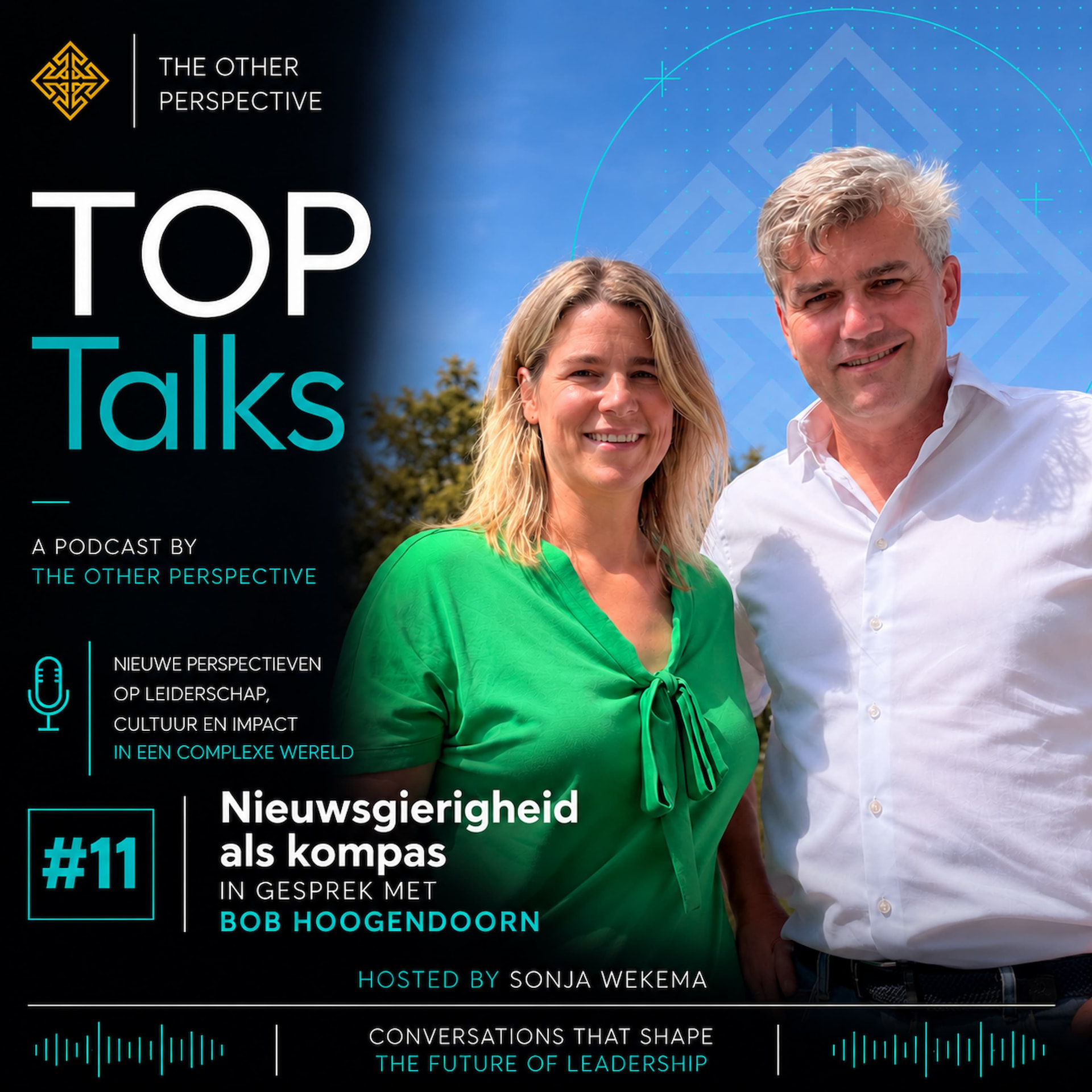
#11 Nieuwsgierigheid als kompas met Bob Hoogendoorn
Bob Hoogendoorn
Aardwetenschapper, projectcoördinator GSEU bij TNO
Over deze aflevering
Wat gebeurt er met je loopbaan als je nooit een script hebt gevolgd, maar wel elke kans hebt gepakt? Bob Hoogendoorn is aardwetenschapper en projectcoördinator van GSEU, Geological Service for Europe, een Europees project bij TNO Geologische Dienst Nederland met partners uit veertig landen. Daarvoor werkte hij vijftien jaar bij Deltares, was hij universitair docent aan de TU Delft en werkte hij bij KPMG. Hij noemt zichzelf scriptloos: nooit een carrièreplan gehad, wel steeds de volgende kans gepakt op het moment dat die zich aandiende. In dit gesprek gaat het over veldwerkavonturen in de Kaspische Zee en de jungle van Kalimantan, over eenzaamheid als universitair docent, over het redden van de aardwetenschappenopleiding aan de VU, en over waarom hij zichzelf, ook na een tegenslag bij KPMG, nog steeds een zondagskind noemt.
In deze aflevering
- Waarom hij zichzelf al zijn hele werkende leven scriptloos noemt
- Hoe hij na twee colleges economie overstapte naar aardwetenschappen, en hoe een bijbaantje op de optiebeurs uitgroeide tot een fulltime carrière in Parijs
- Het bizarre verhaal van een mogelijke piraat, een Amerikaanse koelkast in de jungle van Kalimantan, en een zwempartij vol krokodillen
- Wat zijn promotieonderzoek naar zeespiegelstijging in de Kaspische Zee te maken heeft met de Nederlandse kust
- Waarom eenzaamheid als universitair docent hem minder productief maakte, en wat hij daaraan deed
- Hoe het Spiegelzee-project in Katwijk de aanleiding werd voor zijn overstap naar Deltares, waar hij zeven jaar een afdeling leidde en vertrok op het moment dat het juist goed ging
- Waarom hij meevocht voor het voortbestaan van de aardwetenschappenopleiding aan de VU, en wat dat uiteindelijk opleverde
- Wat de klap bij KPMG hem leerde over geluk, controle en het gevoel al zijn hele leven een zondagskind te zijn
- Hoe hij als projectcoördinator van een Europees project met veertig landen wetenschap vertaalt naar beleid
“Voor sommige mensen is het besluit het eindstuk. Voor mij is het besluit het begin.”
Over Bob Hoogendoorn
Bob Hoogendoorn is aardwetenschapper en projectcoördinator van GSEU, Geological Service for Europe, bij TNO Geologische Dienst Nederland. Eerder werkte hij vijftien jaar bij Deltares, was hij universitair docent aan de TU Delft, en werkte hij bij KPMG. Hij was voorzitter van het KNGMG, de vakvereniging voor Nederlandse aardwetenschappers, en zette zich in voor het behoud van de aardwetenschappenopleiding aan de VU. Bob is getrouwd, vader van drie dochters, en werkt daarnaast aan Carbon Vanish, een initiatief rond carbon capture.
Links
Luister verder
Aanbevolen afleveringen over verwante thema's
 00629:59·NL
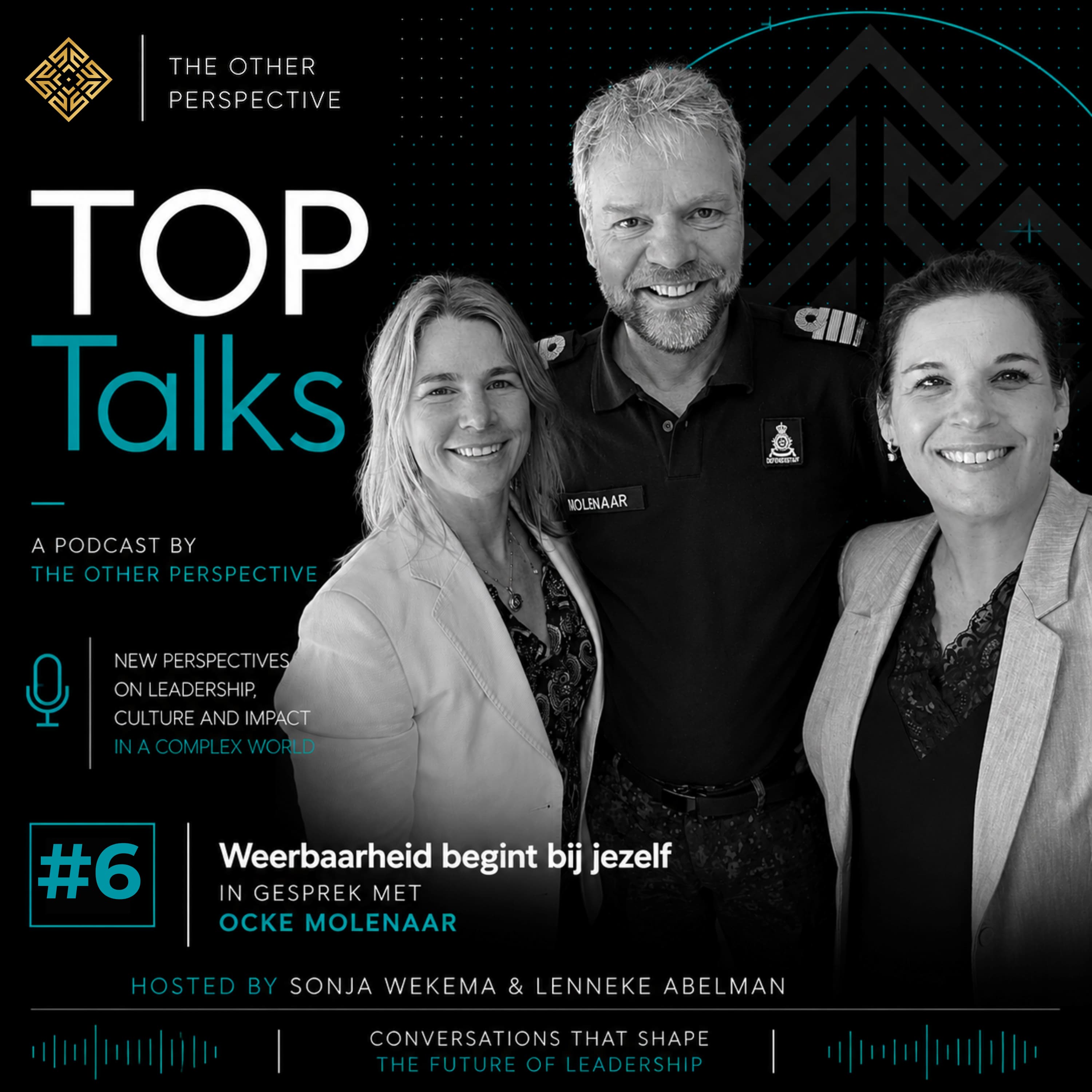
#6 Weerbaarheid begint bij jezelf met Ocke Molenaar
Hoe maak je een samenleving weerbaar in een wereld die steeds minder voorspelbaar wordt? Sonja Wekema en Lenneke Abelman spreken met Ocke Molenaar, hoofd Reservisten en Samenleving bij Defensie, over civiel-militaire samenwerking, bureaucratie als rem op verandering, en vertrouwen als kern van leiderschap.
LeadershipResilienceNLLuister 00838:40·NL
#8 Vrijheid in je hoofd met Gerard Penning
Hoe creëer je als leider een omgeving waarin mensen echt tot bloei komen? Sonja Wekema en Lenneke Abelman spreken met Gerard Penning — senior HR-leider met een indrukwekkende internationale loopbaan, onder meer als EVP HR voor de wereldwijde downstreamorganisatie van Shell. Over de vrijheid die je jezelf moet organiseren om integer te blijven, waarom nieuwsgierigheid meer is dan vragen stellen, en hoe je menselijke energie leest in een organisatie.
LeadershipCultureNLLuister
Transcript
Bob Hoogendoorn over een loopbaan zonder script. Onderwerpen: nieuwsgierigheid als kompas, veldwerk in de Kaspische Zee en Kalimantan, het behoud van de aardwetenschappenopleiding aan de VU, en wetenschap vertalen naar Europees beleid.
Volledige transcriptie beschikbaar in het Nederlands en het Engels.
NLLees het volledige gesprek
Transcript NL — Nieuwsgierigheid als kompas
Bob Hoogendoorn over een loopbaan zonder script. Onderwerpen: nieuwsgierigheid als kompas, veldwerk in de Kaspische Zee en Kalimantan, het behoud van de aardwetenschappenopleiding aan de VU, en wetenschap vertalen naar Europees beleid.
Sonja Wekema Welkom bij TOP Talks, de podcast van The Other Perspective. Vandaag is mijn gast Bob Hoogendoorn. Welkom Bob!
Bob Hoogendoorn Dank je wel.
Sonja Wekema We zitten in de Groene Kamer in mijn kantoor in Den Haag en ik denk dat dat een mooi bruggetje ook is naar jouw werk. Want je bent veel bezig met sustainability, duurzaamheid. Je bent aardwetenschapper, lang gewerkt bij Deltares en nu werkzaam bij TNO op een heel groot Europees project waar we straks denk ik toch wel over gaan spreken. Vader van drie dochters. Ja. In het voorgesprek zei je van: nou, ik zei: goh, heb je een bepaald script? Vertel je jezelf een bepaald verhaal waar je naartoe wil? En wat je net aangaf was: ik ben eigenlijk scriptloos, dus dat vind ik interessant en daar kunnen we ook eens even op ingaan. Ja, en je zit twee dagen in de week in Brussel, dicht bij het Europese stakeholdernetwerk. Ja, dus voldoende aanknopingspunten denk ik om een mooi gesprek te hebben. Dus, welkom Bob.
Bob Hoogendoorn Dank je wel, Sonja. Ja, ik ben heel benieuwd. Ik vind het ook, ja, best wel... spannend is misschien niet het goede woord, maar wel: ik ben benieuwd waar het naartoe gaat.
Sonja Wekema Ja. Ja, dat weten we maar nooit.
Bob Hoogendoorn Nee.
Sonja Wekema Wat we vooral doen met deze podcast is dat we mensen uitnodigen om eens te reflecteren op de complexiteit waar wij ons tegenwoordig in bevinden. Maar ook om te kijken van: hoe gaan mensen daarmee om? En, nou ja, dat we er ook hopelijk een positieve draai aan kunnen geven, zodat mensen die luisteren daar ook door geïnspireerd raken. Maar misschien goed om eens te beginnen bij het begin. Wie is Bob?
Bob Hoogendoorn Goed. Ja, dat vind ik altijd lastige vragen. Daar hou ik me nooit zo heel erg mee bezig, met wie ik ben. Maar ik ben getrouwd met een fantastische vrouw, Tanja Anne. Zij is neuroloog, ik geoloog, of aardwetenschapper zoals je zei. En we hebben drie dochters die het geweldig doen op hun eigen manier. En ik werk inmiddels, dus voor Deltares al tien jaar bij de TU Delft, als aardwetenschapper. Dus bijna meer dan 25 jaar in deze sector. En dat is wel iets wat me gevormd heeft en wat ik heel erg leuk vind, en waardoor je het werk ook niet altijd als werk voelt, maar echt als een voorrecht om je daarmee bezig te mogen houden.
Sonja Wekema Ja. Kan jij voor de luisteraars iets vertellen over wat een geoloog, een aardwetenschapper, doet?
Bob Hoogendoorn Ja, aardwetenschappen noem ik als term vaak omdat het een wat bredere term is die veel meer omvat. Het is eigenlijk alle disciplines die iets te maken hebben met de aarde. En dat kan te maken hebben met water, met het oppervlak, met de ondiepe ondergrond, met de diepe ondergrond, met het statische geheel van: hoe ziet een steentje eruit, of een mineraal? Of hoe ontwikkelt een kust zich, dat het heel dynamisch is. En ja, alles bij elkaar, dat zijn de aardwetenschappen.
Sonja Wekema Ja. En ben jij zelf ook gespecialiseerd in een bepaald onderdeel daarin, of niet?
Bob Hoogendoorn Ja. Ik heb promotieonderzoek gedaan en dat ging over het effect van zeespiegelstijging op de kust. Dus hoe de zeespiegel gaat stijgen. Dat is in ieder geval meer dan de verwachting. En hoe moeten we daarmee omgaan? Wat gaat het systeem doen? En met welke scenario's kan je daarbij rekening houden? En dat is wel echt mijn achtergrond.
Sonja Wekema Ja.
Bob Hoogendoorn En ook wat je daarvoor nodig hebt. En dat is in Nederland veel zand. Dus ik weet ook waar je het zand vandaan moet halen.
Sonja Wekema Waar moet je het vandaan halen?
Bob Hoogendoorn Nou, veel uit de Noordzee. Maar dat is niet zo simpel als het klinkt, want de ondergrond van de Noordzee is ook heel divers. Dus niet elke plek is daarvoor geschikt. En dat maakt het ook weer heel moeilijk. Want er worden plekken aangewezen om bijvoorbeeld windmolens te plaatsen. Maar dat is ook net de plek waar je misschien je zand vandaan wil halen. Dus dat is altijd een afweging van verschillende belangen.
Sonja Wekema Ja. En een actueel onderwerp. Dat was het waarschijnlijk al toen jij dat studeerde. Maar wat je natuurlijk nu hoort met de veranderingen in de temperatuur die wij op dit moment meemaken. Hoe kijk jij daarnaar?
Bob Hoogendoorn Nou, ik zie een enorme positieve verandering. Toen ik studeerde... ik ben in 2000 begonnen met promotieonderzoek. Toen was het bijna een soort hobby van: o, leuk dat je je daarmee bezighoudt, maar hoe relevant is het? Terwijl het nu echt actueel is. Het speelt, mensen houden zich ermee bezig. Niet alleen het publiek of het individu, maar ook echt het beleid. En dat is echt een grote verandering. Terwijl dat, nou ja, 20, 25 jaar geleden een bijgedachte of een nagedachte was. Veel meer dan dat het nu is. Maar aan de andere kant, bijvoorbeeld als je het nu hebt over een droge periode, wat heel erg opvalt, nu zie je het in het nieuws en we hebben de bosbranden. Iedereen vindt het verschrikkelijk, maar straks is het herfst en dan is het weer niet meer top of mind, en dan zie je het weer verdwijnen. Dus het is wel heel erg gevoelig, met een soort nieuwswaarde van de dag, hoe we ermee omgaan. En dat is nog wel een zorg, om zo te zeggen.
Sonja Wekema Mhm. En net als de reden waarom ik vraag wat een aardwetenschapper eigenlijk doet: waarom zouden mensen zich hiermee moeten bezighouden? Wat zou jij zien als een soort basisniveau van kennis dat mensen zouden moeten hebben hierover?
Bob Hoogendoorn Een van de belangrijkste dingen waar ik me op dit moment mee bezighoud, is hoe je de kennis - en die is vaak heel erg bètagericht, heel erg verdiepend en gedetailleerd - maar de gemiddelde beleidsmaker, privépersoon of bedrijf heeft er niks aan, want ze kunnen hun handelingsperspectief er niet op aanpassen. Dus ik probeer dat heel erg te overbruggen in het werk wat ik nu doe in Europa, om te zorgen dat al die kennis die beschikbaar is bij al die grote geologische diensten en al die universiteiten, vertaald wordt naar handelingsperspectief. Zodat het beleid, wat best wel goed is in Europa - als je het hebt over de Green Deal en de uitvoering daarvan, ook al spreken mensen van verzwakking en aanpassingen, het uiteindelijke uitgangspunt om naar een duurzame maatschappij te werken en het beeld daarbij is nog steeds heel erg sterk - maar om die kennis in te voegen in het beleid en het beleid dus effectief te maken, daar is nog een heel groot gat. En dat probeer ik te dichten.
Sonja Wekema Ja, want je zit nu als projectleider op een groot programma. Kan je iets vertellen over hoe je op die plek beland bent?
Bob Hoogendoorn Formeel heet het projectcoördinator en het is het GSEU-project, dat staat voor Geological Service for Europe. Het is een vijfjarig programma en ik ben, op maand veertig van de zestig, ingevallen omdat de vorige projectcoördinator wegviel. Hoe ben ik daar gekomen? Dat is een hele soort... mijn scriptloze reis, om zo te zeggen. Als je mij vroeger vroeg: wat wil je worden? Dan had ik geen idee. Er was ooit zo'n cartoon waarin die vraag werd gesteld, en het antwoord was: ik wil groot worden. Wat ik wist - want ik heb hier in Den Haag altijd op school gezeten - het enige wat ik wist na mijn eindexamen, is dat ik in Amsterdam wilde studeren.
Sonja Wekema Had je er zo'n beeld bij?
Bob Hoogendoorn Nee, het was meer dat ik, de keren dat ik in Amsterdam was geweest om uit te gaan, zo'n toptijd had gehad dat ik dacht: daar moet ik gaan studeren.
Sonja Wekema Ja.
Bob Hoogendoorn En...
Sonja Wekema En nu woon je ook nu in een grote stad?
Bob Hoogendoorn Nee. In een klein... ja, ze noemen het een stad, maar het is gewoon een dorp.
Sonja Wekema Ja. Een dorp met stadsrechten.
Bob Hoogendoorn Ja, maar daar word ik altijd heel giechelig van. Omdat Den Haag natuurlijk geen stadsrechten heeft, maar wel een stad is. En ik ben echt in Den Haag opgegroeid.
Sonja Wekema Maar goed, je ging...
Bob Hoogendoorn ...woon ik in een dorp.
Sonja Wekema Je wilde in Amsterdam studeren.
Bob Hoogendoorn Ja, en ik had economie in mijn pakket en dat ging me heel makkelijk af, dus ik ben economie gaan studeren. En na twee colleges dacht ik: dit ga ik geen vier jaar volhouden. En toen ben ik voor het eerst na gaan denken wat ik zelf wou.
Sonja Wekema En nu zeg je: wat ik zelf wou.
Bob Hoogendoorn Ja, of tenminste wat ik niet wou. De economie was ook mijn eigen keuze, hoor. Maar iedereen was dan: oh, economie studeren, top! Leuk!
Sonja Wekema Ja, ja, je had geen positieve...
Bob Hoogendoorn Niemand had een kritische noot van: zou je dat wel doen? Want er zijn honderd andere mensen die het doen. Het is een hele generalistische studie - als je dat wil doen, waarom ga je niet een HEAO doen? Of: wat is je uitgangspunt ermee? Net zo goed economie of rechten dan, dat was oké. Ik wist nog steeds dat ik in Amsterdam wou blijven en dat ik wou studeren, maar ik wist wel dat het geen economie moest zijn. En toen kwam ik dus heel snel bij Aardwetenschappen. Dus een bètagerichte toegepaste studie, en een kleine studie. Want economie... ik vond het verschrikkelijk, die zeshonderd mensen in een collegezaal.
Sonja Wekema En hoe kwam je daar dan zo bij?
Bob Hoogendoorn Nou, dan is het een soort cirkel die rond is. Want toen ik jong was, heb ik nota bene - en ik zal het nooit vergeten - op een hockeytoernooi in Voorschoten bij Forescate de ballonnenwedstrijd gewonnen, en daar heb ik een encyclopedie van de aarde gewonnen.
Sonja Wekema Wauw.
Bob Hoogendoorn En dat boek heeft me gefascineerd. En daarna had ik altijd dat soort boekjes over de aarde, over het klimaat. De jeugdvariaties daarop, die vrat ik op. En toen dacht ik: ja, dit is wat ik leuk vind. Toen ben ik dat dus gaan studeren.
Sonja Wekema Is dat dan iets wat ook vanuit je familie werd gestimuleerd, of kwam je daar zelf op?
Bob Hoogendoorn Nee, mijn ouders waren op vakantie - ik weet niet eens meer waar naartoe, maar ver weg en lang, iets van een maand weg. En het was net na de herfstvakantie, dus ik had al voor de kerst besloten, of eigenlijk heel snel: dit ga ik niet studeren, wat ga ik dan doen? Tijd genomen, besluit genomen, en toen kwamen ze terug. Zeg ik: jongens, ik ga wat anders studeren. En het eerste wat ze zeggen: ja, maar wat ga je ermee doen?
Sonja Wekema Ja, ja.
Bob Hoogendoorn Ik zeg: geen idee, maar het besluit staat vast. En ik zei ook: ik maak deze keuze ook om hem nu af te maken. En daar was ik heel erg vastbesloten in.
Sonja Wekema Dat beeld had je echt: van dit wordt het.
Bob Hoogendoorn Ja, dit moet het worden, want ik kan niet nog een keer stoppen en veranderen.
Sonja Wekema Nee. Waarom dacht je dat?
Bob Hoogendoorn Ja, dat weet ik niet. Dat was gewoon... ik kan me nog heel goed herinneren dat ik dacht: je moet niet een eeuwige student worden.
Sonja Wekema Was dat een soort schrikbeeld?
Bob Hoogendoorn Nee, ik was gewoon gemotiveerd om het te gaan doen, ondanks dat ik nog helemaal niet wist wat het inhield. Maar tachtig procent van wat mijn opleiding inhield, vond ik hartstikke leuk. De eerste jaren was ik heel bewust dat ik een minimaal aantal punten moest halen om door te gaan. En naarmate het tweede deel kwam, dus wat je nu je master zou noemen, werd ik ook steeds meer gemotiveerd. En toen waren de bijzaken niet meer de hoofdzaak, om het zo te zeggen. En toen leerde ik op een gegeven moment ook mijn vrouw kennen, en die was altijd heel jaloers en zei: je vindt je studie zo leuk. Want het kost me nooit moeite om, met of zonder kater, uit bed te komen en mijn dingen voor te bereiden. Nou ja, dus dat ging allemaal heel erg vanzelf. Dus zo ben ik daar wel echt ingerold.
Sonja Wekema Dus je bent echt op je plek gekomen, of beland.
Bob Hoogendoorn Ja. Maar dan is het weer het grappige dat ik tijdens mijn studie, via een teamgenoot, een bijbaantje kreeg op de optiebeurs, en daar moest ik dus analyses doen. En dat, nou ja, data-analyses, ging me heel goed af. En toen ging ik afstuderen en zei ik: nou jongens, ik stop hiermee, want het is echt een studentenbaantje. Ik ga een baan zoeken, want ik ben afgestudeerd. En toen zeiden ze: maar wil je hier niet komen werken? Dus toen heb ik gezegd: oké. Want vanuit werk werk zoeken leek mij altijd beter dan vanuit het niks. En het was ook... het was een redelijk goede tijd, maar ook niet dat de banen voor het oprapen lagen.
Sonja Wekema En over welk jaar hebben we het nu?
Bob Hoogendoorn '96.
Sonja Wekema Ja.
Bob Hoogendoorn '96, '97 zoiets. En toen ben ik gaan werken, 1 december of 15 december zoiets. Dus de echte baan. En tijdens de kerstvakantie belt mijn baas op en die zegt: kan je 2 januari op Schiphol zijn, want we moeten naar Parijs. Er was een probleem geweest met de leidinggevende daar. Die was op staande voet ontslagen en er moest uitgezocht worden wat er gedaan moest worden. En toen zei mijn baas: nou, het is voor een weekje, kan je zorgen dat er niks verdwijnt - dus dat hij terugkomt en dat er, weet ik veel wat voor toestanden gebeuren. Ik zeg: oké. Nou, van een week werd het twee weken, twee weken werden een maand, één maand, twee maanden. Toen heb ik dus acht maanden in Parijs gezeten en gewoond, wat een unieke ervaring was. En heel snel natuurlijk - je hebt twee weken echte werkervaring - en ik voerde daar alle onderhandelingen, want er ging al... eerst was er niks aan de hand, en toen moest het kantoor gesloten worden. Na een maand of drie hadden ze dat besloten. Dus in de laatste drie, vier maanden moest ik een kantoor sluiten. Dus alle leveranciers bellen.
Sonja Wekema Als broekie die net was afgestudeerd.
Bob Hoogendoorn Ja, maar dat doe je dan. En dan zeggen ze: ja, dat kan helemaal niet, want je hebt een contract voor nog twee jaar. Maar ik was natuurlijk wel voorbereid en ook geholpen door de juridische afdeling, en die zeiden: ja, maar in de clausule staat: als je sluit, mag je opzeggen. Dus dan zeg ik: hier staat, als je sluit, mag je opzeggen. Oké.
Sonja Wekema En hoe ging dat dan? Want jij werd eigenlijk gewoon geholpen door het hoofdkantoor of zo?
Bob Hoogendoorn Nee, nee, het was wat je noemt een subsidiary van ING, en het was een clearing member, dus die stond garant voor de dagelijkse handelaar. Een vrij intensieve positie. En die hadden dus een hoofdkantoor in Amsterdam. Maar ze zorgden ook voor handel in Frankfurt en in Parijs, dus alles kon uit en in Londen uitgevoerd worden. En daarvoor hadden ze daar kantoren. En ook een aantal handelaren zaten daar, die dan weer gebruikmaakten van de faciliteiten. Dus een handelaar, professionele handelaar, maar ook een bank - die heeft altijd een clearing member nodig om garant te staan, want die staat garant dat als jij een transactie uitvoert, dat die ook betaald wordt, en vice versa: dat jij dus de derivaten, de opties of de futures krijgt die je gekocht hebt. Dus een hele bijzondere wereld.
Sonja Wekema En was alles nieuw voor je?
Bob Hoogendoorn Alles nieuw. Alles. En dat doet me een beetje denken ook aan ons voorgesprek, want ik was wel super nieuwsgierig. Het was echt... toentertijd had je die film Wall Street, en niet zo natuurlijk zo'n verhaal, maar het was wel de snelle wereld, en op de vloer geschreeuw en gedoe, en, ja, hele lange periodes dat er natuurlijk niks aan de hand was en het heel saai was. En dan gebeurde er wat. Nou ja, een of andere domme actie ergens, of een uitspraak van iemand, en dan was er paniek. Dat was echt wel een aparte wereld.
Sonja Wekema Er gebeurde veel. Dynamiek.
Bob Hoogendoorn Ja. En toen, vanuit Parijs, kwam ik vrij snel op de afdeling Riskmanagement, en dat is echt het kloppende hart van waar alle dynamiek gebeurt, waar je dus continu op je hoede moest zijn om de dingen in de gaten te houden. Dat deed ik samen met drie anderen: een hoofd riskmanager en twee andere jongens die ook vrij jong waren, net afgestudeerd. En dan moesten we de boel in de gaten houden. En dat hebben we dus ruim twee jaar, anderhalf jaar zoiets, gedaan.
Sonja Wekema Met je master, of toen heette dat waarschijnlijk...
Bob Hoogendoorn Ja, toen had ik wel een master.
Sonja Wekema Ja.
Bob Hoogendoorn Ik had geen bachelor, maar wel een master.
Sonja Wekema Ja. Maar wel met aardwetenschappen.
Bob Hoogendoorn Ja. En dan zag je - omdat het internationaal was, dus in Londen was dat heel normaal - en ik zat alleen maar tussen de econometristen in Nederland.
Sonja Wekema Ja.
Bob Hoogendoorn En die vonden me echt heel erg raar.
Sonja Wekema Ja, zag je dat de populatie heel verschillend was?
Bob Hoogendoorn Ja. Dus in Nederland blijf je een beetje in je hokje.
Sonja Wekema Ja.
Bob Hoogendoorn En daar, bijvoorbeeld in Londen, was het echt een veel meer gemixte groep. Er kwamen ook biologen, weet ik nog. En ook wel econometristen, hoor. En economen, maar vooral...
Sonja Wekema Andere achtergronden bij elkaar.
Bob Hoogendoorn Andere achtergronden. Diverser. Het was ook natuurlijk groter.
Sonja Wekema Ja.
Bob Hoogendoorn Dus dat is dan misschien ook wel meer ruimte voor.
Sonja Wekema En als je dan jezelf... nou ja, want je hebt natuurlijk in Nederland dan het een en ander gezien, ook naast je studie. In Parijs, nou ja, dat is natuurlijk een aparte situatie als je de boel moet sluiten. Londen, maar waarschijnlijk ook Frankfurt. Merkte je daar dan ook iets van een andere sfeer, andere cultuur, dat soort dingen?
Bob Hoogendoorn Oh zeker. Ja, ja, ja, ja. Wat dat betreft ben ik echt een Nederlander. Want de cultuur van deels open, maar ook verantwoordelijkheid, past wel echt bij mij.
Sonja Wekema Ja.
Bob Hoogendoorn Duitsland is natuurlijk vrij hiërarchisch en regels zijn regels. Engeland eigenlijk ook hiërarchisch, maar dan wat minder doorzichtig. Dan moet je veel meer de onderstroomse signalen weten op te vangen.
Sonja Wekema Het indirecte. Ja.
Bob Hoogendoorn Ja. En in Frankrijk doe je niks zonder dat je baas het zegt.
Sonja Wekema Ja.
Bob Hoogendoorn Dus...
Sonja Wekema En moesten deze teams ook met elkaar werken, of niet?
Bob Hoogendoorn Nee, nee, helemaal niet. Luister, de enige teams waar ik echt gewerkt heb, zijn dus in Nederland en Parijs. En met de andere teams had je contact omdat er transacties afgehandeld moesten worden, of natuurlijk als er iets niet goed ging, dat er dan overlegd moest worden. Op die manier had je daar contact mee.
Sonja Wekema Dus je ging van economie, stopte daarmee. Aardwetenschappen. Daarnaast deed je de optiehandel eigenlijk als een soort bijbaantje waar je bent blijven hangen.
Bob Hoogendoorn Ja.
Sonja Wekema Toen naar Parijs voor één week, twee weken, acht maanden in totaal. Ja. En daarna?
Bob Hoogendoorn Ja, toen kwam... het was eigenlijk dat ik dacht: is dit het nou?
Sonja Wekema Is dit alles?
Bob Hoogendoorn Ja. Want alles ging om geld, dus het was heel makkelijk. Kan je er geld mee verdienen? Doen we het. Is het risico hoger dan wat het kan opbrengen? Doen we het niet. Kost het geld? Doen we het al helemaal niet. Dat was het enige kader waarnaar er, nou ja, gehandeld werd.
Sonja Wekema Ja.
Bob Hoogendoorn En niks mis mee, maar dat dacht ik: ja, is dit het nou? En letterlijk dat weekend kwam er een advertentie. Ik weet niet eens meer welke krant, maar toen stonden advertenties nog in de krant, en ze zochten een promotieplek voor een aardwetenschapper met wiskundige affiniteit. En ik had natuurlijk de afgelopen twee jaar alleen maar sommetjes gemaakt, dus ik dacht: nou, ik schrijf erop. En ik werd het.
Sonja Wekema Hmm.
Bob Hoogendoorn En toen ging ik naar mijn baas toe en ik zei: nou jongens, ik heb een nieuwe baan. En negen van de tien, of eigenlijk altijd, vanuit riskmanagement ging iedereen naar een handelshuis, dus er was best wel wat verloop. En hij had er gewoon geen zin in en zei: wat gaan ze je betalen dan? Ik zeg: nou, het is ongeveer een kwart van dat, of nog zelfs minder van wat ik nu verdien.
Sonja Wekema En toen viel-ie van zijn stoel of wat?
Bob Hoogendoorn Ja. Ja.
Sonja Wekema Hmm.
Bob Hoogendoorn Maar het was nog in de periode, godzijdank, dat we geen huis hadden. We hadden geen kinderen.
Sonja Wekema Ja.
Bob Hoogendoorn We woonden in een huurflatje waarvan we de huur ook net...
Sonja Wekema Was nog niet helemaal gewend aan je standaarden.
Bob Hoogendoorn Nou, luister, we leefden een fantastisch leven, want we gingen drie, vier keer in de week gewoon uit eten. Ja, het was echt, sloeg nergens op. En we waren ook echt heel vervelend geworden, want dan was het niet helemaal...
Sonja Wekema En dan stuurde je het terug.
Bob Hoogendoorn Nee, zo erg was het niet. Maar het zijn wel van die momenten. We waren toen heel bewust dat we dachten: hé, we genieten er niet meer van.
Sonja Wekema Ja, ja.
Bob Hoogendoorn Dus we moeten ook iets anders gaan doen, of iets gaan veranderen.
Sonja Wekema Best wel snel dus eigenlijk. Sommige mensen doen er jaren over.
Bob Hoogendoorn Ja, misschien deden we er ook wel jaren over. Het is wel een periode dat we allebei werkten en dus weinig vaste lasten hadden. Dat hebben we zeker twee, drie jaar mogen genieten.
Sonja Wekema Dus je ging weer uit de hele optiewereld, de bancaire kant, de aandelenkant.
Bob Hoogendoorn Naar Delft. Ja, en eigenlijk nooit teruggekeken. Mijn eerste werkdag was in de Wolgadelta, aan de Kaspische Zee, in Rusland. Ja, dat was één groot avontuur. Een heel groot deel van mijn promotieonderzoek bestond uit, of tenminste een significant deel - het meeste deel was natuurlijk in Delft - maar een significant deel was in de Kaspische Zee. Dus in Rusland, Azerbeidzjan, Kazachstan heb ik redelijk wat voetstappen liggen. Ja, dat was heel erg avontuurlijk.
Sonja Wekema Waar was je naar op zoek? Wat ging je onderzoeken?
Bob Hoogendoorn Nou, de Kaspische Zee fluctueert veel sneller dan de normale wereldzeeën, omdat het natuurlijk een gesloten bekken is. Verdampt veel. De invoer, of terecht de afvoer van de Wolga, is de voornaamste component die het niveau bepaalt. Dus die kan over tientallen jaren vijf tot tien meter verschillen. En deels ging het over de reconstructie daarvan, want er is natuurlijk nooit gemeten in het verleden. Dus je ziet wel de afzettingen, de geologie die als restant van die zeespiegelverandering is overgebleven, die kan je daar zien.
Sonja Wekema Ja.
Bob Hoogendoorn Maar je kan ook zien wat het heeft gedaan. Dus als model, als een soort living lab voor de moderne Nederlandse kust, kon je dat gebruiken. En daar hebben we dus heel veel boringen gezet. Heel veel seismiek gedaan, en dan ondiep, allemaal tot een meter of tien, en dat op een rij gezet. En daarna hebben we daar modellen van gemaakt om...
Sonja Wekema Je hebt het over 'we'. Was het echt met een team, of?
Bob Hoogendoorn Nou ja, dat vind ik altijd lastig. Je doet in zo'n promotieonderzoek - 99% van het werk doe je zelf, maar er zijn altijd studenten die helpen. Er zijn altijd collega's die helpen. Je wordt natuurlijk begeleid. Ik had een hele goede promotor en ook een dagelijkse begeleider. Dus ja, ik heb het werk gedaan, maar het is zeker ook met andere mensen. Ja. En ook, in ieder geval in Indonesië, heb ik in die tijd gewerkt, in Kalimantan, dus Borneo, wat een groot avontuur was waar we fantastisch...
Sonja Wekema In de jungle.
Bob Hoogendoorn Ja, nee, het was in de Mahakam Delta, dus waar de jungle eigenlijk uitkomt. En het mooiste verhaal wat ik daar heb: we hadden echt van alles gezien. Gewoon van die echte neusapen in het wild, en heel veel vogels, en van alles en nog wat. We denken ook dat we op bezoek zijn geweest bij een piraat.
Sonja Wekema Je denkt dat.
Bob Hoogendoorn Ja, hij heeft het nooit bevestigd natuurlijk, maar we kwamen in the middle of nowhere, en daar waren van die grote fish ponds waar ze dan garnalen kweken. En er was dan één zo'n hut, en op een gegeven moment kwam er iemand uit. Of tenminste, ze wisten al lang dat je daar bezig was, en Total zat er ook, en dat was de vijand. Maar wij waren duidelijk van de universiteit, dus we hadden niks met Total.
Sonja Wekema Van de lokale bevolking...
Bob Hoogendoorn ...werd vervolgd. Precies. Ja. Ja, en dus we hadden allemaal brieven en papieren, en we hadden altijd gezegd: "Nee hoor, we hebben ook de kapitein van ons bootje. We komen van de universiteit." En toen kwam die man toch informeren wat we daar dan deden, als we niet van Total waren. Dit en dat, en dan nog een keer uitgelegd, in het beste Engels en het halve woord Indonesisch wat je dan spreekt. Toen mochten we naar zijn hut voor een kopje thee.
Sonja Wekema Hmm.
Bob Hoogendoorn En toen kwamen we daar in een hut. Van buiten zag het er niet uit, maar van binnen was het gewoon ultra luxe. Echt, in de tijd dat we in Nederland nog geen Amerikaanse koelkast hadden, stond daar een Amerikaanse koelkast en een flatscreen.
Sonja Wekema Met de ijsblokjes erin.
Bob Hoogendoorn Ja, precies.
Sonja Wekema Ja.
Bob Hoogendoorn En ja, dan echt in the middle of nowhere denk je: hoe kan dit?
Sonja Wekema Ja, ja. Dat was iets dat had je anders never nooit gezien.
Bob Hoogendoorn Nee, nee, dat niet, of tenminste, het was niet wat je normaal daar tegenkwam. Het was echt bizar om dat zo in the middle of nowhere tegen te komen. Maar toen waren we terug, dus op de universiteit in Balikpapan. En toen zeiden we: "Alles goed gegaan?" "Ja, wat fijn. Helemaal geen moeilijkheden." Nee, toen zeiden ze: "Maar heb je nog krokodillen gezien?" Krokodillen? Zijn die er dan? Maar die heb je dus daar ook. En elke dag zijn we van het bootje door het water gezwommen.
Sonja Wekema Oh echt?
Bob Hoogendoorn Naar...
Sonja Wekema Met gevaar voor eigen leven. Maar je wist het niet.
Bob Hoogendoorn Precies.
Sonja Wekema Ja.
Bob Hoogendoorn Ja. Dus dat zijn...
Sonja Wekema Ja. Nou mooi. Dat zijn wel de verhalen die je waarschijnlijk, als je straks ooit een keer oud en bejaard bent, nog gaat vertellen.
Bob Hoogendoorn Ja, ik vertel het nu al.
Sonja Wekema Ja, toch?
Bob Hoogendoorn Nog wel, ja.
Sonja Wekema Nee, je bent nog niet eens oud en bejaard. Kan je nagaan. Ja.
Bob Hoogendoorn Dus, maar dat was uiteindelijk een hele avontuurlijke, leuke tijd. En de promotie ook netjes afgerond. En toen kreeg ik al heel snel - of tenminste, ik had tijdens mijn promotieonderzoek al de mogelijkheid om een vervolgvoorstel te schrijven - ik kreeg gehonoreerd als postdoc, maar daar heb ik eigenlijk geen gebruik van gemaakt, want er kwam een vaste positie vrij en die heb ik toen gekregen.
Sonja Wekema In Delft.
Bob Hoogendoorn Ja. Dus ik was toen, vanuit mijn promotie, vrij snel universitair docent. En weer een hele nieuwe fase, nieuw leven. Dat heb ik toen vijf jaar gedaan, met heel veel plezier, en heb ik ook altijd als een voorrecht ervaren. Maar ik vond het heel eenzaam. Op de universiteit werk je toch allemaal op je eigen kamertje. Tuurlijk spreek je elkaar bij de koffie, en het zijn allemaal gezellige en leuke mensen. Maar ja, je doet je eigen onderzoek.
Sonja Wekema Ja.
Bob Hoogendoorn Je hebt wel je aio's, maar het was geen dynamiek.
Sonja Wekema Mhmm. Als je daar even op inzoomt, van: wat gebeurt er dan met jou als je je eenzaam voelt?
Bob Hoogendoorn Ik denk dat ik dan minder productief word. In de beginjaren van mijn promotie was ik heel energiek, omdat ik natuurlijk uit die hele dynamische wereld kwam waar iedere dag weer een nieuw avontuur was. Dus dat nam je mee. En maar dat was...
Sonja Wekema Die energie zat nog in je.
Bob Hoogendoorn Ja, precies, maar dat was na... en zeker met dat veldwerk en weet ik veel wat, dat bleef wel, maar dat doofde wel uit. En zeker in die tijd, toen ik UD was, was dat echt uitgedoofd. Dan ging ik mee met de rest.
Sonja Wekema En de rest bedoel je dan de andere docenten?
Bob Hoogendoorn Ja. Ja. En niet dat het kritiek is, maar die gedijen daarop. En toen deed ik nota bene een outreach-project in Katwijk en dat heette Spiegelzee. En daar hadden we een groot paviljoen gebouwd waarin we de zeespiegelstijging - van het laatste interglaciaal, toen die zes meter hoger stond, helemaal tot het Glaciaal, toen hij dus honderdtwintig meter lager stond - hadden verbeeld tot het huidige niveau, uitgebeeld als een soort outreach-project. Dat heb ik toen ingediend voor de Academische Jaarprijs. Toen hebben we, ja, niet de eerste prijs, maar wel een eervolle vermelding gekregen. En het is toen opgepakt door het Verenigde Naties-jaar van de aarde. Die zeiden: we zoeken mooie projecten, dit is een fantastisch project, we gaan het gewoon maken.
Sonja Wekema Het is een mooie naam, Spiegelzee. Waar kwam dat vandaan?
Bob Hoogendoorn Nou, ons initiële ontwerp was om een soort wensput te maken met een spiegel erin en een spiegel erboven. Dat je, als je die uit elkaar zet, dat het dan dieper lijkt, en dat je dan kan zien bij welk tijdstip het zeeniveau, of het zeespiegelniveau, zou zijn. Dus er zat een spiegel in. En toen dachten we: spiegel, spiegel, zee, zee, Spiegelzee.
Sonja Wekema Ja, omge...
Bob Hoogendoorn Ja. Dus in die zin, daar kwam het toen vandaan. En dat heb ik toen samen gedaan met een collega en een aantal studenten, maar dat was ook samenwerking met TNO. En toen werd Deltares gevormd. En vanuit dat project had ik op een gegeven moment een gesprek, en toen zeiden ze: ja, we zoeken nog iemand die de afdeling Toegepaste Geologie en Geofysica gaat leiden. Wil jij dat niet doen? En toen dacht ik: oké, dus het was perfecte timing, want ik zat...
Sonja Wekema Alweer perfecte timing.
Bob Hoogendoorn Ja, ja, ja. Dat is niet altijd zo geweest.
Sonja Wekema Oké, klinkt een beetje zo.
Bob Hoogendoorn Ja, ja. Nee, nee. Maar ik voel me echt wel een zondagskind, hoor. Zeker tot dat moment. Want altijd als ik dacht: nou, er moet wat gebeuren - en het was natuurlijk niet instantaan, dus soms zat er wel een jaar tussen - dan gebeurde er iets waarvan ik dacht: hè, dit is wat ik zocht en dit was wat er moest gebeuren.
Sonja Wekema Ja.
Bob Hoogendoorn Dat heb ik zeven jaar gedaan. Die afdeling geleid met heel veel plezier, ongelooflijk veel geleerd, maar na zeven jaar dacht ik: jeetje, ik heb dezelfde gesprekken met dezelfde mensen, hoe kan dit?
Sonja Wekema Ja. Hoe kwam dat, dat je daar ineens op ging reflecteren?
Bob Hoogendoorn Dat merk je bij jezelf. Ik was gewoon niet meer... of het nou de energie is of ik... op een gegeven moment wil je wel mensen helpen. Dus ik ervaar altijd dat je mensen moet behandelen zoals je zelf wil behandeld worden. Mensen komen met een probleem. Kan ik het oplossen? Nee. Maar kan ik ze helpen? Ja. Hoe kan ik ze helpen? Door in ieder geval eerlijk en oprecht te zijn en te kijken wat daar mogelijk is.
Sonja Wekema Ja.
Bob Hoogendoorn Maar als je hetzelfde gesprek voor de tweede, derde keer hebt, dan denk je: ja, blijkbaar helpt het niet meer wat ik doe. En dan denk ik: ja, ik vind het niet meer leuk.
Sonja Wekema Toch zijn er mensen die daar dan gewoon blijven zitten. Die berusten daarin en die blijven daar jaren zitten.
Bob Hoogendoorn Ja.
Sonja Wekema Wat maakt het voor jou anders?
Bob Hoogendoorn Volgens mij is dat mijn nieuwsgierigheid naar wat er aan de andere kant is. Dan denk ik: oké, dit heb ik gedaan, dit heb ik gezien. En niet dat ik het uit mijn handen wil laten vallen, dat je niet kan concentreren en iets afmaken, maar dan wel dat je denkt: ja, oké dan. Blijkbaar is er nog zoveel te ontdekken, zoveel te zien en zoveel te leren. En dan denk ik: ik wil wat anders gaan doen.
Sonja Wekema Je wil niet daar blijven hangen.
Bob Hoogendoorn Nee. Nee.
Sonja Wekema Want dan mis je de andere mogelijkheden.
Bob Hoogendoorn Ja, en ik wil ook niet... het is een fijne balans, om zo te zeggen. En die ook niet altijd werkt, of gewerkt heeft, hoor. Maar...
Sonja Wekema En hoe is het dan bijvoorbeeld om te zeggen: nou, dan ga ik weg? Want je zei natuurlijk al bij dat eerdere voorbeeld: goh, ik ga mijn baan opzeggen, ik ga wat anders doen. Dat je toenmalige manager zei: nou, wat ga je dan verdienen? Een kwart. Maar je ging iets totaal anders doen.
Bob Hoogendoorn Ja.
Sonja Wekema En daar was het verloop best hoog. Ik kan me voorstellen dat bij universitair docenten mensen best wel wat langer blijven.
Bob Hoogendoorn Ja, ja, dat zijn echt mensen die hun hele leven daar blijven.
Sonja Wekema Ja, maar hoe... wat voor reacties kreeg je daar?
Bob Hoogendoorn Mensen die het heel leuk vonden en mensen die het onbegrijpelijk vonden. Wat je op de universiteit merkt, is dat het heel generaliserend is, maar heel veel mensen hebben daar een script. Die willen hoogleraar worden. Daar dromen ze al van sinds ze drie zijn, om het zo te zeggen - sinds het eerste bewustzijn dat dat is wat ze willen worden, wat ze willen gaan doen. En er zijn er heel veel die het ook niet lukt. Het is maar een beperkt aantal mensen dat daar komt, en het UD-schap is daarvan echt wel een mijlpaal. En die vinden het dus onbegrijpelijk dat ik dat dan bij het grofvuil neerzet - zo zien zij dat. Terwijl ik dacht: ja, ik...
Sonja Wekema Career limiting in hun ogen.
Bob Hoogendoorn Ja, ja, maar voor mij was hoogleraar worden geen doel. Die staat ook niet op mijn radar. Het is ook niet dat ik onbewust denk: dat zou een leuke baan zijn. Nee, ook nu niet. We zijn met de VU bezig geweest, en dan denk ik ook niet: oh god, ja. Dat is nog een kant.
Sonja Wekema Ja, want dat is een succesverhaal, hè?
Bob Hoogendoorn Ja.
Sonja Wekema Wat je bij de VU hebt gedaan. Ja. Wil je daar wat over vertellen? Ik zag wat dingen voorbij vliegen zo nu en dan op LinkedIn.
Bob Hoogendoorn Ja, het is even een stap naar voren. In 2019 ben ik voorzitter geworden van het KNGMG. Dat is het Koninklijk Nederlands Geologisch Mijnbouwkundig Genootschap, en dat is eigenlijk de vakvereniging voor aardwetenschappers. Het motto is ook: voor aardwetenschappers. Die doen een aantal dingen. We hebben een leuk vakblaadje, waar ik het trouwens heel leuk vond om columns in te schrijven. We hebben een wetenschappelijke publicatie samen met de Geologische Dienst. We hebben twee tot drie symposia per jaar. En we hebben prijzen: een oeuvreprijs, de Baets-Schots van der Gracht-penning. We hebben de Jelgersma-prijs voor de beste bachelorscriptie en de Esscher-prijs voor de beste masterscriptie. Dus dat is een beetje het oeuvre. Maar het is natuurlijk heel moeilijk in deze tijden om zo'n vereniging ook levensvatbaar te houden. Nu waren er altijd rond de 700 leden. Maar dan probeer je daar wel dingen, een initiatief voor te ontplooien. We hebben toen ook ooit een podcast opgezet, die inmiddels niet meer bestaat. Wat wel heel leuk was.
Sonja Wekema Nou, wat let je om het weer op te starten?
Bob Hoogendoorn Nou, luister, ik kon niet alles zelf doen. Vooral de Paper Trail - dat was een podcast waar een auteur van een publicatie ging uitleggen wat het verhaal achter de publicatie was, want de wetenschappelijke publicaties zijn vaak heel droog, maar er zit een heel verhaal achter, en het zijn echt hele leuke verhalen.
Sonja Wekema Hmm.
Bob Hoogendoorn Dus...
Sonja Wekema Maar die zijn nog wel te luisteren?
Bob Hoogendoorn Absoluut. De Paper Trail van de KNGMG. Heel goed. Even gepitcht ook.
Sonja Wekema Ja.
Bob Hoogendoorn Maar toen kwam, als vakvereniging, het bericht bij ons binnen dat ze bij de VU Aardwetenschappen gingen opheffen. En toen dacht ik: ja, dat...
Sonja Wekema Waar kwam dat vandaan?
Bob Hoogendoorn Dat kwam via, via, dus eigenlijk via de leden en via het netwerk wat je dan hebt.
Sonja Wekema Maar was dat een beslissing vanuit het Rijk of?
Bob Hoogendoorn Nee, nee. Ja, indirect natuurlijk, want er is toen die grote bezuinigingsronde geweest, en alle universiteiten werden gekort. Wat natuurlijk, laten we ook zeggen, waanzin is - dat je zegt: we hebben een kenniseconomie nodig, we hebben hoogopgeleide mensen nodig, maar we gaan wel op het hoger onderwijs bezuinigen. Nu zeg ik niet dat het hoger onderwijs niet zonder verbeteringen kan en betere besteding van de middelen, et cetera. Maar zo rigoureus als dat in ieder geval het vorige kabinet gegaan is, is waanzin. En dat het nog niet volledig is teruggedraaid, terwijl dat beeld wel wordt neergezet door het huidige kabinet, is ook niet waar.
Sonja Wekema Wat kunnen we daar als burgers aan doen?
Bob Hoogendoorn Nou, door het toch op de agenda te zetten en ook actief te participeren en te laten zien. Ik denk dat we in Nederland - en dan komen we wel weer op een heel ander onderwerp - wel heel passief zijn in onze houding. Dus we klagen graag, maar er zelf iets aan doen, dat is een stap te ver.
Sonja Wekema Ja.
Bob Hoogendoorn En ik denk toch...
Sonja Wekema Dat is een van de redenen waarom we deze podcast ook doen: van, goh, er gebeurt van alles en mensen kijken naar wat er allemaal om mij heen gebeurt. Maar het raakt mij niet. En pas op een heel laat moment lijkt het dat mensen wakker worden, en dan is het eigenlijk al bijna te laat, hè?
Bob Hoogendoorn Ja, het is vaak dan al te laat. Dus je moet je mengen in het debat, en dan kan je ook echt invloed hebben. Maar je moet het wel doen en niet passief. En we zijn daar te comfortabel in. Ik geloof niet in wat Wennink zegt, dat we lui en dik en verwend zijn, maar je moet wel de verantwoordelijkheid nemen.
Sonja Wekema En wat er gebeurde met deze opleiding, ook met de aardwetenschappen: op een gegeven moment was het gewoon kogel door de kerk. Bestaat niet meer.
Bob Hoogendoorn Nee, dus dat was natuurlijk wel weer een enorme besluitvorming in een universiteit met medezeggenschap en alles erop en eraan. Vrij traag, moet ik zeggen, maar zeker in het begin in ons voordeel. Maar mijn doel was eigenlijk om te laten zien aan de mensen die het betrof - collega's, collega-aardwetenschappers - dat het niet zomaar voorbijgaat. Dat wij als vakbroeders en -zusters hen zien en zeggen: wij zijn het er gewoon niet mee eens, en we zullen er ook alles aan doen om het te stoppen.
Sonja Wekema Eigenlijk de boel gemobiliseerd met z'n allen.
Bob Hoogendoorn Ja, maar met hele lage verwachting moet ik eerlijk zeggen, want ik dacht: ja, wat kunnen we uiteindelijk doen?
Sonja Wekema Hoe kwam dat? Had je het idee dat er niks meer te veranderen was?
Bob Hoogendoorn Nee, maar op een gegeven moment moet je ook een oplossing bieden. En als vakvereniging kan dat niet. Dus als het niet uit de lengte moet komen, moet het uit de breedte komen. Dat die bezuiniging realistisch was - hoe ze ermee omgingen, waren we het natuurlijk niet mee eens, want er werd ook wel een soort interne politiek gespeeld, waarbij aardwetenschappen aan het kortste eind had getrokken. En daar kan je wat van vinden, maar dat was de realiteit. En toen hadden we eigenlijk de tijdsgeest mee. Want wat zie je? Kritische grondstoffen, energietransitie, klimaatadaptatie, klimaatmitigatie - gewoon algemene kennis. Geothermie, CO2-opslag. Het zijn allemaal dingen waar we heel veel aardwetenschappers voor nodig hebben en waar aardwetenschappelijke kennis voor noodzakelijk is, en waar bij de VU een belangrijke bijdrage aan werd geleverd.
Sonja Wekema Was deze opleiding ook op andere plekken te doen, of was het echt specifiek VU?
Bob Hoogendoorn Je ziet inmiddels - en dat geldt volgens mij voor heel veel opleidingen, niet voor alles, hoor - dat je de aardwetenschappen... aan de UvA had je het vroeger, en dat is min of meer gedecimeerd.
Sonja Wekema De UvA.
Bob Hoogendoorn UvA is weg. Aan de VU hebben ze het nog, tegenover de opleidingen in Utrecht en in Delft. In Twente hebben ze nog een poot op het gebied van remote sensing, dus dat is gewoon met satellietbeelden. En in Groningen heb je een klein cluster dat nog... nou ja. Maar die hebben allemaal eigenlijk hun eigen specialisme. Dat is allemaal uitgekristalliseerd. Er zit weinig overlap tussen. Dus als je zegt: we halen het daar weg, dan moet je wel denken: oké, waar gaat die kennis dan naartoe? Want die vraag naar die kennis is er.
Sonja Wekema Ja.
Bob Hoogendoorn En eigenlijk, door die actualiteit van die onderwerpen die ik net noemde, kwam niet alleen het werk in beweging - want je kan iedereen wel een brief schrijven van: geachte rector, wat u nu gaat doen lijkt ons een heel slecht idee - maar die zeiden: oké, wat heb je nodig? En toen ze dat hoorden - dus dat het maatschappelijke belang meer ging spelen dan alleen maar de geste van 'we zijn het niet mee eens', want ik had het gevoel dat ik al een soort paringsdans zat: van, wij zeggen we vinden het heel erg. Ja, wij vinden het ook heel erg, maar we hebben geen keuze. Oké, ja, wij vinden het nog steeds erg, maar we begrijpen dat je geen keuze hebt - gingen we uiteindelijk zeggen: oké, wat heb je nodig? En dat is toen geïnventariseerd. Er is toen ook een reorganisatieplan voor opgesteld. En ik zeg altijd: ook al is het een succes, er zit een donkere rand aan, want we hebben nog steeds vijf mensen die ontslagen worden. Maar dat is natuurlijk beter dan het opdoeken van een hele groep met ruim zeventig mensen die ontslagen moeten worden. En ze blijven dus bestaan. Maar ik zeg er altijd bij - het is een beetje hetzelfde als een project binnenhalen - je kan echt één dag feestvieren, want daarna moet je aan de bak.
Sonja Wekema Ja.
Bob Hoogendoorn En dan begint het echt te werken. En daar staan ze nu voor gesteld. Maar het was wel ongelooflijk om te zien dat als je het maar volhoudt, de mensen weet te verzamelen en te motiveren en de belangen duidelijk zijn... want voor het werkveld - dus voor TNO, de Geologische Dienst, voor EBN, voor Deltares, voor de archeologie, voor Fugro, noem maar op, ze hadden het NIOZ - we hadden zo tien instellingen, maar ook de overheid, IenW, EZK, KGG - die zeiden allemaal: oké, dit kan dus niet, want dan hebben we straks een probleem, want we kunnen nu al niet aan de mensen komen. Je hebt in Nederland sinds kort het NMO, Nederlands Materialen Observatorium, dat moet voldoen aan de eis van de commissie om te rapporteren welke grondstoffen de mogelijkheden zijn in Nederland. Daar moeten de mensen voor uit het buitenland gehaald worden, omdat die kennis niet meer in Nederland aanwezig is. Dus je moet die mensen hier opleiden. Het is ongelooflijk dat toch die kortzichtigheid in het bestuur gaat over de KPI's en het excelletje.
Sonja Wekema Ja.
Bob Hoogendoorn Terwijl dat ook belangrijk is, maar het moet vormgeven aan het doel wat je hebt.
Sonja Wekema Mhmm.
Bob Hoogendoorn En daar merk ik wel dat ik vaak ook mijn eigen strijd heb binnen organisaties. Ik ben extreem doelgericht, denk ik, en ik moet echt mijn hoofd erbij houden om te zeggen: het proces is ook belangrijk, want het proces kan me helpen het doel te bereiken. Waar ik heel moeilijk mee heb, zijn mensen die op het proces zitten en geen oog meer hebben voor het doel. Dan word ik heel erg...
Sonja Wekema Dat past niet.
Bob Hoogendoorn Nee, dan vind ik het heel moeilijk om te schakelen en te denken: oké, maar wat wil je dan? En je hebt zo'n mooie uitdrukking - niet van mij, dus - die zegt: voor sommige mensen is het besluit het eindstuk. En dat is vooral in het proces, maar voor mij is het besluit het begin.
Sonja Wekema Ja, dat is wat je net ook aangeeft, hè. Van: dit is nu misschien wel zo, maar daarna begint het pas echt.
Bob Hoogendoorn Precies.
Sonja Wekema Ja.
Bob Hoogendoorn Omdat...
Sonja Wekema Als je nu even fast forward naar waar je nu mee bezig bent. Want ik geloof dat je net iets zei over: goh, er stond een advertentie ergens in de krant, heel toevallig op het juiste moment. Was er niet ook een soortgelijk verhaal bij de positie waar je nu zit?
Bob Hoogendoorn Ja. Ja, dus. Maar goed, ik ben bij Deltares na vijftien jaar weggegaan - dus na mijn functie ben ik van de ene afdeling naar de andere afdeling gegaan, en dat was ook weer super, en ook fantastische mensen. Wat ook wel leuk was: met geologie stonden we niet helemaal in de kern van Deltares, maar de andere afdeling was de kustgroep, die alles doet op het korte, midden en lange termijn onderhoud en beheer en kustdynamiek. En dat was echt, denk ik, een van de sterkste groepen binnen Deltares. En dat was echt een geweldige tijd, en daar werk je echt met wereldtop. Maar toen dacht ik: ja, dit... na vijftien jaar ging het toch weer een beetje... En toen werd ik via via gevraagd om naar KPMG te gaan, en dat was, dacht ik: weer iets totaal nieuws, ga ik gewoon doen. Overigens wel met, zeker achteraf, een bepaalde naïviteit die ik toen in ieder geval niet overzag. Want het eerste jaar was echt leuk, ook best wel wat leuke projecten gedaan, maar de portfolio zat gewoon niet vol. En het is gewoon een hypercommercieel bedrijf. Dus als de portfolio niet vol zit, zijn de vooruitzichten niet alleen voor die ene sustainability-afdeling slecht, maar wat breder.
Sonja Wekema Want daar zat je toen met die sustainability-afdeling.
Bob Hoogendoorn En allemaal geweldige mensen. Maar dan kom je erachter: tot nu toe was ik altijd toch het zondagskindje. Het kwam altijd aanwaaien, en nu kwam het niet aanwaaien. En dan zeggen ze: ja jongen, leuk dat je er bent, maar we gaan hiermee stoppen.
Sonja Wekema Ja, hoe was dat voor jou? Want als alles altijd zo vanzelfsprekend leek te gaan en dan in één keer niet...
Bob Hoogendoorn Nou, ik had twee dingen. Twee reddingslijnen. De eerste was de VU, daar kon ik me naar hartenlust in kwijt en mijn tijd. En ik had nog een soort startup op het gebied van carbon capture, daar heb ik heel veel in gewerkt. Dat heet Carbon Vanish en dat doe ik samen met een kunstenaar hier in Den Haag. En dat, ja, het is dus: ik was gewoon van de straat. En nota bene, de directeur van de Geologische Dienst - met hem had ik toen al veel over de VU gesproken. En die heb ik natuurlijk verteld: joh, dit en dit en dit. En die zei: ja, je moet nu wel gaan bedenken wat je zelf wil. En dat was voor het eerst dat ik voor mezelf - dus je hebt het over een script - dacht: ja, oké, wat wil ik nu met mijn werkende leven? En niet wachten tot de kans voorbijkomt. Of dat ik zelf bedenk: we moeten het anders, en zien wat er dan gebeurt.
Sonja Wekema Was het vergelijkbaar met die, wat was het, twee maanden economie, dat je uiteindelijk toch koos voor een andere studie? Of was het een heel ander soort moment?
Bob Hoogendoorn Nou, nee. Beetje een flauw antwoord misschien. Ja, dus dat ik door mezelf zag dat het noodzakelijk was. Maar de setting en de timing, en wie je bent op dat moment... ik was, denk ik, 19 toen ik met mijn studie zat. Dat is natuurlijk totaal anders dan wie je nu bent. Maar het was wel voor het eerst dat ik dacht: ik moet een plan hebben. En dat had ik toen nog niet met mijn studie, behalve dan dat ik iets leuks zou doen.
Sonja Wekema Nee, en wat je toen zei, en ook later met keuzes van: goh, je was nog niet per se gebonden aan een huis, hypotheek, kinderen, dat soort dingen. Dat was nu natuurlijk wel het geval.
Bob Hoogendoorn Ja, jazeker. Maar het helpt dat we toch wel iets van spaargeld hadden, dus we zaten niet gelijk te denken van: hoe moeten we volgende week de boodschappen, de hypotheek en weet ik veel wat betalen. Maar het had geen drie jaar moeten duren of zo. Maar goed, dus ik kreeg de tip: ga nou maar echt bedenken wat je wil. En eigenlijk ook weer door wat ik met de VU had meegemaakt, want ik kreeg er heel veel energie van dat je, op bestuurlijk niveau, probeert te beïnvloeden, in die zin om iets voor elkaar te krijgen, iets op te bouwen. En ik had natuurlijk veel internationaal gewerkt - ook in mijn tijd bij Deltares heb ik veel in Singapore gewerkt. En toen dacht ik: ik wil weer internationaal. Dus ik wou internationaal en op bestuurlijk niveau, en vooral het overbruggen van kennis en maatschappij. Dus ik zat nog een beetje in een relax-modus, in die zin van: oké, wat is dat? Hoe moet ik dat gaan doen? Een soort checklist. En toen kreeg ik dus een belletje van de Geologische Dienst: we zoeken iemand voor een project, als projectleider. En toen dacht ik: ja, moet ik nou projectleider worden? Ik was niet heel enthousiast, want ik dacht: niet dat dat past in het plaatje. Maar toen ben ik gaan praten, en dat is ook deels omdat de directeur van de Geologische Dienst zei: ga maar praten, dan ga je praten.
Sonja Wekema Ja, is dat het brave jongetje in je, of?
Bob Hoogendoorn Nee, dat is gewoon zoals dit... god, nee, je moet hem maar een keer ontmoeten, dan begrijp je wat ik bedoel.
Sonja Wekema Ja, ja.
Bob Hoogendoorn En toen, tick all the boxes - ik weet niet wat je in het Nederlands netjes zegt - dus een groot Europees project, projectcoördinator, bestuurlijk complex. Want alle geologische diensten, dus niet alleen de 27 landen in de EU, maar ook die daarbuiten. Dus ik kwam volgens mij op 40 landen die er allemaal in zitten. Negen werkpakketten, waarvan zeven inhoudelijk. En een belangrijke timing, dus dat de commissie en de DG's - Klimaat, Grow - allemaal zitten te wachten op deze kennis en informatie en data. Dus er moest echt wat gebeuren. Toen dacht ik: ja, dit moest zo zijn.
Sonja Wekema Ja, heel veel dingen van wat je daarvoor hebt gedaan komen samen, blijkbaar.
Bob Hoogendoorn Ja, ja.
Sonja Wekema Wat zijn de elementen waarvan jij denkt: nou, weet je, omdat ik bepaalde andere banen heb gedaan of ervaringen heb meegemaakt, zonder die ervaring zou ik dit heel erg lastig hebben gevonden? Kan je dat duiden?
Bob Hoogendoorn Nou, ik denk... wat het comfortabel maakt voor mijn Europa-werk, is dat ik het al eerder gedaan heb in andere rollen. Dus niet zo'n prominente rol als deze, maar wel dat je je bewust bent van de cultuurverschillen. Dat je bewust bent van de procedures. Als je het hebt over proceszwaar, dan is dat Brussel zeker. Dus alles is geformaliseerd. Alles. Je moet alle rapportages goed hebben, alles op tijd. Anders maak je je eigen leven heel moeilijk. Terwijl dat niet mijn kracht is. Dus dat zijn wel...
Sonja Wekema Hoe doe je dat dan? Heb je daar mensen voor ingeschakeld, of?
Bob Hoogendoorn Nou, dat is meer dat ik de hulp vraag van mensen, want je kan niet alles uitbesteden, maar dat je zegt: oké, hoe gaan we dit doen? Wat doe jij, wat doe ik, en wanneer gaan we dat doen? En op die manier ook gezamenlijke deadlines stelt.
Sonja Wekema Dus dat is echt wel je zelfkennis en gewoon weten waar je energie zit en waar niet.
Bob Hoogendoorn Ja. En heel erg bewust zijn. Want als je het niet doet, dan gaat het energie zuigen, en dat wil je te allen tijde voorkomen.
Sonja Wekema Ja.
Bob Hoogendoorn Dus in die zin is dat een belangrijke. En ook weten dat het mensenwerk blijft, dus je hoeft het ook niet perfect te doen. Ik heb geen invloed op wat Slovenen doen of wat ze uiteindelijk gaan doen. Ik kan het wel vragen en proberen, netjes, weet ik veel wat. En dat geldt ook voor de Tsjechen. En de Engelsen, die zijn helemaal verschrikkelijk natuurlijk. Dus iedereen doet toch zijn eigen ding. Dus je moet het ook los kunnen laten en zeggen: oké, maar dit zijn wel de eisen, dus ga je dat halen? Ja. En zorg dat het bij elkaar komt.
Sonja Wekema En bepaal je dan... volgens mij gaf je ooit eens aan, ik weet niet of ik dat al in dit gesprek deed of ergens anders, dat je best wel doelgericht bent. Dat je echt ook wil weten van: nou, waar gaan we nu met z'n allen naartoe? Waaruit blijkt dat dan voor jou, dat je bijvoorbeeld de goede richting op gaat?
Bob Hoogendoorn Ik denk niet dat ik dat ooit echt weet. Behalve dan dat je vertrouwen hebt - ten eerste dat het duidelijk is wat mijn doel is. Dus ik heb vanaf dag één in dit Europese avontuur gezegd: we moeten de kloof tussen wat de commissie wil, wat het beleid wil, en de fantastische kennis die er aanwezig is, overbruggen, anders zijn we niet relevant. En iedereen vindt dat zo natuurlijk, hè - het is een soort van, ik noem het altijd een wereld zonder criminaliteit, dan hoef je geen moeite te doen om te verkopen. Maar je moet wel beseffen dat het ook geen realistisch beeld is dat je dat ooit helemaal voor elkaar krijgt. Dus daar op blijven hameren. Dan krijg je bijvoorbeeld een fantastisch rapport, of weet ik veel wat, met een recent voorbeeld voor mij: de executive summary van vier pagina's. Dan zeg ik: jongens, denk je dat iemand die ooit gaat lezen? Fantastisch wat er staat, hè. Ik zeg: het moet 300 woorden zijn, anders ga ik het niet accorderen. En dan weet je natuurlijk dat ze niet heel enthousiast zijn, maar ze doen het wel uiteindelijk, want ze weten waar we het voor doen. Het is om die brug, of tenminste dat gat, te overbruggen met de commissie en het beleid. Want anders komen we er niet. En dat moet je wel als een mantra...
Sonja Wekema Het is eigenlijk wat je zei over de Paper Trail-podcast: dat je iets wat best wel ingewikkeld is, ook echt toegankelijk maakt voor de ander.
Bob Hoogendoorn Ja. Dus je moet je iedere keer verplaatsen in die ander en niet zeggen: moet je kijken wat... En dat is wel weer, mijn ervaring misschien vanuit de universiteit, dat je heel blij bent met je eigen prestatie. En een paper kan dat echt zijn, hè. Dus dat je denkt: wow, het is fantastisch wat er staat, en hier wordt de wereld echt een stukje beter van. Maar uiteindelijk ben je blij als het, nou ja, weet ik veel wat, tientallen keren wordt geciteerd.
Sonja Wekema Ja.
Bob Hoogendoorn En dat betekent dat het dan misschien honderd keer gelezen is. Maar nu willen we factor twee, drie, dus dat het duizend keer geciteerd wordt en door tienduizend mensen wordt gelezen. Dat betekent dat je een andere mindset moet hebben en dat je op een heel andere manier je boodschap moet weten over te brengen.
Sonja Wekema Zijn er nog andere dingen die je doet?
Bob Hoogendoorn Nou, in de beeldvorming daarbij zijn het ook de producten. We hebben fantastische kaarten gemaakt. Zelfs als aardwetenschapper zijn ze voor mij dan al iets te statisch. Het ziet er fantastisch uit en er zitten duizenden uren werk in. Dat kan je echt aan afzien. Maar het vertelt geen verhaal. Het is een beetje als, voor de leek, een schilderij in een museum. Ja, het ziet er mooi uit, maar het gaat pas leven...
Sonja Wekema Maar je weet niet wat er gebeurd is.
Bob Hoogendoorn Precies.
Sonja Wekema Ja.
Bob Hoogendoorn En als een gids - een goede gids dan tenminste - in een museum je vertelt: dit was de artiest, dit was zijn achtergrond, en dit was in het tijdsbeeld, en zo moet je dit zien. Dan denk je: wauw, dit zit allemaal in dit schilderij, of weet ik veel wat. Wij kunnen geen gids erbij geven, dus we moeten zorgen dat dat verhaal er ook in zit en dat blijven benadrukken. En daar dus een eigen beeld bij hebben, zonder dat dat weer gesloten is. Want ik kan ze niet opleggen wat er moet gebeuren. En ik probeer - en dan is het ook weer grappig - dat ik af en toe zeg: het maakt me niet uit wat het wordt, maar het moet wel duidelijk zijn wat je verhaal is, wat je hier wil vertellen.
Sonja Wekema Ja.
Bob Hoogendoorn En dan merk je vaak dat sommige mensen daar heel enthousiast van worden en die gaan ermee aan de slag, en andere mensen willen dan: ja, we willen de beleidsmakers spreken, want we willen een co-creatiesessie opzetten. Zeg ik: ja, als het lukt, geweldig, maar ik ga het niet voor je organiseren, en ik denk niet dat ze jouw uitnodiging daarvoor gaan accepteren, want die mensen hebben het knetterdruk. Dus je moet ze eerst iets laten zien waar ze enthousiast van worden, en dan kan je zo'n sessie gaan hebben. En ja, dat realisme is nog wel... dat varieert enorm, laten we het zo zeggen.
Sonja Wekema Als we langzaam naar de afronding gaan. Want ik zit ook even te denken van: goh, je zegt kaarten, je zegt aarde, je zegt: hoe bereik je andere mensen? Dan krijg ik toch weer dat beeld van dat kleine jongetje - of misschien inmiddels iets groter jongetje - met dat hockeyveld en die atlas die je had gewonnen. Als je nu terugdenkt aan dat kleine jongetje, hoe zou die nu naar jou kijken?
Bob Hoogendoorn Ja, dat vind ik... ik ben heel slecht in dit soort vragen, hè.
Sonja Wekema Andersom mag je hem ook doen, hè. Van: wat zou je...
Bob Hoogendoorn Ja, maar ik denk, als ik wel eens terugdenk aan momenten, dan denk ik: ik voel me heel erg, behalve gelukkig, bevoorrecht in wat ik heb kunnen doen en wat ik heb kunnen meemaken. En dat is deels in mijn werk, maar zeker ook in mijn privéleven. Dan denk ik: ja, dan heb ik het gevoel dat ik wel echt een soort sweetspot heb bereikt. We zijn niet rijk, maar we hebben meer dan voldoende. We hebben een fantastische plek om te wonen. We hebben alles wat ons hartje begeert. Ik heb de kans gehad om nog heel veel dingen van de wereld te zien, maar ook om de cultuur daar te proeven. Dus niet als een toerist in Turkije aan het strand te liggen - waar ook niks mis mee is - maar ook echt dat je in Azerbeidzjan, in the middle of nowhere, ontvangen wordt en dat je...
Sonja Wekema Je bent bij de echte mensen die er...
Bob Hoogendoorn Precies. Echt wonen en werken. Ja, en dan zie je - en ook dat is een van de dingen - als je dat meemaakt, dan zie je hoe ongelooflijk goed we het hier hebben, en hoe alles hier voor elkaar is. Je hoeft alleen maar naar België te gaan. Iedereen heeft het over de wegen, maar zoveel dingen zijn in Nederland goed georganiseerd. Veilig. Als je het hebt over waterveiligheid, waterbeschikbaarheid, drinkwater uit de kraan, noem maar op. Het is hier zo goed. De zorg, de toegang tot de zorg voor iedereen. En in zoveel landen is dat er gewoon niet. En daarom ben ik helemaal voor: als je niet klaagt, wordt het niet beter. Dus klaag alsjeblieft, maar doe er ook wat aan. En apprecieer wat er ook is. En dat is wel echt een verrijking. En dat geeft heel veel rust. Dat het gewoon fijn is en dat het goed is en dat we de mogelijkheid hebben. En ik kijk vooral ook uit naar alle dingen die nog gaan komen en die ik nog niet weet en die we nog mogen doen. Ja.
Sonja Wekema Ja. Wat zou je later willen worden als je groot bent?
Bob Hoogendoorn Oud.
Sonja Wekema Oud.
Bob Hoogendoorn Dat was mijn tweede antwoord altijd.
Sonja Wekema Oh ja.
Bob Hoogendoorn Ja, daar was ik wel op voorbereid.
Sonja Wekema Ik ben toch wel benieuwd nu naar die cartoon die je noemde.
Bob Hoogendoorn Ja, nee, volgens mij...
Sonja Wekema Is er nog een laatste woord wat je zou willen...
Bob Hoogendoorn Stichtelijk woord?
Sonja Wekema Stichtelijk woord voor de luisteraar.
Bob Hoogendoorn Nou, misschien twee dingen naar aanleiding van the wicked world. Het ene is: volgens mij zijn tijden altijd onzeker. Dus wat is het? Volatiliteit is een kans. Uncertainty is het altijd geweest. We kunnen natuurlijk nu terugkijken alsof het anders was. Dingen zijn... in het verleden waren ze niet beter, maar ook niet slechter. Ze waren gewoon hun eigen tijd, dus het is van alle tijden. En het andere deel is dat, in mijn scriptloze gedachte, je ook wel je kansen moet pakken en nemen, en zien wanneer je ze ziet. En dan kom je er wel. En, ja, uiteindelijk heb ik meer, of tenminste over mezelf, geleerd toen het misging dan wanneer het goed gaat. En dat klinkt heel flauw. Dus ik gun het niemand om even opzij gezet te worden of ontslag te moeten nemen, omdat je denkt: ja, dit is iets wat er niet is, of wat het niet is. Maar je hoeft het ook niet uit de weg te gaan, denk ik. En als je dingen altijd oprecht en authentiek hebt gedaan, dan kan ik me niet voorstellen dat er geen alternatieve kansen komen. Maar ja, ik voel me heel slap als ik dit zeg, want dan denk ik: er zijn zoveel mensen die dingen overkomen waar ze helemaal niks aan kunnen doen, en die wel alle consequenties daarvan dragen, en dan voel ik me toch weer dat zondagskindje.
Sonja Wekema Voor bevoorrecht, hè. Dat is ook wel het thema, denk ik...
Bob Hoogendoorn Ja, ja, ja... van...
Sonja Wekema ...het gesprek hier.
Bob Hoogendoorn Ja, dus ik...
Sonja Wekema En ook dat je een aantal keren hebt aangegeven van: goh, op momenten dat ik denk: nou, ik doe de hele tijd hetzelfde. Ik ben eigenlijk veel te nieuwsgierig om hier nog langer te zitten - dan toch weer die stap te zetten van: hé, wat zou er gebeuren als ik toch eens wat anders zou gaan doen?
Bob Hoogendoorn Ja.
Sonja Wekema En dat is wat je ook aangaf. Soms gaat het goed, en andere keren leer je er weer van, omdat het misschien wat minder goed gaat.
Bob Hoogendoorn Ja.
Sonja Wekema Maar dat is natuurlijk ook: welke criteria hanteer je daarbij?
Bob Hoogendoorn Ja, maar je moet wel accepteren... ik accepteerde wel dat ik ongelooflijk veel geluk heb, dat het dan weer snel op zijn pootjes terechtkomt. Daar ben ik me heel bewust van.
Sonja Wekema Ja, nou mooi. Dank je wel.
Bob Hoogendoorn Dank jij wel. Ja.
Sonja Wekema En ik ben benieuwd wat de toekomst brengt.
Lenneke Abelman Dit was TOP Talks. Als dit gesprekje een gedachte, een vraag of een inzicht opleverde, deel het dan met een collega in je team of reageer op LinkedIn. Leiderschap groeit in gesprek, niet in isolatie. Wil je op de hoogte blijven? Abonneer je dan op TOP Talks via Spotify, Apple Podcast of waar je ook luistert. En volg The Other Perspective op LinkedIn voor meer informatie over leiderschap in een complexe wereld. Tot de volgende keer!
ENShow transcript
Transcript EN — Curiosity as a Compass
Bob Hoogendoorn on a career without a script. Topics: curiosity as a compass, fieldwork in the Caspian Sea and Kalimantan, saving the earth sciences programme at VU Amsterdam, and translating science into European policy.
Sonja Wekema Welcome to TOP Talks, the podcast by The Other Perspective. Today my guest is Bob Hoogendoorn. Welcome, Bob!
Bob Hoogendoorn Thank you.
Sonja Wekema We're sitting in the Green Room in my office in The Hague, and I think that's also a nice bridge to your work. Because you're very much involved in sustainability. You're an earth scientist, worked at Deltares for a long time, and now work at TNO on a really big European project, which I think we'll get to talk about later. Father of three daughters. Yes. In our pre-conversation you said: well, I asked you: gosh, do you have a particular script? Do you tell yourself a certain story about where you want to go? And what you said was: I'm actually scriptless, which I find interesting, and we can dig into that too. Yes, and you spend two days a week in Brussels, close to the European stakeholder network. Yes, so plenty of angles, I think, for a good conversation. So, welcome, Bob.
Bob Hoogendoorn Thank you, Sonja. Yes, I'm very curious. I also find it, well, pretty... exciting isn't quite the right word, maybe, but I am curious where this is going to go.
Sonja Wekema Yes. Yes, you never know.
Bob Hoogendoorn No.
Sonja Wekema What we mainly try to do with this podcast is invite people to reflect on the complexity we find ourselves in these days. But also to look at how people deal with it. And, well, hopefully give it a positive spin, so that the people listening get inspired by it too. But maybe it's good to start at the beginning. Who is Bob?
Bob Hoogendoorn Right. Yes, I always find those difficult questions. I never really occupy myself much with who I am. But I'm married to a fantastic woman, Tanja Anne. She's a neurologist, I'm a geologist, or earth scientist as you said. And we have three daughters who are all doing great in their own way. And by now I've been working - well, before Deltares I was already at TU Delft for ten years, as an earth scientist. So almost more than 25 years in this sector. And that's something that has shaped me and that I really enjoy, and because of which the work doesn't always feel like work, but really like a privilege to be able to occupy myself with it.
Sonja Wekema Yes. Can you tell the listeners a bit about what a geologist, an earth scientist, does?
Bob Hoogendoorn Yes, I often use the term earth sciences because it's a somewhat broader term that covers a lot more. It's actually every discipline that has something to do with the earth. And that can be about water, about the surface, about the shallow subsurface, about the deep subsurface, about the static side of things - what does a pebble look like, or a mineral? Or how does a coastline develop, which is very dynamic. And, yes, all of that together, that's the earth sciences.
Sonja Wekema Yes. And are you yourself specialised in a particular part of that, or not?
Bob Hoogendoorn Yes. I did my PhD research and that was about the effect of sea-level rise on the coast. So how the sea level is going to rise. That's higher than expected, in any case. And how do we need to deal with that? What is the system going to do? And what scenarios can you take into account there? And that really is my background.
Sonja Wekema Yes.
Bob Hoogendoorn And also what you need for that. And in the Netherlands, that's a lot of sand. So I also know where you need to get the sand from.
Sonja Wekema Where do you need to get it from?
Bob Hoogendoorn Well, a lot from the North Sea. But that's not as simple as it sounds, because the subsurface of the North Sea is also very diverse. So not every spot is suitable for it. And that makes it difficult again too. Because certain spots are designated for, say, placing wind turbines. But that's also exactly the spot where you might want to get your sand from. So it's always a trade-off between different interests.
Sonja Wekema Yes. And a topical subject. It probably already was when you were studying it. But of course what you hear now with the temperature changes we're currently experiencing. How do you look at that?
Bob Hoogendoorn Well, I see an enormous positive change. When I was studying - I started my PhD research in 2000 - it was almost a kind of hobby then, like: oh, nice that you're into that, but how relevant is it, really? Whereas now it's really topical. It matters, people are engaged with it. Not just the public or the individual, but policy too, really. And that's a huge change. Whereas, well, 20, 25 years ago it was an afterthought, a secondary consideration. Much more than it is now. But on the other hand, for example if you talk about a dry period now, what really stands out - you see it in the news now, we have the wildfires. Everyone finds it terrible, but then autumn comes and it's no longer top of mind, and you see it disappear again. So it's very sensitive to a kind of news value of the day, how we deal with it. And that's still a concern, so to speak.
Sonja Wekema Mhm. And, similar to why I ask what an earth scientist actually does: why should people concern themselves with this? What would you see as a kind of baseline of knowledge people should have about this?
Bob Hoogendoorn One of the most important things I'm working on at the moment is how you take the knowledge - which is often very science-heavy, very in-depth and detailed - but the average policymaker, private individual, or company can't do anything with it, because they can't adjust their own course of action based on it. So in the work I now do in Europe, I try very hard to bridge that, to make sure that all the knowledge available at all those big geological surveys and all those universities gets translated into a course of action. So that the policy - which is actually pretty good in Europe, if you look at the Green Deal and its implementation, even though people talk about it being watered down and adjusted, the underlying premise of working toward a sustainable society, and the vision behind it, is still very strong - but to fold that knowledge into policy and make the policy effective, there's still a huge gap there. And that's what I'm trying to close.
Sonja Wekema Yes, because you're now the project lead on a big programme. Can you tell us how you ended up there?
Bob Hoogendoorn Formally it's called project coordinator, and it's the GSEU project, which stands for Geological Service for Europe. It's a five-year programme, and I stepped in at month forty of sixty because the previous project coordinator dropped out. How did I end up there? That's a whole kind of... my scriptless journey, so to speak. If you'd asked me when I was young what I wanted to become, I had no idea. There was that cartoon once - you know, where someone's asked that question and the answer is: I want to become big. What I did know - because I always went to school here in The Hague - the only thing I knew after my final exams was that I wanted to study in Amsterdam.
Sonja Wekema Did you have a picture of it in mind?
Bob Hoogendoorn No, it was more that the times I'd been to Amsterdam to go out, I'd had such a great time that I thought: that's where I need to study.
Sonja Wekema Yes.
Bob Hoogendoorn And...
Sonja Wekema And now you also live in a big city?
Bob Hoogendoorn No. In a small... well, they call it a city, but it's really just a village.
Sonja Wekema Yes. A village with city rights.
Bob Hoogendoorn Yes, but that always makes me giggle. Because The Hague, of course, doesn't have city rights but is a city. And I really grew up in The Hague.
Sonja Wekema But anyway, you went...
Bob Hoogendoorn ...I live in a village.
Sonja Wekema You wanted to study in Amsterdam.
Bob Hoogendoorn Yes, and I had economics as one of my subjects, and it came easily to me, so I went to study economics. And after two lectures I thought: I'm not going to keep this up for four years. And that's when, for the first time, I started thinking about what I actually wanted.
Sonja Wekema And now you say: what I wanted.
Bob Hoogendoorn Yes, or at least what I didn't want. Economics was my own choice too, mind you. But everyone was like: oh, studying economics, great! Nice!
Sonja Wekema Yes, yes, so you didn't get any positive...
Bob Hoogendoorn Nobody had a critical remark like: are you sure you want to do that? Because there are a hundred other people doing it. It's a very generalist degree - if that's what you want, why not do a HEAO instead? Or, what's your goal with it? Economics or law would have been just as fine, that was okay too. I still knew I wanted to stay in Amsterdam and that I wanted to study, but I did know it shouldn't be economics. And then I arrived very quickly at Earth Sciences. So a science-based applied programme, and a small one. Because economics - I hated those six hundred people in one lecture hall.
Sonja Wekema And how did you end up there then?
Bob Hoogendoorn Well, it's a kind of circle that closes. Because when I was young, I actually - and I'll never forget it - won the balloon competition at a hockey tournament in Voorschoten, at Forescate, and I won an encyclopaedia of the earth.
Sonja Wekema Wow.
Bob Hoogendoorn And that book fascinated me. And after that I always had that kind of book, about the earth, about the climate. The kids' versions of that, I devoured them. And then I thought: yes, this is what I enjoy. So that's what I went to study.
Sonja Wekema Was that something that was encouraged by your family, or did you come to it yourself?
Bob Hoogendoorn No, my parents were on holiday - I don't even remember where anymore, but far away and for a long time, something like a month. And it was right after the autumn break, so I'd already decided before Christmas, or actually very quickly: I'm not going to study this, so what am I going to do? Took some time, made the decision, and then they came back. I said: guys, I'm going to study something else. And the first thing they said was: yes, but what are you going to do with it?
Sonja Wekema Yes, yes.
Bob Hoogendoorn I said: no idea, but the decision is made. And I also said: I'm making this choice specifically to actually finish it this time. And I was very determined about that.
Sonja Wekema You really had that picture: this is it.
Bob Hoogendoorn Yes, this has to be it, because I can't stop and switch again.
Sonja Wekema No. Why did you think that?
Bob Hoogendoorn Yes, I don't know. It was just... I still remember very clearly thinking: you shouldn't become an eternal student.
Sonja Wekema Was that a kind of nightmare scenario?
Bob Hoogendoorn No, I was just motivated to go and do it, even though I still had no idea what it actually involved. But eighty percent of what my programme involved, I thought was great. The first years I was very conscious that I needed a minimum number of credits to continue. And as the second part came along, what you'd now call the master's, I got more and more motivated. And then the side issues were no longer the main issue, so to speak. And at some point I also met my wife, and she was always very jealous and said: you enjoy your studies so much. Because it never cost me any effort to get out of bed, hangover or not, and prepare my things. So, well, it all just came naturally. So that's really how I rolled into it.
Sonja Wekema So you really found your place, or ended up there.
Bob Hoogendoorn Yes. But then the funny thing is that during my studies, through a teammate, I got a side job at the options exchange, where I had to do analyses. And that - well, data analysis - came very easily to me. And then I was about to graduate, and I said: right, guys, I'm stopping this, because it's really just a student job. I'm going to look for a proper job now that I've graduated. And then they said: but don't you want to come and work here? So then I said: okay. Because looking for a job while already having a job always seemed better to me than looking from nothing. And it was also... it was a reasonably good time, but not that jobs were just lying around for the taking either.
Sonja Wekema And what year are we talking about now?
Bob Hoogendoorn '96.
Sonja Wekema Yes.
Bob Hoogendoorn '96, '97, something like that. And then I started working, December 1st or the 15th, something like that. So the real job. And during the Christmas holidays my boss calls and says: can you be at Schiphol on January 2nd, because we need to go to Paris. There'd been a problem with the manager over there. He'd been fired on the spot, and it had to be figured out what needed to be done. And then my boss said: well, it's for a week, can you make sure nothing disappears - so that when he comes back, whatever's happened, nothing's gone missing. I said: okay. Well, a week became two weeks, two weeks became a month, one month, two months. So in the end I spent eight months living in Paris, which was a unique experience. And very quickly, of course - you have two weeks of real work experience - and I conducted all the negotiations there, because it had already... first there was nothing going on, and then the office had to be closed. After about three months they'd decided that. So in the last three, four months I had to close down an office. So calling all the suppliers.
Sonja Wekema As a rookie who'd just graduated.
Bob Hoogendoorn Yes, but that's what you do then. And then they say: no, that's not possible at all, because you have a contract for another two years. But I was of course prepared, and also helped by the legal department, and they said: yes, but the clause says: if you close, you're allowed to terminate. So then I say: it says right here, if you close, you're allowed to terminate. Okay.
Sonja Wekema And how did that go then? Because you were basically just helped by head office or something?
Bob Hoogendoorn No, no, it was what you'd call a subsidiary of ING, and it was a clearing member, so it guaranteed the daily trader. A fairly intensive position. And they had a head office in Amsterdam. But they also facilitated trading in Frankfurt and in Paris, so everything could be executed out of and into London. And for that they had offices there. And a number of traders were also based there, who then made use of the facilities. So a trader, a professional trader, but also a bank - always needs a clearing member to act as guarantor, because that guarantor ensures that if you execute a transaction, it also gets paid, and vice versa: that you receive the derivatives, the options or the futures that you bought. So a really unusual world.
Sonja Wekema And was all of it new to you?
Bob Hoogendoorn Everything new. Everything. And that reminds me a bit of our pre-conversation too, because I was super curious. It was really... at the time you had that film Wall Street, and it wasn't quite that dramatic, obviously, but it was a fast-paced world, shouting and commotion on the floor, and, yes, very long periods where nothing was going on and it was really boring. And then something would happen. Some dumb move somewhere, or a remark from someone, and then there'd be panic. It really was a world of its own.
Sonja Wekema A lot happened. Dynamic.
Bob Hoogendoorn Yes. And then, from Paris, I moved fairly quickly to the Risk Management department, and that's really the beating heart of where all the dynamics happen, where you have to be constantly on your guard to keep an eye on things. I did that together with three others: a head risk manager and two other guys who were also fairly young, just graduated. And then we had to keep an eye on everything. And we did that for a good two years, a year and a half or so.
Sonja Wekema With your master's, or what would that have been called then...
Bob Hoogendoorn Yes, by then I did have a master's.
Sonja Wekema Yes.
Bob Hoogendoorn I didn't have a bachelor's, but I did have a master's.
Sonja Wekema Yes. But in earth sciences.
Bob Hoogendoorn Yes. And then you saw - because it was international, so in London that was completely normal - and in the Netherlands I was surrounded only by econometrists.
Sonja Wekema Yes.
Bob Hoogendoorn And they thought I was really quite strange.
Sonja Wekema Yes, did you notice that the mix of people was very different?
Bob Hoogendoorn Yes. In the Netherlands you stay a bit in your own box.
Sonja Wekema Yes.
Bob Hoogendoorn And over there, for instance in London, it was really a much more mixed group. Biologists came too, I remember. And some econometrists too, mind you. And economists, but mostly...
Sonja Wekema Different backgrounds together.
Bob Hoogendoorn Different backgrounds. More diverse. It was of course also bigger.
Sonja Wekema Yes.
Bob Hoogendoorn So that maybe also creates more room for it.
Sonja Wekema And when you look at yourself then... well, because you obviously saw quite a bit in the Netherlands too, alongside your studies. In Paris, well, that's of course a peculiar situation when you have to shut the whole thing down. London, but probably Frankfurt too. Did you notice a different atmosphere, a different culture, that kind of thing, there as well?
Bob Hoogendoorn Oh, definitely. Yes, yes, yes, yes. In that respect I'm really Dutch. Because a culture of being partly open, but also taking responsibility, really suits me.
Sonja Wekema Yes.
Bob Hoogendoorn Germany is of course fairly hierarchical, and rules are rules. England is actually also hierarchical, but a bit less transparent. There you have to pick up on the undercurrents much more.
Sonja Wekema The indirectness. Yes.
Bob Hoogendoorn Yes. And in France, you don't do anything without your boss saying so.
Sonja Wekema Yes.
Bob Hoogendoorn So...
Sonja Wekema And did these teams also have to work together, or not?
Bob Hoogendoorn No, no, not at all. Look, the only teams I really worked in were in the Netherlands and Paris. And with the other teams you had contact because transactions needed to be handled, or of course if something went wrong and it needed to be discussed. That's how you had contact with them.
Sonja Wekema So you went from economics, stopped that. Earth sciences. Alongside that you did options trading, basically as a kind of side job that you ended up staying in.
Bob Hoogendoorn Yes.
Sonja Wekema Then to Paris for one week, two weeks, eight months in total. Yes. And after that?
Bob Hoogendoorn Yes, and then it came... it was really that I thought: is this it, then?
Sonja Wekema Is this all there is?
Bob Hoogendoorn Yes. Because everything was about money, so it was really simple. Can you make money with it? We do it. Is the risk higher than the potential return? We don't do it. Does it cost money? We really, definitely don't do it. That was the only framework by which, well, decisions were made.
Sonja Wekema Yes.
Bob Hoogendoorn And nothing wrong with that, but that's when I thought: yes, is this it, then? And literally that same weekend there was an ad. I don't even remember which paper anymore, but back then ads were still in the newspaper, and they were looking for a PhD position for an earth scientist with an affinity for mathematics. And of course, over the past two years, all I'd done was crunch numbers, so I thought: well, let me apply for it. And I got it.
Sonja Wekema Hmm.
Bob Hoogendoorn And then I went to my boss and said: right, guys, I've got a new job. And nine out of ten, or actually pretty much always, people from risk management went on to a trading house, so there was quite a bit of turnover. And he just wasn't happy about it and said: so what are they going to pay you, then? I said: well, it's about a quarter of that, or even less, of what I earn now.
Sonja Wekema And then did he fall off his chair or what?
Bob Hoogendoorn Yes. Yes.
Sonja Wekema Hmm.
Bob Hoogendoorn But it was still in the period, thank god, that we didn't have a house. We didn't have children.
Sonja Wekema Yes.
Bob Hoogendoorn We lived in a rented flat, and we'd only just...
Sonja Wekema You weren't quite used to your own standards yet.
Bob Hoogendoorn Well, listen, we lived a fantastic life, because we went out for dinner three, four times a week. Yes, it was really, it made no sense. And we'd also become really quite obnoxious, because if something wasn't quite right...
Sonja Wekema And then you'd send it back.
Bob Hoogendoorn No, it wasn't that bad. But those are the kind of moments. We were very consciously aware then, thinking: hey, we're not enjoying this anymore.
Sonja Wekema Yes, yes.
Bob Hoogendoorn So we need to start doing something else, or change something.
Sonja Wekema Pretty fast, actually, then. Some people take years over that.
Bob Hoogendoorn Yes, maybe we did take years over it too. It was a period when we both worked and so had few fixed expenses. We got to enjoy that for a good two, three years, certainly.
Sonja Wekema So you got out of the whole options world, the banking side, the equities side.
Bob Hoogendoorn To Delft. Yes, and actually never looked back. My first working day was in the Volga Delta, on the Caspian Sea, in Russia. Yes, that was one big adventure. A really big part of my PhD research consisted of, or at least a significant part - most of it was of course in Delft - but a significant part was on the Caspian Sea. So in Russia, Azerbaijan, Kazakhstan I've left quite a few footprints. Yes, that was very adventurous.
Sonja Wekema What were you looking for? What were you researching?
Bob Hoogendoorn Well, the Caspian Sea fluctuates much faster than the normal world oceans, because it's of course a closed basin. It evaporates a lot. The inflow, or rather the outflow of the Volga, is the main component that determines the level. So over the course of decades it can vary by five to ten metres. And part of it was about reconstructing that, because of course it was never measured in the past. So you can see the deposits, the geology left behind as a remnant of that sea-level change, right there.
Sonja Wekema Yes.
Bob Hoogendoorn But you can also see what it did. So as a model, as a kind of living lab for the modern Dutch coast, you could use that. And there we did a lot of drilling. Did a lot of seismic surveying, and shallow, all of it, down to about ten metres, and lined that all up. And afterwards we built models from that to...
Sonja Wekema You keep saying 'we'. Was it really with a team, or?
Bob Hoogendoorn Well, I always find that difficult. In a PhD project like that - 99% of the work you do yourself, but there are always students who help. There are always colleagues who help. You're supervised, of course. I had a really good supervisor and also a day-to-day advisor. So yes, I did the work, but it's certainly also with other people. Yes. And also, in Indonesia at least, I worked at that time in Kalimantan, so Borneo, which was a huge adventure where we had a fantastic...
Sonja Wekema In the jungle.
Bob Hoogendoorn Yes, no, it was in the Mahakam Delta, so where the jungle actually comes out. And the best story I have from there: we'd really seen everything. Real proboscis monkeys in the wild, and loads of birds, and all sorts of things. We also think we visited a pirate.
Sonja Wekema You think that.
Bob Hoogendoorn Yes, he never confirmed it, of course, but we ended up in the middle of nowhere, and there were these big fish ponds where they farm shrimp. And there was this one hut, and at some point someone came out. Or rather, they'd known for a while that you were working there, and Total was operating there too, and that was the enemy. But we were clearly from the university, so we had nothing to do with Total.
Sonja Wekema From the local population...
Bob Hoogendoorn ...being persecuted. Exactly. Yes. Yes, so we had letters and papers, and we'd always said: "No, no, we've got the captain of our boat too. We're from the university." And then the man still came to ask what we were doing there, if we weren't from Total. This and that, and then explained it all again, in the best English and the half a word of Indonesian you can manage. Then we were allowed into his hut for a cup of tea.
Sonja Wekema Hmm.
Bob Hoogendoorn And then we came into this hut. From the outside it looked like nothing, but inside it was pure luxury. Really, at a time when we didn't even have an American fridge in the Netherlands yet, there stood an American fridge, and a flatscreen.
Sonja Wekema With ice cubes in it.
Bob Hoogendoorn Yes, exactly.
Sonja Wekema Yes.
Bob Hoogendoorn And yes, right there in the middle of nowhere you think: how is this possible?
Sonja Wekema Yes, yes. That's something you'd otherwise never, ever have seen.
Bob Hoogendoorn No, no, not that, or at least, it wasn't what you'd normally run into there. It was really bizarre to come across that in the middle of nowhere. But then we were back, so at the university in Balikpapan. And we said: "Did everything go well?" "Yes, great. No difficulties at all." No, and then they said: "But did you see any crocodiles?" Crocodiles? Are there any there? But yes, you have those there too. And every day we'd swim from the boat through the water.
Sonja Wekema Oh really?
Bob Hoogendoorn To...
Sonja Wekema At risk of your own life. But you didn't know that.
Bob Hoogendoorn Exactly.
Sonja Wekema Yes.
Bob Hoogendoorn Yes. So those are...
Sonja Wekema Yes. Well, lovely. Those are probably the stories you'll still be telling once you're old and grey someday.
Bob Hoogendoorn Yes, I'm telling it now already.
Sonja Wekema Yes, right?
Bob Hoogendoorn Still, yes.
Sonja Wekema No, you're not even old and grey yet. Just imagine. Yes.
Bob Hoogendoorn So, but that was ultimately a really adventurous, great time. And I finished the PhD properly too. And then, pretty quickly - or actually, during my PhD research I already had the option to write a follow-up proposal - I got approved for a postdoc, but I never actually made use of it, because a permanent position opened up, and I got that.
Sonja Wekema In Delft.
Bob Hoogendoorn Yes. So from my PhD, I fairly quickly became an assistant professor. And a whole new phase again, a new life. I did that for five years, with a lot of enjoyment, and I've always experienced it as a privilege too. But I found it very lonely. At university you all end up working in your own little room. Sure, you talk to each other over coffee, and they're all nice, sociable people. But you do your own research.
Sonja Wekema Yes.
Bob Hoogendoorn You do have your PhD students, but there was no dynamism.
Sonja Wekema Mhmm. If you zoom in on that for a moment: what happens to you when you feel lonely?
Bob Hoogendoorn I think I become less productive. In the early years of my PhD I was very energetic, because I'd of course come from that whole dynamic world where every day was a new adventure. So you carried that with you. And but that was...
Sonja Wekema That energy was still in you.
Bob Hoogendoorn Yes, exactly, but that was after... and certainly with the fieldwork and so on, that stayed for a while, but it did fade out. And certainly by the time I was an assistant professor, that had really faded. Then I just went along with the rest.
Sonja Wekema And by 'the rest' you mean the other lecturers?
Bob Hoogendoorn Yes. Yes. And not that it's a criticism, but they thrive on that. And then I did, of all things, an outreach project in Katwijk called Spiegelzee, or Mirror Sea. And there we'd built a big pavilion in which we depicted sea-level rise - from the last interglacial, when it was six metres higher, all the way to the glacial period, when it was a hundred and twenty metres lower - depicted up to the current level, as a kind of outreach project. I entered that for the Academic Year Award. We got, well, not first prize, but an honourable mention. And it was then picked up by the United Nations' Year of Planet Earth. They said: we're looking for great projects, this is a fantastic project, we're just going to make it happen.
Sonja Wekema It's a lovely name, Spiegelzee. Where did that come from?
Bob Hoogendoorn Well, our initial design was to make a kind of wishing well with a mirror inside it and a mirror above it. So that when you pull them apart, it looks deeper, and you can see at which point in time the sea level, or the sea-surface level, would have been. So there was a mirror in it. And then we thought: mirror, mirror, sea, sea, Spiegelzee.
Sonja Wekema Yes, turned...
Bob Hoogendoorn Yes. So in that sense, that's where it came from. And I did that together with a colleague and a number of students, but that was also a collaboration with TNO. And then Deltares was formed. And from that project, at some point I had a conversation, and they said: yes, we're still looking for someone to lead the Applied Geology and Geophysics department. Wouldn't you want to do that? And I thought: okay, so it was perfect timing, because I was...
Sonja Wekema Perfect timing again.
Bob Hoogendoorn Yes, yes, yes. That hasn't always been the case.
Sonja Wekema Okay, sounds a bit like it has been, though.
Bob Hoogendoorn Yes, yes. No, no. But I really do feel like a Sunday's child, you know. Certainly up to that point. Because whenever I thought: well, something needs to happen - and it wasn't instantaneous, of course, so sometimes a year would pass - something would happen that made me think: hey, this is what I was looking for, this was what needed to happen.
Sonja Wekema Yes.
Bob Hoogendoorn I did that for seven years. Led that department with a lot of enjoyment, learned an incredible amount, but after seven years I thought: gosh, I'm having the same conversations with the same people, how can this be?
Sonja Wekema Yes. How come you suddenly started reflecting on that?
Bob Hoogendoorn You notice that in yourself. I just wasn't... whether it's the energy or me... at a certain point you do want to help people. So the way I always experience it is that you should treat people the way you'd want to be treated yourself. So people come to you with a problem. Can I solve it? No. But can I help them? Yes. How can I help them? By at least being honest and sincere, and looking at what's possible there.
Sonja Wekema Yes.
Bob Hoogendoorn But if you're having the same conversation for the second, third time, then you think: yes, apparently what I'm doing isn't helping anymore. And then I think: yes, I don't enjoy this anymore.
Sonja Wekema And yet there are people who just stay put there. Who resign themselves to it and stay there for years.
Bob Hoogendoorn Yes.
Sonja Wekema What makes it different for you?
Bob Hoogendoorn I think it's my curiosity about what's on the other side. So then I think: okay, I've done this, I've seen this. And it's not that I want to just drop it, that you can't concentrate and finish something, but rather that you think: yes, okay then. Apparently there's still so much to discover, so much to see, so much to learn. And then I think: I want to go and do something else.
Sonja Wekema You don't want to stay stuck there.
Bob Hoogendoorn No. No.
Sonja Wekema Because then you miss the other possibilities.
Bob Hoogendoorn Yes, and I also don't want... it's a nice balance, so to speak. And one that doesn't always work, or hasn't always worked, mind you. But...
Sonja Wekema And what's it like, for instance, to say: well, then I'm leaving? Because you already mentioned, with that earlier example: gosh, I'm going to quit my job, I'm going to do something else. That your manager at the time said: well, what are you going to earn then? A quarter. But you were going to do something completely different.
Bob Hoogendoorn Yes.
Sonja Wekema And the turnover there was pretty high. I can imagine that among assistant professors, people tend to stay quite a bit longer.
Bob Hoogendoorn Yes, yes, those are really people who stay there their whole lives.
Sonja Wekema Yes, but how... what kind of reactions did you get there?
Bob Hoogendoorn People who thought it was great, and people who found it incomprehensible. What you notice at university - and this is a generalisation, of course - is that a lot of people there have a script. They want to become a professor. They've been dreaming of that since they were three years old, so to speak - since the first moment of awareness that that's what they want to become, what they want to do. And there are plenty who don't manage it. Only a limited number of people get there, and the assistant-professorship is really a milestone on that path. So they find it incomprehensible that I'm putting that out with the rubbish, so to speak - that's how they see it. Whereas I thought: yes, I...
Sonja Wekema Career limiting, in their eyes.
Bob Hoogendoorn Yes, yes, but for me, becoming a professor was never the goal. It's not on my radar either. It's not that I unconsciously think: that would be a nice job. No, not even now. We've been working on the VU situation, and even then I don't think: oh god, yes. That's still a different side of it.
Sonja Wekema Yes, because that's a success story, isn't it?
Bob Hoogendoorn Yes.
Sonja Wekema What you did at the VU. Yes. Do you want to tell us about that? I saw a few things go by now and then on LinkedIn.
Bob Hoogendoorn Yes, this is a bit of a step forward in time. In 2019 I became chairman of the KNGMG. That's the Royal Netherlands Geological and Mining Society, and that's essentially the professional association for earth scientists. Its motto is also: for earth scientists. They do a number of things. We have a nice trade magazine, where I quite enjoyed writing columns, actually. We have a scientific publication together with the Geologische Dienst, the Geological Survey. We have two to three symposia a year. And we have awards: a lifetime achievement award, the Baets-Schots van der Gracht medal. We have the Jelgersma Prize for the best bachelor's thesis and the Esscher Prize for the best master's thesis. So that's roughly the body of work. But of course it's very difficult these days to keep an association like that viable. We've always had around 700 members. But you do try to launch initiatives around that. At one point we also set up a podcast, which no longer exists. Which was really good, actually.
Sonja Wekema Well, what's stopping you from starting it up again?
Bob Hoogendoorn Well, look, I couldn't do everything myself. Especially the Paper Trail - that was a podcast where an author of a publication would explain the story behind the publication, because scientific papers are often very dry, but there's a whole story behind them, and they're really great stories.
Sonja Wekema Hmm.
Bob Hoogendoorn So...
Sonja Wekema But those can still be listened to?
Bob Hoogendoorn Absolutely. The Paper Trail, from the KNGMG. Very good. Just a little pitch there too.
Sonja Wekema Yes.
Bob Hoogendoorn But then, as a professional association, word reached us that they were going to shut down Earth Sciences at the VU. And then I thought: yes, that...
Sonja Wekema Where did that come from?
Bob Hoogendoorn That came through, well, through the members really, and through the network you have.
Sonja Wekema But was that a decision from the government, or?
Bob Hoogendoorn No, no. Well, indirectly, of course, because there'd been that big round of budget cuts, and all the universities were cut back. Which is, let's be honest, madness - you say: we need a knowledge economy, we need highly educated people, but we're going to cut back on higher education. Now, I'm not saying higher education can't do with some improvements and better allocation of resources, and so on. But as rigorous as the previous cabinet went about it, that's madness. And the fact that it still hasn't been fully reversed, even though the current cabinet gives that impression, isn't true either.
Sonja Wekema What can we do about that as citizens?
Bob Hoogendoorn Well, by putting it on the agenda anyway, and actively participating and showing up. I think that in the Netherlands - and now we're getting onto a completely different subject - we're quite passive in our attitude. We like to complain, but doing something about it ourselves, that's a step too far.
Sonja Wekema Yes.
Bob Hoogendoorn And I do think...
Sonja Wekema That's one of the reasons we do this podcast too: like, gosh, all sorts of things are happening and people look at what's going on around them. But it doesn't touch me. And only at a really late moment do people seem to wake up, and by then it's almost too late, isn't it?
Bob Hoogendoorn Yes, it's often already too late by then. So you have to get involved in the debate, and then you really can have influence. But you do have to actually do it, and not stay passive. And we're too comfortable with that. I don't believe what Wennink says, that we're lazy and fat and spoiled, but you do need to take responsibility.
Sonja Wekema And what happened with this programme, with earth sciences too: at a certain point it was just a done deal. It doesn't exist anymore.
Bob Hoogendoorn No, well, that was of course a huge decision-making process at a university, with works councils and everything that comes with it. Fairly slow, I have to say, but certainly at the start that worked in our favour. But my goal was really to show the people it concerned - colleagues, fellow earth scientists - that this wasn't just going to pass without a fight. That we, as fellow professionals, saw them and said: we simply don't agree with this, and we'll do everything we can to stop it.
Sonja Wekema Basically mobilising everyone together.
Bob Hoogendoorn Yes, but with very low expectations, I have to admit honestly, because I thought: yes, what can we actually do?
Sonja Wekema How come? Did you feel there was nothing left to change?
Bob Hoogendoorn No, but at some point you also have to offer a solution. And as a professional association, you can't do that on your own. So if it can't come from depth, it has to come from breadth. So, the fact that the cuts were realistic - how they handled it, we obviously disagreed with, because there was also a kind of internal politics being played, in which earth sciences drew the short straw. And you can have your opinion about that, but that was the reality. And then we actually had the spirit of the times on our side. Because what do you see? Critical raw materials, the energy transition, climate adaptation, climate mitigation - just general knowledge. Geothermal energy, CO2 storage. These are all things for which we need a lot of earth scientists, and for which earth-science knowledge is essential, and to which the VU made a significant contribution.
Sonja Wekema Was this programme also available elsewhere, or was it really specific to the VU?
Bob Hoogendoorn You see now - and I think this applies to a lot of programmes, not everything, mind you - that earth sciences... the UvA used to have it, and that's been more or less decimated.
Sonja Wekema The UvA.
Bob Hoogendoorn The UvA is gone. The VU still has it, alongside the programmes in Utrecht and in Delft. Twente still has a branch in the field of remote sensing, so that's satellite imagery. And in Groningen there's a small cluster that still... well. But they've all really developed their own specialism. It's all crystallised. There's little overlap between them. So if you say: we're taking it away there, then you have to think: okay, where does that knowledge go, then? Because the demand for that knowledge is there.
Sonja Wekema Yes.
Bob Hoogendoorn And actually, because of how topical those subjects I just mentioned are, it wasn't just the campaign that got moving - because you can write everyone a letter saying: dear rector, what you're about to do seems like a really bad idea to us - but they said: okay, what do you need? And once they heard that - so once the public interest started to weigh more than just the gesture of 'we disagree' - because I had the feeling I was already in a kind of mating dance: like, we say we're very upset about this. Yes, we're very upset about it too, but we have no choice. Okay, yes, we're still upset about it, but we understand you have no choice - eventually we got to the point of saying: okay, what do you need? And that was then inventoried. A reorganisation plan was also drawn up for it. And I always say: even though it's a success, there's a dark edge to it, because we still have five people being let go. But that's of course better than shutting down an entire group with well over seventy people who would have had to be let go. And so it continues to exist. But I always add - it's a bit like landing a project - you can really only celebrate for one day, because after that you have to get to work.
Sonja Wekema Yes.
Bob Hoogendoorn And that's when it really starts. And that's what they're facing now. But it was incredible to see that if you just keep at it, manage to gather people and motivate them, and the interests are clear... because for the field - so for TNO, the Geologische Dienst, EBN, Deltares, archaeology, Fugro, you name it, they had NIOZ - we had around ten institutions like that, but also the government, IenW, EZK, KGG - they all said: okay, this just can't happen, because then we're going to have a problem, since we already can't get the people we need. In the Netherlands you've recently got the NMO, the Netherlands Materials Observatory, which has to meet the Commission's requirement to report on what raw materials are available in the Netherlands. And they have to bring in people from abroad for that, because that knowledge is no longer present in the Netherlands. So you need to train those people here. It's incredible that this short-sightedness in governance still comes down to KPIs and the little spreadsheet.
Sonja Wekema Yes.
Bob Hoogendoorn Whereas that's also important, but it needs to serve the goal you actually have.
Sonja Wekema Mhmm.
Bob Hoogendoorn And that's something I notice too, that I often have my own struggle with, within organisations. I'm extremely goal-oriented, I think, and I really have to remind myself to say: the process is important too, because the process can help you reach the goal. What I find really hard to deal with are people who are stuck on the process and no longer have any eye for the goal. Then I get really...
Sonja Wekema That doesn't sit well.
Bob Hoogendoorn No, then I find it really hard to shift gears and think: okay, but what do you actually want, then? And there's this lovely expression - not mine, mind you - that says: for some people, the decision is the final step. And that's especially true in a process-oriented mindset, but for me, the decision is the beginning.
Sonja Wekema Yes, that's what you were just saying too, isn't it. That this may be the case now, but afterwards is when it really begins.
Bob Hoogendoorn Exactly.
Sonja Wekema Yes.
Bob Hoogendoorn Because...
Sonja Wekema If we fast forward now to what you're currently working on. Because I believe you mentioned something earlier about: gosh, there was an ad in the paper somewhere, quite by chance at exactly the right moment. Wasn't there a similar story with the position you're in now?
Bob Hoogendoorn Yes. Yes, so. Anyway, I left Deltares after fifteen years - so after my role there, I moved from one department to another, and that was also fantastic again, with great people too. What was also nice: with geology, we weren't quite at the core of Deltares, but the other department was the coastal group, which handles all the short, medium and long-term maintenance, management, and coastal dynamics. And that was really, I think, one of the strongest groups within Deltares. And that was a truly great time, and you really work with world-class people there. But then I thought: yes, this... after fifteen years it started to feel a bit... again. And then I got asked, through the grapevine, to go to KPMG, and I thought: something completely new again, I'll just do it. Mind you, with, especially in hindsight, a certain naivety that I definitely didn't see at the time. Because the first year was really good, did some really nice projects too, but the portfolio just wasn't full. And it's simply a hyper-commercial company. So if the portfolio isn't full, the outlook isn't just bad for that one sustainability department, but more broadly too.
Sonja Wekema Because that's where you were then, in that sustainability department.
Bob Hoogendoorn And all fantastic people. But then you find out: up until then, I'd always been the Sunday's child, so to speak. It always just fell into my lap, and now it wasn't falling into my lap. And then they say: yes, buddy, nice to have you, but we're going to stop doing this.
Sonja Wekema Yes, how was that for you? Because if everything always seemed to go so smoothly, and then all of a sudden it doesn't...
Bob Hoogendoorn Well, I had two things. Two lifelines. The first was the VU, where I could throw myself into it to my heart's content, and my time. And I still had a kind of startup in the field of carbon capture, which I worked a lot on. It's called Carbon Vanish, and I do that together with an artist here in The Hague. And that, well, so - I was basically out of a job. And notably, the director of the Geologische Dienst - I'd already spoken with him a lot about the VU by then. And I naturally told him: hey, this and this and this. And he said: yes, but you really need to start figuring out what you actually want. And that was the first time that, for myself - so, going back to the idea of a script - I thought: right, okay, what do I want now with my working life? And not wait for the opportunity to pass by. Or come up with it myself: we need to do this differently, and see what happens.
Sonja Wekema Was it comparable to that, what was it, two months of economics, before you eventually chose a different degree? Or was it a completely different kind of moment?
Bob Hoogendoorn Well, no. Bit of a weak answer maybe. Yes, so that I myself saw that it was necessary. But the setting and the timing, and who you are at that moment... I was, I think, 19 when I was in the middle of my studies. That's of course totally different from who you are now. But it was the first time I thought: I need to have a plan. And I didn't have that yet with my studies, other than that I'd do something I enjoyed.
Sonja Wekema No, and what you said then, and also later with choices like: gosh, you weren't necessarily tied down yet with a house, a mortgage, kids, that kind of thing. That was of course the case now.
Bob Hoogendoorn Yes, absolutely. But it helps that we did have some savings, so we weren't immediately thinking: how are we going to pay for groceries, the mortgage, and whatever else next week. But it shouldn't have taken three years or so. Anyway, so I got the tip: go and really figure out what you want. And actually also because of what I'd experienced with the VU, because I got a huge amount of energy from trying, at a governance level, to influence things, in the sense of getting something done, building something up. And of course I'd worked a lot internationally - even during my time at Deltares I worked a lot in Singapore. And then I thought: I want to go international again. So I wanted to be international and at a governance level, and above all bridging the gap between knowledge and society. So I was still a bit in relax mode, in the sense of: okay, what is that? How do I go about that? A kind of checklist. And then I got a call from the Geologische Dienst: we're looking for someone for a project, as project lead. And I thought: right, do I really want to become a project lead? I wasn't very enthusiastic, because I thought: that doesn't quite fit the picture. But then I went to talk to them, and that's partly because the director of the Geologische Dienst said: just go and talk, then you'll go and talk.
Sonja Wekema Yes, is that the good boy in you, or?
Bob Hoogendoorn No, that's just how he is... god, no, you really have to meet him sometime, then you'll understand what I mean.
Sonja Wekema Yes, yes.
Bob Hoogendoorn And then, ticking all the boxes - I don't know what the polite way to say that is in Dutch - so, a big European project, project coordinator, governance-wise complex. Because all the geological surveys - so not just the 27 EU countries, but also those outside it. So I think it came to 40 countries, all involved. Nine work packages, of which seven substantive. And crucial timing, in that the Commission and the Directorates-General - Climate, Grow - were all sitting there waiting for this knowledge, information and data. So something really needed to happen. And I thought: yes, this had to happen this way.
Sonja Wekema Yes, a lot of things from what you'd done before are coming together, apparently.
Bob Hoogendoorn Yes, yes.
Sonja Wekema What are the elements where you think: well, you know, because I had certain other jobs, or went through certain experiences, without that experience I would have found this really difficult? Can you pinpoint that?
Bob Hoogendoorn Well, I think... what makes it manageable for my Europe work is that I've done it before, in other roles. Not as prominent a role as this one, but I am aware of the cultural differences. I'm aware of the procedures. If you're talking about process-heavy, that's Brussels for sure. So everything is formalised. Everything. You need all your reports in order, everything on time. Otherwise you make your own life very difficult. Whereas that's not my strength. So those are certainly...
Sonja Wekema So how do you deal with that, then? Did you bring people in for that, or?
Bob Hoogendoorn Well, it's more that I ask people for help, because you can't outsource everything, but you say: okay, how are we going to do this? What do you do, what do I do, and when are we going to do it? And that way you also set shared deadlines.
Sonja Wekema So that's really self-knowledge, just knowing where your energy is and where it isn't.
Bob Hoogendoorn Yes. And being very conscious of it. Because if you don't do that, it starts draining your energy, and you want to prevent that at all costs.
Sonja Wekema Yes.
Bob Hoogendoorn So in that sense that's an important one. And also knowing that it stays human work, so you don't have to do it perfectly either. I have no influence over what the Slovenians do, or what they end up doing. I can ask, and try, nicely, whatever. And the same goes for the Czechs. And the English, who are of course completely dreadful. So everyone does their own thing anyway. So you have to be able to let go of that too, and say: okay, but these are the requirements, so are you going to meet them? Yes. And make sure it all comes together.
Sonja Wekema And do you determine then... I think you mentioned once, I'm not sure if it was earlier in this conversation or somewhere else, that you're quite goal-oriented. That you really want to know: well, where are we all headed here? What shows you, for instance, that you're heading in the right direction?
Bob Hoogendoorn I don't think I ever really know that. Except that you have confidence - first of all that it's clear what my goal is. So from day one in this European adventure, I've said: we need to bridge the gap between what the Commission wants, what the policy wants, and the fantastic knowledge that's out there, otherwise we're not relevant. And of course everyone agrees with that, right - it's a kind of, I always call it a world without crime, you don't need to make an effort to sell that idea. But you also have to realise it's not realistic that you'll ever fully achieve that. So you have to keep hammering on that. So then you get, for example, a fantastic report, or whatever, with a recent example for me: the executive summary of four pages. And I say: guys, do you really think anyone's ever going to read that? Fantastic, what's in it, sure. I say: it needs to be 300 words, otherwise I'm not signing off on it. And of course then you know they're not too thrilled about it, but they do it in the end, because they know what we're doing it for. It's to bridge that gap, or at least that gap, with the Commission and with policy. Because otherwise we won't get there. And you have to keep that as a mantra...
Sonja Wekema That's actually what you said about the Paper Trail podcast: that you take something that's pretty complicated and really make it accessible for the other person too.
Bob Hoogendoorn Yes. So every time you have to put yourself in the other person's shoes, and not say: just look at what... And that's again, maybe my experience from university, that you're really pleased with your own achievement. And a paper can really be that, right. So you think: wow, this is fantastic, what's written here, and this really makes the world a bit better. But ultimately you're happy if it's, well, whatever, cited dozens of times.
Sonja Wekema Yes.
Bob Hoogendoorn And that means it's probably been read about a hundred times. But now we want a factor of two, three, so that it gets cited a thousand times and read by ten thousand people. That means you need a different mindset, and you need to know how to get your message across in a completely different way.
Sonja Wekema Are there other things you do?
Bob Hoogendoorn Well, in terms of the imagery around that, it's also about the products. We've made fantastic maps. Even as an earth scientist, they're already a bit too static for me. It looks fantastic, and there are thousands of hours of work in it. You can really tell. But it doesn't tell a story. It's a bit like, for the layperson, a painting in a museum. Yes, it looks beautiful, but it only comes alive...
Sonja Wekema But you don't know what actually happened.
Bob Hoogendoorn Exactly.
Sonja Wekema Yes.
Bob Hoogendoorn And like a guide - a good guide, at least - in a museum tells you: this was the artist, this was his background, this was the context of the time, and this is how you should look at it. Then you think: wow, all of that is in this painting, or whatever. We can't provide a guide alongside it, so we have to make sure that story is embedded in it, and keep emphasising that. And have your own vision on it, without it becoming closed off. Because I can't impose on them what has to happen. And I try - and this is funny too - I occasionally say: I don't care what it becomes, but it has to be clear what your story is, what you want to say here.
Sonja Wekema Yes.
Bob Hoogendoorn And then you often notice that some people get really enthusiastic about it and run with it, and others want: yes, we want to speak to the policymakers, because we want to set up a co-creation session. I say: yes, if you manage it, great, but I'm not going to organise it for you, and I don't think they're going to accept your invitation for that, because those people are insanely busy. So you first have to show them something that gets them excited, and then you can have that kind of session. And yes, that sense of realism still... it varies enormously, let's put it that way.
Sonja Wekema As we slowly start wrapping up. Because I'm also thinking: gosh, you talk about maps, you talk about the earth, you talk about how you reach other people. It brings me back to that image of that little boy - or maybe a somewhat bigger boy by now - with that hockey field and the atlas you won. If you think back now to that little boy, how would he look at you now?
Bob Hoogendoorn Yes, that's... I'm really bad at these kinds of questions, you know.
Sonja Wekema You can also do it the other way round. Like: what would you...
Bob Hoogendoorn Yes, but I think, when I do sometimes think back to certain moments, I think: I feel very, besides happy, privileged for what I've been able to do and what I've been able to experience. And that's partly in my work, but certainly also in my private life. Then I think: yes, I really have the feeling I've reached a kind of sweet spot. We're not rich, but we have more than enough. We have a fantastic place to live. We have everything our hearts desire. I've had the chance to see so many parts of the world, but also to taste the culture there. Not lying on a beach in Turkey as a tourist - nothing wrong with that either - but really, being welcomed in Azerbaijan, in the middle of nowhere, and that you...
Sonja Wekema You're with the real people who...
Bob Hoogendoorn Exactly. Really live and work there. Yes, and then you see - and that's also one of the things - when you experience that, you see how incredibly well off we are here, and how well everything is organised here. You only have to go to Belgium. Everyone talks about the roads, but so many things are well organised in the Netherlands. Safe. If you talk about water safety, water availability, drinking water from the tap, you name it. It's so good here. Healthcare, access to healthcare for everyone. And in so many countries that just isn't there. And that's why I'm completely in favour of: if you don't complain, nothing gets better. So please complain, but also do something about it. And appreciate what there is too. And that's really an enrichment. And it gives a lot of peace of mind. That it's simply good, that it's fine, and that we have the opportunity. And I especially look forward to all the things still to come, that I don't know about yet, that we still get to do. Yes.
Sonja Wekema Yes. What do you want to be when you grow up?
Bob Hoogendoorn Old.
Sonja Wekema Old.
Bob Hoogendoorn That was always my second answer.
Sonja Wekema Oh right.
Bob Hoogendoorn Yes, I was prepared for that one.
Sonja Wekema I am curious now about that cartoon you mentioned.
Bob Hoogendoorn Yes, no, I think...
Sonja Wekema Is there one last word you'd like to...
Bob Hoogendoorn A word of wisdom?
Sonja Wekema A word of wisdom for the listener.
Bob Hoogendoorn Well, maybe two things, in light of the wicked world. One is: I think times have always been uncertain. So what is it? Volatility is an opportunity. Uncertainty has always been there. Of course we can look back now as if it was different. Things were... in the past they weren't better, but they weren't worse either. They were simply their own time, so it's true of every era. And the other part is that, in my scriptless way of thinking, you also have to grab and take your chances, and see them when you see them. And then you'll get there. And, yes, ultimately I've learned more, or at least learned more about myself, from when things went wrong than from when things went well. And that sounds really weak. So I wouldn't wish it on anyone to be set aside for a while, or to have to resign because you think: yes, this is something that isn't there, or that isn't what it should be. But you don't have to avoid it either, I think. And if you've always done things sincerely and authentically, I can't imagine there won't be alternative opportunities. But yes, I feel really feeble saying this, because then I think: there are so many people who have things happen to them that they can't do anything about, and who bear all the consequences of that, and then I feel like that Sunday's child again after all.
Sonja Wekema As in privileged, right. That's also the theme, I think, of...
Bob Hoogendoorn Yes, yes, yes... of...
Sonja Wekema ...this conversation here.
Bob Hoogendoorn Yes, so I...
Sonja Wekema And also that you've said a few times: gosh, at moments when I think: well, I keep doing the same thing, I'm actually far too curious to keep sitting here - to still take that step anyway, of: hey, what would happen if I went and did something different after all?
Bob Hoogendoorn Yes.
Sonja Wekema And that's what you also said. Sometimes it goes well, and other times you learn from it again because it maybe goes a bit less well.
Bob Hoogendoorn Yes.
Sonja Wekema But that's of course also a matter of: what criteria do you use for that?
Bob Hoogendoorn Yes, but you do have to accept... I did accept that I'm incredibly lucky, that things tend to land on their feet again quickly. I'm very aware of that.
Sonja Wekema Yes, well, lovely. Thank you very much.
Bob Hoogendoorn Thank you too. Yes.
Sonja Wekema And I'm curious to see what the future brings.
Lenneke Abelman This was TOP Talks. If this conversation sparked a thought, a question or an insight, share it with a colleague in your team or respond on LinkedIn. Leadership grows in conversation, not in isolation. Want to stay up to date? Then subscribe to TOP Talks on Spotify, Apple Podcast or wherever you listen. And follow The Other Perspective on LinkedIn for more on leadership in a complex world. Until next time!