
#9 Leading Between Worlds met Yoshi Hashimoto
Yoshi Hashimoto
Executive coach, cross-cultureel leiderschap, partner in het netwerk van The Other Perspective
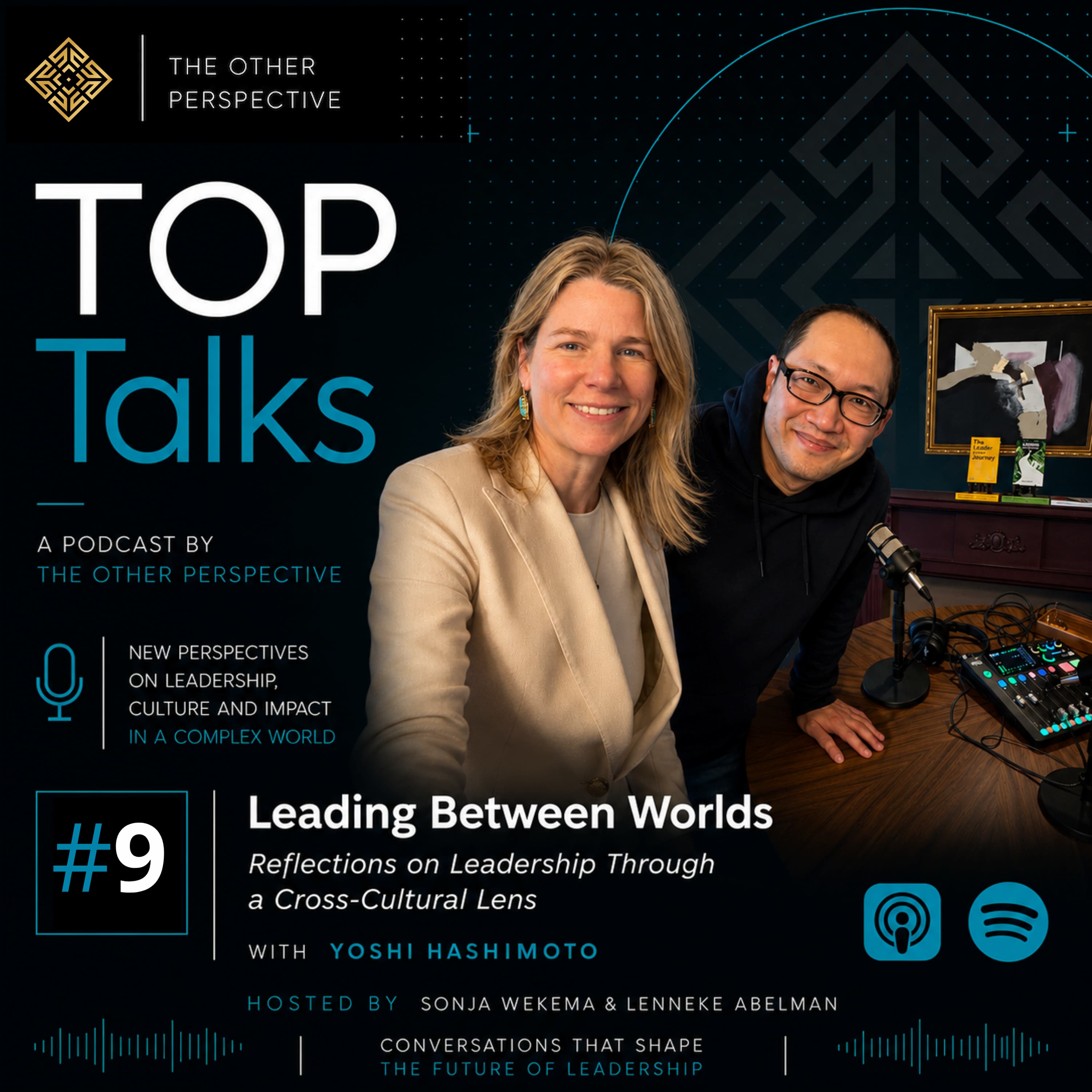
Over deze aflevering
Leiden tussen werelden. Yoshi Hashimoto laat Sonja Wekema zien hoe een cross-culturele blik westerse leiderschapsaannames kantelt — over stilte, hiërarchie en wat we missen als we alles in modellen willen vatten.
Luister verder
Aanbevolen afleveringen over verwante thema's
 00522:41·EN
#5 Clarity Before Certainty: How to Lead and Decide When You Don't Have All the Answers met Krasi Bozhinkova
Helderheid voor zekerheid. Krasi Bozhinkova deelt met Sonja Wekema hoe je leidt en beslist wanneer je niet alle antwoorden hebt — en waarom clarity before certainty essentieel is in een wereld die vraagt om wendbaarheid, niet om perfectie.
AIInnovationENLuister 00217:03·NL
#2 Menselijk blijven in een wereld vol AI met Marly Teunissen
AI is allang geen toekomstmuziek meer — het verandert nu al hoe we werken, leren en leidinggeven. Sonja Wekema gaat in gesprek met Marly Teunissen over de impact van AI op organisaties, medewerkers en leiderschap. Niet vanuit hype of angst, maar vanuit nieuwsgierigheid, kritisch denken en menselijke ontwikkeling. Over relevant blijven, samenwerken met AI zonder blind te volgen, en de menselijke kant van technologische verandering.
AILeadershipNLLuister
Transcript
Yoshi Hashimoto on leading between worlds. Topics: cross-cultural leadership, silence, hierarchy and the limits of Western leadership models.
Full transcript available in Dutch and English.
ENRead the full conversation
Transcript EN — Leading Between Worlds
Yoshi Hashimoto on leading between worlds. Topics: cross-cultural leadership, silence, hierarchy and the limits of Western leadership models.
Sonja Wekema Welcome to TOP Talks, the podcast by The Other Perspective.
Sonja Wekema Today, I'm here with Yoshi Hashimoto. Welcome, Yoshi.
Yoshi Hashimoto Thank you Sonja. It's great to be here.
Sonja Wekema And nice to have you here. The sun is shining and we are here in the Hague. I invited Yoshi because he's part of the network of The Other Perspective, and we work together with different clients, executive coaching clients, but also international clients where we do leadership development programmes and cultural differences. Maybe it's nice to give you a bit of a view or a feel for how we got to know each other. So, maybe you can say a little bit about that, Yoshi.
Yoshi Hashimoto Yeah, of course. We have a common friend and she and I were working on a project and I think at that time you were already working for a Japanese company and you were working with her as well. So she decided that it might be a good idea for you and I to get to know each other. I remember getting on a call together.
Sonja Wekema Yeah. A seed was planted. I think that's also what life is all about. Really just finding out like, Hey, who are the people that you have a nice connection with, where you share the same values maybe and who want to drive the same things you want to drive. And I think in our situation it's having that international focus, you having lived and worked in different places, so did I, but of course in a different way. And really being curious about each other's story and seeing how the privilege that we have, how we can share that with others as well and learn from those others, simultaneously.
Yoshi Hashimoto I think you raised a good point about planting the seeds and also learning from each other and from others. Looking back, if this was something where I was strictly focused on business acquisition or getting something out of the initial conversation, it probably would have gone nowhere. I think the catalyst was actually a book that you published after COVID. And that got me even more curious into the work that you were doing.
Yoshi Hashimoto What is a wicked world?
Sonja Wekema Whenever you think that you understand what's happening, time and the world has already shifted again. You cannot just sort it all out by yourself. And I always say it's like you have a piece of soap in your hands and it's still a bit wet, and every time you think I have it, I caught this piece of soap, it's just escaping from your hands again. So who's catching it?
Yoshi Hashimoto I like the soap metaphor, and it makes me think about this idea that no matter how many times you try to clean your hands, the moment that you walk out of the bathroom, go out in the world, you're already encountering a new situation. And every time it slips out of your hand you need to go grab it, but because you've used it once, the shape is different and the texture is different. Just because you started to talk about your book, maybe this is a good opportunity to ask you about your leadership journey as well. What brought you interested in cross-cultural differences, having been born and raised in the Netherlands? Curious to learn about that as well.
Sonja Wekema That's a question I ask myself all the time. Because my parents were born in the same village in the northern part of the Netherlands. What I do know is that because my parents came from the north of the Netherlands and I grew up in the eastern part in Twente, I was always quite intrigued by the different dialects, by the different ways of doing things, especially in the northern part. And living in the eastern part of the Netherlands, they also had a different dialect. I was always a bit part of those two different groups, but still also separate from it, and had to work out how to adjust as a child. I don't know, I was already intrigued by all the differences. And I also remember that around the age of 10, I was already sending letters to the House of Europe here in the Hague, because I wanted to know what Europe was really all about. How do all these countries connect? And how can I learn to speak different languages? So when I was little, I wanted to be fluent in French. But it was a bit of a pity, because I had teachers who at some point even asked me, okay, what exactly are you doing here at the university studying French? The reason I think they asked me is that my fellow students all went to France to become an au pair, but I was never an au pair. I just wanted to study international relations, and in my first year I needed to do a foreign language. So I thought, let me just do French, because my highest grades at school were more or less in French. If teachers don't really see you for who you are, it's quite tough to finish whatever you want to do. So there's also a contextual element of creating a safe space for children to learn. That is also something that has sparked my interest. And not just for children, also for people in organisations and for leaders in organisations. Because in the 25 years I've now worked, what I see in some organisations is that people look at their managers and leaders like: hey, they know it all, they should tell me what to do. But these leaders have not always had the privilege to get the training or the sponsorship they need. So working in a system like that is quite tough for some people. And also not knowing what you're maybe supposed to know, that's really difficult too. So it's about creating that shared language, shared understanding, so that people can also say: hey, I don't know. I think that's the red thread throughout my whole career.
Yoshi Hashimoto Wow, that's a fascinating story. I think for me, coming from outside the Netherlands, I hadn't appreciated how different the regions are, because in a way it's a relatively small country with one language spoken throughout. So it didn't even occur to me that a cross-cultural, multicultural experience of difference can exist within a country like the Netherlands as well. And it's also nice to hear that evolution, from there all the way to Europe, French, and then thinking about the safe space you want to create. Because I know we talk a lot about psychological safety in the work that we do together.
Sonja Wekema Yeah. And I can also imagine that people who haven't been to Europe, or maybe just as a visitor or tourist, might think that Europe is one country, and then coming here, living here, you find out: oh wow, they're all different countries with their own systems, their own languages. And of course we now have more or less the same currency, which wasn't the case when I grew up. So how was that for you, finding out: hey, where do I fit into this thing that's called Europe?
Yoshi Hashimoto Such a great question. It was a little bit by coincidence that I ended up in the Netherlands. I was working for a Dutch company, I had an opportunity to transfer internally, and I didn't think much before moving here. Now, what I'm discovering as I travel a little more throughout Europe is how well organised and structured Dutch society is. Everything is done very professionally, it's efficient, it's productive. That wasn't something I was expecting when I first moved here. I was maybe expecting people to be a bit looser with time, appointments not always being honoured, especially when it comes to people coming to do work at your house. So that was already a bit of a surprise, but then I started to make sense of it. Coming from Japan, we also say there are a lot of commonalities between Japan and Germany, in terms of seriousness, structure, and those kinds of elements, and I wondered if it has to do with proximity to Germany, or a similar culture. But for me, having lived in the United States and in Japan, the Netherlands feels like a perfect middle ground, the best of both worlds. People mind their own business, but also have a very strong cultural connection with neighbours, coworkers, colleagues and friends. A lot of structure, but also a lot of freedom in how you operate. Very cosmopolitan, especially in the areas I've been to. But I understand from your story that if you go east or north it might be a bit different, so perhaps I'm only seeing part of the Netherlands. But I experience it as a nice mesh of the more extreme western stereotype I had, and the eastern upbringing I carry with me. So I find it very comfortable, and yes, I feel like this is now my second home.
Sonja Wekema It's nice to hear, and I think what you say is true. Coming from Twente, the eastern part of the Netherlands, and starting to work here in the Randstad, as we call it, that's Amsterdam, the Hague, Rotterdam, that area, that's the Randstad. For me it was some sort of culture shock, because the way I grew up was: just work hard, keep your head down. People will see that you're doing a good job, and then you'll get a promotion or new chances. I remember starting to work as a consultant after my studies. I thought, okay, I'm working really hard, I'm not really asking for anything, so they'll come to me and say, oh, you can do this job, or that project, or this piece of education. Nothing happened. For me it really felt like: I'm earning money for you, but I'm not getting that much in return. And once I started to understand how it worked, those are the unwritten rules really, by observing a lot, listening to people, and finding out how other people did this. I remember asking a mentor of mine, how do I deal with this? And he said, just think about what you want to do, and then ask people what kind of training, studies or courses they've done, and maybe make a list and put it in front of your manager. So I finally did that, and it was 2001, so I'd only been there half a year when 9/11 happened. Especially the consultancy business, and I was in the financial sector at the time, was hit quite quickly. There was no funding, no budget left. So I couldn't do anything. I studied communications, and at the time I was working as an HTML and JavaScript programmer, 40-plus hours behind a computer, until someone, this was at Capgemini, and that was after Enron, so Capgemini Ernst & Young was the company I was working for then, because there was no client hiring us anymore. I was asked to work in the communications department at Capgemini, and there I got to know someone from the former Ernst & Young consultancy practice. She said: did you study communications? What are you doing there 40 hours a week behind a computer, programming? You have people skills, you should be doing something else entirely. So they adopted me into that former Ernst & Young practice. She asked, do you have any ideas about what you'd like to learn? So I had my list. She said, we have this RA, a register accountant, I don't know if that's also an English term, but if he says yes, you'll become part of our practice, and then we'll also have the budget for whatever you want to learn. I thought, wow, and that within the same organisation. So I went to see this person, and my boyfriend at the time was also studying accountancy, so I knew a bit about how these people function. We had a really nice conversation, made some jokes, and at some point he said: okay, so what about your future? I gave him my list, and he said, okay, we'll hire you, we'll take you from financial services. Where do I sign? So all of a sudden, from not being able to do anything, I could do everything I wanted. That's one of those memories I keep thinking back to. It was within the same business, but because of a merger, there were two completely different cultures. And it really depended on where you were in the organisation, what your context was, who you were working with, and what kind of opportunities that might open up in your life. And I use that in the work I do today.
Yoshi Hashimoto It's such an interesting story in so many ways for me, because I'm hearing: planting the seeds, studying communications, sticking to what you believe, what you enjoy, your values, and also a little bit of luck if it comes your way.
Yoshi Hashimoto And when you said that back in the east of the Netherlands, if you work hard and do the right thing, people will recognise it and you'll be rewarded accordingly, that's a little bit of the same culture I grew up in. My own story was put to the test when I did an MBA in the United States. It was a two-year MBA, and after the first year I decided to apply for a leadership position for the student body. It was a very popular position, so there was a robust recruitment process run by the second-years. There were interviews, role plays, activities. I made it through to the final round of the selection, was waitlisted as the final decision, and then eventually never got in. I was quite upset and disappointed about the whole thing, so I went to ask for feedback, like I always do when I don't agree with someone. And the second-year representative said something very interesting. He said he recognised what I'd been doing in terms of leadership, trying to support the group from the back and making sure things ran smoothly, but that in their context, that's considered invisible. So all of a sudden, leadership in the United States was, for me, a very stereotypical style I had imagined: being at the front, raising your voice, pulling people together, marching as the first person in the row. That stayed with me for a long time as probably something I should adapt to, maybe something I needed to learn as part of my skillset, but I was still not entirely convinced that's the only way to lead an organisation or a team. That lesson carried forward as I entered the corporate world, at the Dutch company that brought me to the Netherlands. I kept thinking: how do I play a leadership role that feels natural to me? I don't think I ever found the right answer. But over time I started to get feedback appreciating my more 'lead from the back' style, the more empathetic style of listening carefully and bringing people along with you instead of leading them. I think that experience is probably what really brought me to where I am today. And I connect that with your story, because again, it's a story about perhaps not getting what you wanted, sticking to your principles, and then opportunity and luck coming your way, and the recognition that how you are as a leader is not just good enough, but actually quite effective. That's the message I want to give to many leaders out there, especially those encountering international situations, cross-cultural differences, and a changing world, VUCA and wicked, as you said.
Sonja Wekema So one of the things I'm always really intrigued by, as I mentioned before, is other cultures, other languages. I remember sitting in an office in Utrecht years ago trying to study Mandarin, but I quit quite quickly, because the progress was really slow. Every lesson I think I learned one word. And of course, I wasn't in China, I was planning to go there to do an MBA and finish it around 2008, when the Olympics were starting. But it never happened. So that's one of those doors that closed at some point. But of course for you, living here in the Netherlands and trying to learn Dutch, coming from a Japanese background but also having lived in Canada and the US, how was that for you, starting to learn Dutch, and how's it going?
Yoshi Hashimoto That's a question I hoped you wouldn't get to. I've been here for nine and a half years, almost ten, and my Dutch fluency, I'd still call it beginner level. I attribute that mostly to how fluent you all are in English. Of course that's an excuse on my end, but I think there's also something real in it: the sense of urgency, that's what's really been missing for me to learn Dutch. I do pick up words through my daily grocery runs. Sometimes I try to listen very carefully to conversations in Dutch between my Dutch friends, to see if I can pick something up. At one point I was on Duolingo quite consistently, but I realised that unless you actually use the language, you don't really learn anything. So that left me with maybe ten words I still remember. Learning Dutch has always been on my New Year's resolution list, one I never got to. And now that I've left the corporate world and I'm building my own business in the same field as you, leadership development and executive coaching, partnering with The Other Perspective, I sometimes think about how much would open up if I could hold a conversation in Dutch, and how much opportunity there would be if I could actually coach in Dutch. So that's giving me a new sense of motivation, I'd say.
Sonja Wekema Yeah. So the urgency to reach a bigger market, and to really belong here, that might help you.
Yoshi Hashimoto Yes. And that's also an interesting question, because there's always a part of me wondering: do I even want to become fluent in Dutch, when I still fully identify as Japanese? My wife and I talk about this quite often. We both feel this is a good place for us to live for the foreseeable future, but we can't really picture retiring here. So when you know there's potentially an end point, how much do you invest in that integration, especially language-wise, when everyone is so fluent in English?
Sonja Wekema Let's talk about something nice, something positive. Where do you really get a lot of excitement or joy from? What do you really love? When are you at your best?
Yoshi Hashimoto Let's see. I think there are three categories. One is actually parenting. I have two kids, twins, a boy and a girl, almost hitting their teenage years, so you can imagine there'll be some challenges as they grow. But I find myself most relaxed, most like myself, when I'm around my kids. They don't want to talk to me as much as they used to, but they're still happy to join in on family get-togethers and outings. I take the kids to Japan to meet their grandparents, and just seeing and holding the family together, that engagement from a calmer perspective, is where I really recharge my energy. It's just such a joyful thing to be part of. I'm quite involved in the parenting itself too. One of the things my kids have taught me is that I actually thought I was a very calm person who never gets angry, but I find myself raising my voice to my children, and I've learned to accept that as part of who I am too. So that's category one. The second category is health and fitness. That's something I probably only really picked up after I came to the Netherlands. I played sports occasionally before, went to gyms every now and then, had memberships at various gyms that I cancelled after a few months and then signed up again. But since I landed here, I've been quite consistent. And it brought me a couple of benefits I hadn't expected, beyond getting fit. One was the community element. I go to a CrossFit gym, so we do group workouts together with other members. And going back to your Dutch question: it gave me the chance to become part of a local Dutch community. These are people who were born and raised here in Amstelveen, whose parents live here, who went to the local schools, or whose kids go there now. They're open-minded, very welcoming, and it gives me a real sense of connection to Dutch society and Dutch culture. It's a place I don't want to miss, I literally block it in my calendar, to make sure I don't miss that chance to both work out and stay connected to this local community.
Sonja Wekema So consistency here is really the key? And how come you were a member of so many different fitness clubs before, and what's really different about this one, that you enjoy it so much, when you probably could have met plenty of people at those other memberships too?
Yoshi Hashimoto I think the word community really jumps out for me, because those other gyms are your typical gym memberships, where you visit during a set hour, you walk in, maybe do a personal training session or join a group class, but you end up just doing something for yourself. You walk in, you walk out, and you might barely speak to anyone in the process.
Sonja Wekema So you're really part of it now?
Yoshi Hashimoto Exactly. Whereas at this gym, even the owner wants to build a community. It lets people check their egos at the door before they walk in, and you're there for three things: number one, to do your best. Number two, to enjoy the process. Number three, to engage with the people around you. So I think that setup is what makes it so different. And now I'm also thinking about how much the owner's vision plays into that whole process.
Sonja Wekema What's your number three, then?
Yoshi Hashimoto Number three is really a manifestation of that global, international, cultural side of things: travel. Not just seeing different places, but actually eating the food from different countries and regions. I wouldn't call myself a huge foodie, but I do enjoy trying different cuisines and different meals. So I make a point of trying something from the local cuisine wherever I travel. Sometimes it's fantastic, other times it's more of an experience to remember, but not repeat.
Sonja Wekema Yeah. You can probably already guess what question is going through my mind now.
Yoshi Hashimoto Okay.
Sonja Wekema What would be your favourite Dutch element of our cuisine, if we have one? And what do you really not like?
Yoshi Hashimoto I really enjoy Dutch fried food. It's delicious, it's unhealthy, it goes well with whatever you're drinking, it's social, and it's actually quite creative too, with the croquettes and the bitterballen and the loempia and all of that. But I also don't like it, because it's simply not healthy for me. I love mustard soup, for example, something I've never had anywhere else. The apple tart is something I really enjoy too. But the reason I find fried food interesting is that it also feels like a mix of different cultures, there's clearly some Indonesian influence in there. I enjoy that diversity that's somewhat baked into Dutch culture too.
Sonja Wekema So one of the things we also did together is help European leaders get a better understanding of Japanese business culture.
Sonja Wekema And you worked with us explaining different terminology and different ways of leading in Japan. I think it might be nice for the people listening: what are the basic concepts that are really relevant to understand when you start working with Japanese organisations or Japanese leaders?
Yoshi Hashimoto I'm smiling a little bit, because whenever this topic comes up, I always add the caveat that things are changing quite rapidly, and the more startup-like organisations, the family-owned businesses, have a different culture. But if we're talking specifically about larger, established organisations, what we sometimes call traditional Japanese companies, they do have certain cultural elements and leadership styles. One is the hierarchy and the seniority-based structure, which comes from how people grow and develop within the organisation. In the past, when Japan had a growing economy, what you basically did was hire people straight out of university, and they gradually climbed the organisation, took on more senior roles, and eventually the people who'd stayed the longest, who had the most track record and the most support, would become CEO. That seniority system is still very present, and it's not just about age or years spent, it's really about the respect for the experience those people have built up in the organisation. So that's something to be mindful of, and it's why you might see, when working with a Japanese company, people becoming very hesitant to skip a layer to reach a faster decision, because that's essentially seen as
Sonja Wekema disrespectful.
Yoshi Hashimoto Exactly.
Sonja Wekema This is primarily linked to what you'd call the traditional companies. So what do you see now in the newer organisations, startups, maybe the leaders you work with? How do they operate, and what's maybe a new way of working in Japan?
Yoshi Hashimoto I think it's a bit of a coexistence between the traditional approach we just talked about and a more merit-based approach, closer to the style you see primarily in the United States. The important thing in this context is that the job market has become more liquid than it's ever been. When I talk about traditional Japanese companies, especially for people a bit older than me, the norm used to be that you'd join a company after graduating from university and stay in that organisation until retirement. And there were a lot of other things, like the salary structure, that reinforced that lifetime employment, as we call it. Now the job market is completely open, so people are free to move from one organisation to another. And I think that's really created a new dynamic, where even culturally, people are looking for the best opportunity, the most exciting job, the best pay.
Sonja Wekema What caused that shift? Was it new legislation, or the availability of people, or?
Yoshi Hashimoto Yes, there are many factors, but part of it is the declining growth of the economy. Lifetime employment works when you're growing year over year, so you're essentially guaranteed growth and an accumulation of pension and wealth by staying in one place. The business was also expanding, so if you stayed, more opportunities would come up as you gained experience. And in those days, people in Japan didn't really specialise early. HR would decide what your next role was, and you'd rotate from business unit to business unit, function to function. So it was much more of a centrally-led, generalist management development style, run by HR. Whereas now, with Japan's growth rate being very low, the economy struggling to some extent, there's actually more risk in staying in one organisation than in taking your talents out into the market and trusting there's demand for you as human capital. So I think the macro backdrop has changed.
Sonja Wekema So there's also a bit of an entrepreneurial spirit emerging, if I understand correctly?
Yoshi Hashimoto Yes. I think the entrepreneurial spirit is also emerging, and interestingly, a lot of the famous Japanese organisations, Toyota, Sony, Panasonic, were all founded by very charismatic entrepreneurs, just a long time ago. So I think the DNA is still there, and we're seeing more and more new entrepreneurs making a real splash in the market. Fast Retailing and Uniqlo come to mind as a global brand, not everyone knows it's Japanese, but it is. And I think when you see that kind of success, and the job market is open and the economy is global, people start to explore a bit more, especially those with the courage, or who want something different. And gradually you start to build a culture where that's more accepted, more encouraged.
Sonja Wekema Yeah.
Yoshi Hashimoto And people feel confident to do it themselves too.
Sonja Wekema So if people wanted to be coached by you, what exactly do you do? Who are your typical clients? What makes you unique in the coaching market? Because there are so many coaches, and not that many with a Japanese background who've also lived and worked in the US, Canada and the Netherlands. So how would you introduce yourself, or talk about yourself, as a coach or a professional?
Yoshi Hashimoto The first thing is something you already touched on: the appreciation and experience I have from living in three distinct cultures. One is Japan, of course, the second is the United States, and you could probably include Canada in there too, although I know my Canadian friends would be a little offended by that. And the third is Europe, specifically the Netherlands. And that's not just a one-year exchange in each region, I've lived in each place for at least eight or nine years, either being educated there or working there professionally. I think that gives me a unique perspective to appreciate the differences and the commonalities, and there are many, across these different cultures. So that's circle number one. Circle number two is the business experience I bring. There's a bit of a stereotype that people in the coaching profession often come from a more people-related business background, and while those people bring a lot of value and unique experience, mine is different: I was an investment banker for eight years. Towards the end I was leading deal teams on international, cross-border M&A transactions. I also worked at a Dutch corporate in a global role, leading about 35 people in marketing. Before marketing, I did strategy, business development, sales, operations. So having that hands-on business leadership experience, along with operational experience across different business functions, is something I can bring to the table that a lot of people appreciate. That's number two, the second circle in the Venn diagram. The third piece is maybe harder to distinguish from others, but it's my genuine passion for seeing people fully realise their potential by finding hope in their own capabilities. And that comes from my own experience. When I first moved to Canada at twelve, I immediately started getting bullied, because I didn't speak the language. It was an area with no Asian kids at school, except maybe one Korean girl and one Indian boy. So it was easy for people to make fun of me, because I didn't speak the language and I looked different. It took me a while to get over that, to feel capable in that setting. But the moment I found some hope, very typically, I was exceptional at maths for my age, and I'd played soccer for a while in Japan as a kid, and Canada isn't known for soccer, so I was probably the best player there. Those kinds of things built my confidence, and having that confidence, having hope in my own ability, really allowed me to bring out my full potential as a junior high school student, to the point where I remember those days as some of the best of my childhood. So, long story short, I'm very passionate about that kind of experience, and it applies to leaders too. Leaders, like we just discussed, question themselves a lot: am I doing the right thing, is my leadership suited to this context, a VUCA context, a cross-cultural context? And I think the work we do, as a leadership consultancy in executive coaching, really supports and empowers leaders to believe in themselves and in their own unique leadership style.
Sonja Wekema Yeah, I think you have a pretty clear picture of that. And what I also hear, between the lines, is adversity. Being bullied at such a young age because you're different, but still finding a way to become resilient, to trust your own abilities through your own skillset. And for people in general: whenever you're stuck in a situation, there's always another way out of it. The only thing is, you need to find either something in yourself that pushes you forward, or trusted people around you who can help you get out of it. So how does that translate for people who might be listening to us talk about this? Are there elements in yourself that you can be proud of, that you can build your own confidence on, that help you take that next step? It's quite inspiring, actually.
Yoshi Hashimoto I think the interesting thing is that these things which ended up being my strengths in that moment were things I hadn't even realised were strengths, or something that would help me build confidence. So this story is a bit of hindsight. But maybe what our work does is help leaders identify strengths they might think, you know, there's nothing special about this. But in reality, when you sit with that, look at it carefully, or hear another perspective on it, it actually shines in a way you hadn't noticed, and that starts to spark a lot of strength and resilience in that person.
Sonja Wekema Yeah. Now that you say this, I remember I've worked quite a bit with operators in factories. I work with boards and mid-level leaders, but I really enjoy also working with the people working with the machines, because that's also where a lot of important work happens. I remember working for a Japanese organisation once, we didn't see any Japanese people in that European branch at the time. This organisation was really struggling. People were afraid, and we called it a neglected organisation. I remember telling them that they might be in a neglected organisation, and I remember putting my hand over my mouth right after, because I was a bit shocked I'd actually said that to them. And people were like, oh, finally someone's telling us we're not crazy. Then I went to see the operators, and a lot of them weren't very happy, they were quite sad, but also really loyal, because they'd worked there forever and had seen some elements of improvement, but they didn't have the language to talk about it, or to make their work and their productivity better. But when I worked with them, initially in about thirty-minute conversations, and in a lot of cases these were older men, and I really asked them, okay, what makes you proud, what do you enjoy, where do you get your energy from, suddenly there was a sparkle in their eyes. I really saw the child in them again. And I told them: when you talk about this, I can see how happy you can be. And in most cases, and this wasn't my intention, they started crying, because they felt, again, who they really were on the inside. And then they asked me: okay, now you know this, how can you help us make this a better place? And then, in co-creation with them, because they had all the knowledge and experience, and I understood how decision-making processes work in these kinds of organisations, it takes quite some time, but if you're resilient and you keep having those conversations, checking in every now and then to see if they're really speaking their mind and if people are being taken seriously, you can do a lot. A few years later I went back to one of these organisations and asked, okay, how's it going now? And they had actually changed their processes and felt they were in a better place. So really finding people's own potential, the things that matter most to them, and helping them voice it, I think that's really important. How does that work, and how do you create a good space for yourself, and ultimately for your colleagues and your organisation?
Yoshi Hashimoto Absolutely. Isn't it incredible how, in your story, it's the people themselves who don't ask the question that put that spark in the operators' eyes? And I think that's the role we can play in our job, asking those questions so people can reconnect with what matters to them.
Sonja Wekema Yeah. And there's a huge cultural element to this too. When I ask them, why don't you ask that kind of question, they say, I don't want to raise expectations, I don't want to promise something I can't really commit to. And so none of these questions get asked. And then you get the stagnant organisation. Nothing happens. People just keep showing up year after year, nothing changes, until, like you mentioned in the Japanese context, and of course we see that here too. I know quite a few people around me who've worked somewhere for twenty-plus years, and when I ask them, so what are you doing about your own personal development, in a lot of cases they say, well, my company will take care of me. Which used to be true, in government organisations, in big corporates. But that's not how it works anymore. Business operates differently these days. Reorganisations happen all the time. So these people, who were so loyal and worked there for maybe twenty years, at some point become redundant. And then the question becomes: who am I, really? And how do I find a new job? Not fresh out of university or some training programme, but if you suddenly have to do all that soul-searching, the younger generation might already be ahead of you. I see a lot of people struggling with this. Is that something you see too, for instance when you're coaching people?
Yoshi Hashimoto Yes. I think the question of what you truly want to do is a difficult one for a lot of people, especially in Japanese organisations. I had the chance recently to work with a very well-established, well-regarded Japanese company, with senior leaders in that organisation. And when I asked that question, they all really had to dig deep to remember why they wanted what they wanted, instead of just quickly answering: as an employee, I want to do what's best for the organisation. So yes, that's a real struggle. And it's also fine to be at that stage, at any point. Great if you can figure it out early, but as the world changes, you change too. So it's probably more about having the opportunity, or having someone ask you that question, and then you can pick it up from there. So I try not to make people feel wrong for not having the answer, because I didn't have it for the longest time either, and honestly, my own answer is probably still evolving as we speak.
Sonja Wekema Yeah, and if you look at what's happening, geopolitically or technologically, I think philosophers and historians agree that people will need to reinvent themselves at least three times in their life. And you also see now that a lot of roles are disappearing. How do you find another job? How do you upskill or reskill? How do you do that for yourself, but also, as a leader, how do you do that for your workforce? And what you also see is that big organisations wanting to innovate at some point need to say goodbye to certain people to take that next step. And coming back to the human side of it: I remember working as an HR leader at some point in my career, and I was part of a reorganisation committee. At some point I woke up in the middle of the night, quite afraid, because the question that kept haunting me was: is this a person, or is this a number? It just kept repeating: is this a number, is this a person? I woke up sweating, thinking, I don't want to see people as numbers, because I'd been in a position myself where I felt like a number. But who are you, really? And do people really see what you're worth? Giving people that sense of being seen, everyone wants that, no matter what role you're in, no matter how high or low up you are in an organisation. And I'm quite privileged now to be able to have these really honest conversations with senior leaders, men and women. But if you're in a role like that, it's quite an isolating position, and it takes real courage to admit you also don't know what's coming next. That's the other side of it. And bringing those two sides together, having that dialogue, that's really what I feel I have to do in the work I do.
Yoshi Hashimoto I find that especially the more senior leaders get, the lonelier they are, even if they don't realise it. One of the common questions we ask in coaching, whenever there's a topic and an action agreed on, is: how do you want to hold yourself accountable, or what structure is there to support you? And a lot of leaders struggle to think of someone they can depend on, someone they can go and ask for help. They take all the responsibility onto themselves to figure out the right answer, when, as you probably know, there's no single right answer, otherwise we'd all be successful. And helping people, and leaders, realise that you're not perfect, you don't have all the right answers, but you're doing your best, and that's good enough, I think that's also an important part of what we do.
Sonja Wekema One of the things I always find intriguing is when you ask a senior leader who gives them feedback, who they actually accept feedback from, and how they treat those people. There are still organisations where there's only yes-men around the top leader, the old boys' network or whatever you want to call it. And in some of those networks, there are always these old friends who can say anything, which is fine, but they're also the yes-sayers, not the naysayers. And then, until it's too late, the organisation might go bankrupt, or simply miss the boat. So really making sure there's someone who keeps you sharp. There's a quote, I don't remember who said it, something like: who's really being honest with you, apart from your mother? I really like that one, and I use it myself sometimes, but I think it's a fair question. And what you're saying about people feeling lonely, and asking other people, or asking us as executive coaches, who can I trust? That's quite sad, to be honest.
Yoshi Hashimoto Absolutely. Yeah.
Sonja Wekema Okay. Thank you for this really in-depth conversation. I think we touched on quite a lot of different things: how we met, what the differences are, the different cultures we've worked in, the dynamics we see around leaders, organisations and leadership right now. And of course there's much more we could discuss, so maybe it'd be nice to see each other again in a few months, and hear what's on your mind at that point. For now, thank you very much, Yoshi, for joining me on TOP Talks. Maybe you have one last question, reflection, or something you'd like to leave the listeners with?
Yoshi Hashimoto Thank you, first of all, Sonja, for having me. This was my first ever podcast recording, so I was quite nervous, and I'm not sure I was able to articulate everything I wanted to, how I truly feel. So I'd really appreciate the chance to reconnect and maybe continue this dialogue, because it's been a lot of fun. Even though I thought I knew you quite well, there are new things I'm learning about you, and maybe that goes both ways. So that's my thank you, and my appreciation for this opportunity, and hopefully for what's next. Maybe the one thing that's staying with me now is something I mentioned earlier: for us, asking the questions that put a sparkle in someone's eyes, or bring them into reflection, is an important part of our job. This conversation today felt a bit like that for me too. And maybe that's an invitation: if anything in today's dialogue, or any of the questions we asked each other, sparks some kind of reflection for the audience, that would be fantastic. I hope it's not just about us telling our story, but a way for people to use this as a mirror too.
Sonja Wekema Thank you very much. And self-reflection, that's also something we see with some of the organisations we work with. It's something you need to grow into. Initially a lot of leaders say, oh, only if I have time will I take a moment for self-reflection. But the longer you work with these people, and the more often you ask, how's it going with your self-reflection, the more I hear them say it's now part of what they do day to day. And without self-reflection, I can't be efficient or effective anymore. So it's a muscle to train. Thank you for pointing that out, and we'll definitely continue this conversation.
Yoshi Hashimoto Terrific. Thank you.
Sonja Wekema Thank you. This was TOP Talks. Leadership grows in conversation, not in isolation. Subscribe to TOP Talks on Spotify, Apple Podcast, and follow The Other Perspective on LinkedIn for more on leadership in a complex world. Until next time.
---
NLToon transcript
Transcript NL — Leiden tussen werelden
Yoshi Hashimoto over leiden tussen werelden. Onderwerpen: cross-cultureel leiderschap, stilte, hiërarchie en de grenzen van westerse leiderschapsmodellen.
Sonja Wekema Welkom bij TOP Talks, de podcast van The Other Perspective.
Sonja Wekema Vandaag zit ik hier met Yoshi Hashimoto. Welkom, Yoshi.
Yoshi Hashimoto Dank je, Sonja. Fijn om hier te zijn.
Sonja Wekema Fijn dat je er bent. De zon schijnt en we zitten hier in Den Haag. Ik heb Yoshi uitgenodigd omdat hij deel uitmaakt van het netwerk van The Other Perspective. We werken samen aan verschillende opdrachten: executive coaching, maar ook internationale trajecten waarin we leiderschapsontwikkeling en cultuurverschillen combineren. Misschien is het leuk om de luisteraars een beeld te geven van hoe wij elkaar hebben leren kennen. Vertel eens, Yoshi.
Yoshi Hashimoto Ja, natuurlijk. We hebben een gezamenlijke vriendin. Zij en ik werkten samen aan een project, en volgens mij werkte jij op dat moment al voor een Japans bedrijf en ook met haar samen. Zij vond dat het een goed idee was als wij elkaar zouden leren kennen. Ik herinner me nog dat we samen aan de telefoon zaten.
Sonja Wekema Ja. Er werd een zaadje geplant. Dat is denk ik ook waar het leven om draait: uitzoeken met wie je een klik hebt, met wie je misschien dezelfde waarden deelt en wie hetzelfde wil bereiken als jij. In ons geval is dat die internationale focus. Jij hebt op verschillende plekken gewoond en gewerkt, ik ook, alleen op een andere manier. En vooral die nieuwsgierigheid naar elkaars verhaal: hoe we het voorrecht dat we hebben kunnen delen met anderen, en tegelijk ook van hen kunnen leren.
Yoshi Hashimoto Je noemt een goed punt over dat zaadje planten en van elkaar leren, en van anderen. Als ik terugkijk: als het puur gericht was geweest op klanten binnenhalen of iets uit dat eerste gesprek willen halen, was het waarschijnlijk nergens op uitgelopen. De echte katalysator was volgens mij een boek dat jij publiceerde na corona. Dat maakte me nog nieuwsgieriger naar het werk dat je deed.
Yoshi Hashimoto Wat is eigenlijk een 'wicked world'?
Sonja Wekema Op het moment dat je denkt te begrijpen wat er gebeurt, is de tijd en de wereld alweer verschoven. Je kunt het niet alleen uitzoeken. Ik zeg altijd: het is alsof je een nat stukje zeep in je handen hebt. Elke keer als je denkt: ik heb het, ik heb dit stukje zeep te pakken, glipt het weer uit je handen. Dus wie vangt het op?
Yoshi Hashimoto Ik vind die zeepmetafoor mooi. Het doet me denken aan het idee dat hoe vaak je je handen ook wast, op het moment dat je de badkamer uit loopt en de wereld in stapt, je alweer een nieuwe situatie tegenkomt. En elke keer als het uit je handen glipt, moet je het weer oppakken. Maar omdat je het al één keer hebt gebruikt, is de vorm anders en de textuur anders. Nu je toch over je boek begint: misschien is dit een goed moment om je iets te vragen over je eigen leiderschapsreis. Waar komt jouw interesse in cross-culturele verschillen vandaan, terwijl je zelf in Nederland bent geboren en getogen? Dat ben ik ook benieuwd naar.
Sonja Wekema Dat is een vraag die ik mezelf ook voortdurend stel. Mijn ouders zijn geboren in hetzelfde dorp in het noorden van Nederland. Wat ik wel weet: doordat mijn ouders uit het noorden kwamen en ik zelf opgroeide in Twente, in het oosten, was ik altijd al gefascineerd door de verschillende dialecten en de verschillende manieren van doen, zeker in het noorden. En in het oosten van Nederland hadden ze ook weer een ander dialect. Ik hoorde altijd een beetje bij die twee groepen, maar stond er ook los van, en moest als kind steeds bijstellen hoe ik me aanpaste. Ik weet niet precies waarom, maar die verschillen intrigeerden me al vroeg. Ik herinner me ook dat ik rond mijn tiende al brieven stuurde naar het Huis van Europa hier in Den Haag, omdat ik wilde weten: wat is Europa nou eigenlijk? Hoe hangen al die landen samen? En hoe kan ik verschillende talen leren spreken? Als kind wilde ik vloeiend Frans spreken. Jammer genoeg had ik op een gegeven moment docenten die me vroegen: wat doe jij hier eigenlijk, Frans studeren aan de universiteit? Ik denk dat ze dat vroegen omdat mijn medestudenten allemaal naar Frankrijk gingen om au pair te worden, maar dat wilde ik nooit. Ik wilde gewoon internationale betrekkingen studeren, en in het eerste jaar moest ik een vreemde taal kiezen. Dus ik dacht: laat ik dat maar doen, want mijn beste cijfers op school had ik min of meer voor Frans. Als docenten je niet echt zien voor wie je bent, is het best lastig om af te maken waar je voor kwam. Dus er zit ook een contextueel element in: het creëren van een veilige plek waar kinderen kunnen leren. Dat heeft mijn interesse gewekt, en niet alleen voor kinderen, ook voor mensen in organisaties en voor leiders. Want wat ik zie, en ik werk nu al 25 jaar, is dat mensen naar hun managers en leiders kijken alsof die alles weten en hen moeten vertellen wat ze moeten doen. Maar die leiders hebben niet altijd zelf het voorrecht gehad om de trainingen of het mentorschap te krijgen die ze nodig hadden. Werken in zo'n systeem is voor sommige mensen best zwaar. En niet weten wat je eigenlijk zou moeten weten, dat is ook heel lastig. Dus het gaat mij steeds om het creëren van een gedeelde taal, een gedeeld begrip, zodat mensen ook durven zeggen: ik weet het niet. Dat is denk ik de rode draad door mijn hele loopbaan.
Yoshi Hashimoto Wow, wat een fascinerend verhaal. Ik kwam van buiten Nederland en had niet beseft hoe verschillend de regio's hier eigenlijk zijn. Het is toch een relatief klein land met één taal die overal wordt gesproken. Het kwam niet eens bij me op dat die cross-culturele, multiculturele ervaring ook binnen een land als Nederland kan bestaan. En het is ook mooi om die ontwikkeling te horen: van daar helemaal naar Europa, naar Frans, en dan naar het idee van die veilige plek die je wilt creëren. Want we praten veel over psychologische veiligheid in het werk dat we samen doen.
Sonja Wekema Ja. En ik kan me ook voorstellen dat mensen die nog nooit in Europa zijn geweest, of misschien alleen als toerist, denken dat Europa één land is. En dan kom je hier wonen en ontdek je: oh, het zijn allemaal verschillende landen, met hun eigen systemen, hun eigen talen. We hebben nu wel min of meer dezelfde munt, wat trouwens niet zo was toen ik opgroeide. Hoe was dat voor jou, om erachter te komen: waar sta ik eigenlijk in dit ding dat Europa heet?
Yoshi Hashimoto Wat een mooie vraag. Het was eigenlijk een beetje toeval dat ik in Nederland terechtkwam. Ik werkte voor een Nederlands bedrijf en kreeg de kans om intern over te stappen, en ik heb er niet lang over nagedacht voor ik hierheen verhuisde. Wat ik nu ontdek, nu ik wat meer door Europa reis, is hoe goed georganiseerd en gestructureerd de Nederlandse samenleving is. Alles gebeurt heel professioneel, efficiënt en productief. Dat had ik niet verwacht toen ik hier net kwam wonen. Ik verwachtte eerlijk gezegd meer mensen die losser met tijd omgaan, afspraken die niet worden nagekomen, zeker als het gaat om iemand die bij je thuis komt werken. Dat was dus best een verrassing, maar later begon ik het wel te begrijpen. Vanuit Japan zeggen we ook dat er veel overeenkomsten zijn tussen Japan en Duitsland, qua nauwgezetheid, structuur, dat soort dingen. En ik dacht: misschien heeft dat te maken met de nabijheid van Duitsland, of een vergelijkbare cultuur. Maar voor mij, na Amerika en Japan, voelt Nederland als het perfecte middenweg: het beste van twee werelden. Mensen bemoeien zich niet met elkaars zaken, maar hebben tegelijk een sterke culturele band met buren, collega's en vrienden. Veel structuur, maar ook veel vrijheid in hoe je je werk inricht. Heel kosmopolitisch, zeker in de gebieden waar ik ben geweest. Maar ik begrijp van jouw verhaal dat het in het oosten of het noorden weer anders kan zijn. Misschien zie ik dus maar een deel van Nederland, maar voor mij voelt het als een mooie mix van het meer extreme westerse stereotype dat ik had en de oosterse opvoeding die ik zelf heb gehad. Ik voel me hier heel comfortabel, en ja, dit voelt nu echt als mijn tweede thuis.
Sonja Wekema Leuk om te horen, en ik denk dat het klopt wat je zegt. Toen ik vanuit Twente, het oosten van Nederland, hier in de Randstad ging werken, zoals we dat hier noemen, Amsterdam, Den Haag, Rotterdam, dat gebied, was dat voor mij best een cultuurschok. Ik was opgevoed met: gewoon hard werken, je hoofd naar beneden houden. Mensen zien vanzelf dat je goed werk levert, en dan krijg je promotie of nieuwe kansen. Ik herinner me dat ik na mijn studie als consultant begon. Ik dacht: ik werk keihard, ik vraag nergens om, dus ze komen vanzelf naar mij toe en zeggen: jij kunt deze klus doen, of die opdracht, of deze opleiding volgen. Er gebeurde niets. Voor mij voelde het alsof ik geld voor het bedrijf verdiende, maar er zelf weinig voor terugkreeg. Op een gegeven moment begon ik te begrijpen hoe het werkte, dat zijn dus die ongeschreven regels, door goed te observeren, te luisteren naar mensen en uit te zoeken hoe anderen dit aanpakten. Ik vroeg op een gegeven moment om een mentor en zei: hoe ga ik hiermee om? Hij zei: bedenk gewoon wat je wilt doen, en vraag mensen welke opleidingen of cursussen zij hebben gevolgd. Maak daar een lijst van en leg die voor aan je manager. Dus dat deed ik. Dat was in 2001, en ik had daar nog maar een half jaar gewerkt toen 9/11 gebeurde. Vooral de consultancybranche werd hard geraakt, en ik zat in de financiële sector, dus dat werd snel voelbaar. Er was geen budget meer, er kon niks meer. Ik studeerde toen communicatie en werkte tegelijk als HTML- en JavaScript-programmeur, meer dan 40 uur per week achter een computer. Tot iemand bij Capgemini, dit was na het Enron-schandaal, en Capgemini Ernst & Young was toen het bedrijf waar ik werkte, want er kwamen geen klanten meer binnen. Ik werd gevraagd om op de communicatieafdeling van Capgemini te werken. Daar leerde ik iemand kennen van de voormalige Ernst & Young-consultancypraktijk. Zij vroeg: heb jij communicatie gestudeerd? Wat doe jij hier dan 40 uur per week achter een computer te programmeren? Jij hebt mensenkennis, jij zou veel meer en iets anders moeten doen. Dus zij namen mij op in die voormalige Ernst & Young-praktijk. Ze vroeg: heb je ideeën over wat je zou willen leren? Ik had mijn lijstje nog. Ze zei: we hebben hier een registeraccountant, ik weet niet of dat ook een Engelse term is, en als hij ja zegt, word je onderdeel van onze praktijk en krijg je budget voor wat je maar wilt leren. Ik dacht: wow, en dat binnen dezelfde organisatie. Dus ik ging naar die persoon toe, en mijn vriend destijds studeerde toevallig ook accountancy, dus ik wist al iets van hoe die mensen functioneren. We hadden een heel leuk gesprek, maakten grappen, en op een gegeven moment vroeg hij: en, wat wil je met je toekomst? Ik gaf hem mijn lijstje. Hij zei: oké, we nemen je aan. We halen je weg uit financial services. Waar moet ik tekenen? Van niets kunnen doen, kon ik ineens alles doen wat ik wilde. Dat is een van die herinneringen waar ik nog vaak aan terugdenk. Het was hetzelfde bedrijf, maar door een fusie waren er twee compleet verschillende culturen ontstaan. Het hing er echt van af waar je je in die organisatie bevond, wat je context was, met wie je werkte, en welke kansen dat je in je leven kon opleveren. Dat gebruik ik nog steeds in het werk dat ik nu doe.
Yoshi Hashimoto Dat is op zoveel manieren een interessant verhaal voor mij. Ik hoor er zaadjes planten in terug, communicatie studeren, vasthouden aan waar je in gelooft, wat je leuk vindt, je eigen waarden, en ook een beetje geluk als dat op je pad komt.
Yoshi Hashimoto En wat je zei over het oosten van Nederland, dat als je hard werkt en het juiste doet, mensen dat wel zien en je op waarde geschat wordt, dat is best een beetje dezelfde cultuur waarin ik ben opgegroeid. Mijn eigen verhaal werd op de proef gesteld tijdens mijn MBA in de Verenigde Staten. Het was een tweejarige MBA, en na het eerste jaar besloot ik te solliciteren naar een leiderschapspositie binnen de studentenvereniging. Het was een heel populaire positie, dus er was een stevig selectieproces vanuit het tweede jaar. Er waren interviews, rollenspellen, activiteiten. Ik haalde de laatste ronde van de selectie, kwam op de wachtlijst terecht als eindbeslissing, en uiteindelijk werd ik niet aangenomen. Ik was behoorlijk overstuur en teleurgesteld, en zoals ik altijd doe als ik het ergens niet mee eens ben, vroeg ik om feedback. De vertegenwoordiger van het tweede jaar zei iets heel interessants. Hij zei dat hij herkende wat ik deed op het gebied van leiderschap: een groep vanaf de achterkant ondersteunen en ervoor zorgen dat alles soepel liep. Maar in hun context, zei hij, wordt dat als onzichtbaar beschouwd. Ineens was leiderschap voor mij in de Verenigde Staten heel erg dat stereotype beeld dat ik altijd had gehad: vooraan staan, je stem verheffen, mensen bij elkaar trekken, letterlijk als eerste in de rij lopen. Dat bleef lang bij me hangen, als iets waar ik me waarschijnlijk aan moest aanpassen, iets dat ik moest leren als onderdeel van mijn vaardigheden. Maar ik was er nooit helemaal van overtuigd dat dat de enige manier is om een organisatie of team te leiden. Die les nam ik mee toen ik het bedrijfsleven inging, bij het Nederlandse bedrijf dat mij hierheen bracht. Ik vroeg me af: hoe geef ik leiderschap vorm op een manier die natuurlijk voor mij voelt? Ik denk niet dat ik ooit het juiste antwoord heb gevonden. Maar na verloop van tijd kreeg ik juist waardering voor mijn meer 'lead from the back'-stijl, die empathische stijl van goed luisteren en mensen meenemen in plaats van ze voor te trekken. Ik denk dat die ervaring me echt heeft gebracht waar ik nu ben. En ik verbind dat met jouw verhaal, want ook dat gaat over iets niet krijgen wat je wilde, vasthouden aan je principes, en dan komt op een gegeven moment de kans en het geluk voorbij, en de erkenning dat hoe jij bent als leider niet alleen goed genoeg is, maar ook heel effectief. Dat is de boodschap die ik veel leiders in de wereld wil meegeven, zeker degenen die te maken hebben met internationale situaties, cross-culturele verschillen en een veranderende wereld, zoals jij zegt: VUCA en wicked.
Sonja Wekema Een van de dingen waar ik altijd erg door geïntrigeerd ben, zoals ik misschien al zei, zijn andere culturen en andere talen. Ik herinner me dat ik jaren geleden op kantoor in Utrecht Mandarijn probeerde te leren, maar daar stopte ik vrij snel mee, want de vooruitgang ging heel langzaam. Elke les leerde ik zo'n beetje één woord. Ik zat toen niet eens in China, ik was van plan om er een MBA te gaan doen, en die af te ronden rond 2008, toen de Olympische Spelen daar waren. Dat is er nooit van gekomen. Dat is een van die momenten waarop een deur zich gewoon sloot. Maar hoe was dat voor jou, hier in Nederland wonen en Nederlands proberen te leren, met jouw Japanse achtergrond, maar ook met je tijd in Canada en de VS? Hoe ging dat, Nederlands leren, en hoe gaat het nu?
Yoshi Hashimoto Dat is een vraag waarvan ik hoopte dat je hem niet zou stellen. Ik woon hier nu negen en een half jaar, bijna tien, en mijn Nederlands zou ik nog steeds beginnersniveau noemen. Dat komt vooral doordat jullie allemaal zo vloeiend Engels spreken. Dat is een excuus van mijn kant, maar ik denk dat er ook wel iets in zit: de urgentie heeft altijd ontbroken om Nederlands te leren. Ik pik wel woordjes op bij het boodschappen doen. Soms probeer ik heel goed te luisteren naar gesprekken in het Nederlands tussen mijn Nederlandse vrienden, om te zien of ik iets oppik. Een tijd lang deed ik consistent Duolingo, maar ik besefte dat je pas echt iets leert als je de taal ook gebruikt. Dus daar bleven zo'n tien woorden van over die ik me nog herinner. Nederlands leren stond bij mij altijd op het lijstje goede voornemens waar ik nooit aan toekwam. Maar misschien nu ik het bedrijfsleven achter me heb gelaten en mijn eigen bedrijf opbouw, in hetzelfde vakgebied als jij, leiderschapsontwikkeling en executive coaching, in partnerschap met The Other Perspective, denk ik weleens: hoeveel zou er opengaan als ik me verstaanbaar kon maken in het Nederlands, en hoeveel kansen zouden er zijn als ik echt in het Nederlands zou kunnen coachen. Dat geeft me nu wel een nieuwe motivatie, zou ik zeggen.
Sonja Wekema Dus die urgentie om een grotere markt te bereiken en er hier echt bij te horen, dat zou je kunnen helpen.
Yoshi Hashimoto Ja. En dat is ook een interessante vraag, want er is altijd een deel van mij dat zich afvraagt: wil ik eigenlijk wel volledig vernederlandsen, terwijl ik mezelf toch echt als Japans zie? Mijn vrouw en ik hebben het hier vaak over. We voelen allebei dat dit voor de nabije toekomst een goede plek is om te wonen, maar we kunnen ons niet voorstellen dat we hier ooit met pensioen gaan. En als je weet dat er misschien een einde aan zit, hoeveel investeer je dan in die integratie, zeker op taalgebied, als iedereen toch al zo vloeiend Engels spreekt?
Sonja Wekema Laten we het over iets fijns hebben, iets positiefs. Waar krijg jij echt energie en vreugde van? Wat vind je heerlijk om te doen? Wanneer ben jij op je best?
Yoshi Hashimoto Even denken. Ik denk dat er drie categorieën zijn. Eén is ouderschap. Ik heb twee kinderen, een tweeling, een jongen en een meisje, die bijna in hun tienerjaren komen. Dus je kunt je voorstellen dat daar de nodige uitdagingen bij gaan komen, maar ik ben het meest ontspannen en het meest mezelf als ik bij mijn kinderen ben. Ze willen niet meer zoveel met me praten als vroeger, maar ze doen nog steeds graag mee met familiebijeenkomsten en uitjes. Ik neem de kinderen mee naar Japan om hun grootouders te ontmoeten, en gewoon het zien en samen vasthouden van het gezin, die verbinding vanuit een rustiger perspectief, dat is waar ik echt energie van krijg. Dat zijn zulke fijne momenten om bij te zijn. En ik ben ook echt betrokken bij het opvoeden zelf. Een van de dingen die mijn kinderen me hebben geleerd, is dat ik dacht dat ik een heel rustig persoon was die nooit boos wordt, maar ik betrap mezelf erop dat ik mijn stem verhef tegen mijn kinderen. Dat heb ik leren accepteren als onderdeel van wie ik ben. Dat is dus categorie één. De tweede categorie is gezondheid en fitness. Dat is iets wat ik waarschijnlijk pas echt heb opgepakt nadat ik naar Nederland kwam. Ik sportte af en toe, ging af en toe naar de sportschool, had verschillende abonnementen bij verschillende sportscholen die ik na een paar maanden opzegde en dan weer afsloot. Maar sinds ik hier woon, ben ik heel consistent. En dat leverde me naast fitter worden nog wat op wat ik niet had verwacht: het gemeenschapsgevoel. Ik ga naar een CrossFit-gym, waar we groepstrainingen doen met andere leden. En om even terug te komen op je vraag over Nederlands: dat gaf mij de kans om deel te worden van een lokale Nederlandse gemeenschap. Dit zijn mensen die hier in Amstelveen geboren en getogen zijn. Hun ouders wonen er, de scholen waar zij op zaten, of waar hun kinderen nu op zitten. Ze staan open, ze zijn heel gastvrij. En het geeft me echt een gevoel van verbinding met de Nederlandse samenleving en cultuur. Dat is een plek die ik niet wil missen, ik blokkeer het letterlijk in mijn agenda, om ervoor te zorgen dat ik die kans niet mis om te sporten, maar ook om verbonden te blijven met die lokale gemeenschap.
Sonja Wekema Dus consistentie is hier echt de sleutel? En hoe komt het dat je bij zoveel verschillende sportscholen abonnee bent geweest? Wat is nou echt het verschil, waardoor je het hier zo naar je zin hebt, terwijl je bij die andere abonnementen waarschijnlijk ook veel mensen had kunnen ontmoeten?
Yoshi Hashimoto Ik denk dat het woord gemeenschap er echt uitspringt voor mij. Die andere sportscholen zijn typische abonnementen: je komt binnen op een vast tijdstip, je doet misschien een personal training of een groepsles, maar uiteindelijk doe je gewoon iets voor jezelf. Je loopt naar binnen, je loopt weer naar buiten, en spreekt onderweg amper iemand.
Sonja Wekema Dus jij maakt er nu echt onderdeel van uit?
Yoshi Hashimoto Precies. Bij deze sportschool wil zelfs de eigenaar een gemeenschap bouwen. Mensen laten hun ego buiten de deur voor ze naar binnen lopen, en je bent er om, ten eerste, je best te doen. Ten tweede, te genieten van het proces. En ten derde, contact te maken met de mensen om je heen. Ik denk dat juist die opzet zo anders is. En eigenlijk denk ik dat de visie van de eigenaar daar een grote rol in speelt.
Sonja Wekema Wat is jouw... wat is jouw nummer drie?
Yoshi Hashimoto Nummer drie is eigenlijk een uiting van die internationale, culturele kant van mij: reizen. Niet alleen nieuwe plekken zien, maar ook echt het eten proeven uit verschillende landen en streken. Ik zou mezelf geen grote foodie noemen, maar ik vind het heerlijk om verschillende keukens en gerechten te proberen. Dus ik maak er altijd een punt van om, waar ik ook ben, iets van de lokale keuken te proeven. Soms is het fantastisch. Andere keren is het meer: een ervaring om te onthouden, maar niet te herhalen.
Sonja Wekema Ja. Je kunt vast al raden welke vraag nu door mijn hoofd gaat.
Yoshi Hashimoto Oké.
Sonja Wekema Wat is jouw favoriete Nederlandse element uit onze keuken, als we die al hebben? En wat vind je juist helemaal niks?
Yoshi Hashimoto Ik ben echt fan van Nederlandse frituursnacks. Heerlijk. Ongezond. Het past bij elke borrel. Het is sociaal. En het is ook best creatief, met al die kroketten, gehaktballen, loempia's, noem maar op. Maar tegelijk vind ik het niet leuk, want het is gewoon niet gezond voor me. Ik ben dol op mosterdsoep, bijvoorbeeld, iets wat ik nergens anders heb gegeten. En de appeltaart vind ik echt heerlijk. Wat ik juist interessant vind aan die frituursnacks, is dat het ook een mix van culturen laat zien. Er zit duidelijk Indonesische invloed in. Die diversiteit, die volgens mij ook onder de Nederlandse cultuur zit, geniet ik van.
Sonja Wekema Een van de dingen die wij samen deden, is Europese leiders helpen om de Japanse zakencultuur beter te begrijpen.
Sonja Wekema Jij hielp ons ook door verschillende begrippen uit te leggen en manieren van leidinggeven in Japan. Ik denk dat het mooi zou zijn voor onze luisteraars: wat zijn de basisconcepten die echt belangrijk zijn om te kennen als je gaat werken met Japanse organisaties of Japanse leiders?
Yoshi Hashimoto Ik moet een beetje glimlachen, want zodra dit onderwerp ter sprake komt, geef ik altijd de kanttekening dat dingen behoorlijk snel veranderen, en dat meer startup-achtige organisaties en familiebedrijven een andere cultuur hebben. Maar als we het specifiek hebben over grotere, gevestigde organisaties, wat we soms traditionele Japanse bedrijven noemen, dan hebben die wel degelijk bepaalde culturele elementen en leiderschapsstijlen. Eén daarvan is de hiërarchie en de senioriteit als structuur. Dat komt voort uit hoe mensen binnen de organisatie zijn gegroeid. In het verleden, toen Japan een groeiende economie had, werden mensen aangenomen direct van de universiteit, en klommen zij geleidelijk op binnen de organisatie, kregen ze meer senior functies, en uiteindelijk werd degene die het langst was gebleven, het meeste trackrecord had en de meeste steun genoot, CEO. Dat senioriteitssysteem bestaat nog steeds heel sterk, en het gaat niet alleen om leeftijd of het aantal jaren dat je ergens werkt, maar om het respect voor de ervaring die die mensen binnen de organisatie hebben opgebouwd. Dat is iets om je bewust van te zijn, en het verklaart ook waarom je ziet dat mensen bij een Japans bedrijf heel terughoudend zijn om bijvoorbeeld een laag over te slaan om sneller tot een besluit te komen, want dat wordt eigenlijk gezien als
Sonja Wekema respectloos.
Yoshi Hashimoto Precies.
Sonja Wekema Dit geldt dus vooral voor wat jij traditionele bedrijven noemt. Wat zie je dan in de nieuwere organisaties, de startups, misschien de leiders waarmee jij werkt? Hoe werken zij in hun organisaties, en wat is misschien een nieuwe manier van werken in Japan?
Yoshi Hashimoto Ik denk dat het een soort naast elkaar bestaan is van de traditionele aanpak waar we het net over hadden, en een meer op verdienste gebaseerde aanpak, de stijl die je vooral in de Verenigde Staten ziet. Het belangrijkste hierbij is dat de arbeidsmarkt vloeibaarder is geworden dan ooit tevoren. Als ik het heb over traditionele Japanse bedrijven, dan bedoel ik vooral, voor mensen die iets ouder zijn dan ik: de norm was dat je na je afstuderen bij een bedrijf ging werken en daar bleef tot je pensioen. En er waren allerlei andere dingen, zoals de salarisstructuur, die dat levenslange dienstverband, zoals we het noemen, versterkten. Nu is de arbeidsmarkt volledig open, mensen kunnen vrij overstappen naar een andere organisatie. En dat heeft echt een nieuwe dynamiek gecreëerd waarin mensen, ook cultureel gezien, op zoek zijn naar de beste kans, de meest spannende baan, het beste salaris.
Sonja Wekema Wat veroorzaakte die verandering? Is dat nieuwe wetgeving, of heeft het te maken met de beschikbaarheid van mensen?
Yoshi Hashimoto Ja, er spelen veel elementen mee, maar een deel ervan is de afnemende economische groei. Levenslang dienstverband werkt zolang je jaar op jaar groeit, dan krijg je min of meer gegarandeerd groei en opbouw van pensioen en vermogen door op één plek te blijven. Het bedrijf groeide ook, dus als je bleef, kwamen er vanzelf meer kansen, naarmate je ervaring opdeed. En vroeger specialiseerden mensen in Japan zich niet snel. Het idee was dat HR bepaalde wat je volgende rol werd, en je roteerde van bedrijfsonderdeel naar bedrijfsonderdeel, van functie naar functie. Het was dus veel meer een centraal geleide, generalistische managementontwikkeling vanuit HR. Terwijl nu, met de lage groei van Japan, de economie tot op zekere hoogte worstelt. Dan is er, denk ik, meer risico om op één plek te blijven dan om je talent mee te nemen en erop te vertrouwen dat er een markt is voor jouw talent als menselijk kapitaal. Dus ja, ik denk dat het macro-economische plaatje is veranderd.
Sonja Wekema Dus er komt ook een soort ondernemersgeest bovendrijven, als ik het goed begrijp?
Yoshi Hashimoto Ja. Ik denk dat die ondernemersgeest inderdaad opkomt. Wat interessant is: veel van die bekende Japanse bedrijven, zoals Toyota, Sony of Panasonic, zijn allemaal opgericht door heel charismatische ondernemers, alleen dan wel heel lang geleden. Dus dat DNA is er nog steeds, en we zien steeds meer nieuwe ondernemers die echt indruk maken op de markt. Fast Retailing en Uniqlo bijvoorbeeld, een wereldwijd merk, niet iedereen weet dat het Japans is, maar dat is het wel. En als je dat succes ziet, en de arbeidsmarkt is open en de economie is mondiaal, dan gaan mensen meer verkennen. Zeker degenen die de moed hebben, of die iets anders willen. En zo bouw je geleidelijk een cultuur op waarin dat meer geaccepteerd en aangemoedigd wordt.
Sonja Wekema Ja.
Yoshi Hashimoto En mensen voelen zich ook zelfverzekerder om het zelf te proberen.
Sonja Wekema Als mensen door jou gecoacht zouden willen worden, wat doe jij dan precies? Wie zijn je typische klanten? Wat maakt jou uniek op de coachingmarkt? Er zijn immers heel veel coaches, maar niet zoveel met een Japanse achtergrond die ook in de VS, Canada en Nederland hebben gewoond en gewerkt. Hoe zou je jezelf voorstellen, of over jezelf praten, als coach of professional?
Yoshi Hashimoto Het eerste is iets waar je zelf al naar verwees: de waardering en ervaring die ik heb doordat ik in drie heel verschillende culturen heb gewoond. Eén is Japan, de tweede zijn de Verenigde Staten, en Canada kun je daar eigenlijk ook bij optellen, al zouden mijn Canadese vrienden dat niet leuk vinden om te horen. En de derde is Europa, specifiek Nederland. En dat is niet zomaar een uitwisselingsjaar per regio. Ik heb steeds minstens acht tot negen jaar op elke plek gewoond, en ik ben er ofwel opgeleid, ofwel professioneel werkzaam geweest. Dat geeft me denk ik een uniek perspectief om de verschillen en overeenkomsten tussen die culturen te waarderen, en die zijn er in overvloed. Dat is dus cirkel één. Cirkel twee is de zakelijke ervaring die ik meebreng. Er bestaat een beetje het stereotype dat mensen uit het coachingvak vooral uit een mensgerichte zakelijke achtergrond komen. Die mensen hebben absoluut veel waarde en unieke ervaring te bieden, maar mijn achtergrond is anders: ik ben acht jaar investment banker geweest. Aan het einde daarvan leidde ik dealteams voor internationale en grensoverschrijdende fusies en overnames. Ik heb ook bij een Nederlands bedrijf in een wereldwijde rol zo'n 35 mensen aangestuurd binnen marketing. Voor ik bij marketing terechtkwam, deed ik strategie, business development, sales, operations. Die praktische zakelijke leiderschapservaring, samen met operationele ervaring in verschillende bedrijfsfuncties, is iets wat ik kan meebrengen en wat veel mensen waarderen. Dat is dus nummer twee, het tweede deel van de Venn-diagram. Het derde deel is misschien wat moeilijker te onderscheiden van anderen, maar het is mijn oprechte passie om mensen hun volle potentieel te zien bereiken door hoop te vinden in hun eigen vermogens. Dat komt voort uit mijn eigen ervaring. Toen ik bijvoorbeeld op mijn twaalfde naar Canada verhuisde, werd ik meteen gepest, omdat ik de taal niet sprak. Het was een omgeving zonder Aziatische kinderen op school, op een Koreaans meisje en een Indiaas jongetje na. Dus het was makkelijk voor anderen om me te pesten, omdat ik de taal niet sprak en er anders uitzag. Het duurde even voor ik daarover heen kwam, voor ik me capabel voelde in die omgeving. Maar op het moment dat ik hoop vond, bijvoorbeeld, heel typisch, ik was uitzonderlijk goed in wiskunde voor mijn leeftijd, en ik had een tijdje in Japan gevoetbald toen ik klein was, en Canada staat niet bekend om voetbal, dus ik was waarschijnlijk de beste speler. Dat soort dingen bouwden mijn zelfvertrouwen op, en dat zelfvertrouwen en die hoop in mijn eigen kunnen zorgden ervoor dat ik als tiener mijn volle potentieel kon laten zien, tot het punt dat ik die tijd me herinner als een van de mooiste periodes van mijn jeugd. Kort gezegd: ik ben heel gepassioneerd over dat soort ervaringen, en dat geldt ook voor leiders. Leiders stellen zichzelf, zoals we het net hadden, vaak de vraag: doe ik het juiste? Past mijn leiderschap bij deze context? In een VUCA-context, in een cross-culturele context? En het werk dat wij doen als leiderschapsconsultancy in executive coaching ondersteunt en versterkt leiders volgens mij echt om in zichzelf te geloven en in hun eigen unieke leiderschapsstijl.
Sonja Wekema Ja, ik denk dat jij het helder voor ogen hebt. En wat ik ook tussen de regels door hoor, is tegenslag. Op zo'n jonge leeftijd gepest worden omdat je anders bent, maar toch een manier vinden om veerkrachtig te worden, om te vertrouwen op je eigen vaardigheden. Ook voor mensen geldt: wanneer je in een situatie vastzit, is er altijd een andere weg eruit. Het enige is dat je iets in jezelf moet vinden dat je vooruit helpt, of vertrouwde mensen om je heen die je erdoorheen kunnen helpen. Hoe vertaalt zich dat naar mensen die nu naar ons luisteren? Zijn er dingen waar je trots op kunt zijn, waar je je eigen vertrouwen uit kunt putten, die je helpen die volgende stap te zetten? Best inspirerend, dit.
Yoshi Hashimoto Ik denk dat het interessante is dat die dingen die uiteindelijk mijn kracht bleken te zijn, dingen waren waarvan ik me op dat moment niet eens bewust was dat het krachten waren, of dat ze me zelfvertrouwen zouden geven. Dus dit verhaal is een beetje achteraf bekeken. Maar misschien is dat precies wat ons werk doet: leiders helpen die krachten te herkennen waarvan ze zelf denken: hier is niets bijzonders aan. Maar in werkelijkheid, als je er even bij stilstaat, er goed naar kijkt, of als je een ander perspectief hoort, dan blijkt het te stralen op een manier die je zelf niet had gezien, en dat begint een hoop kracht en veerkracht in die persoon los te maken.
Sonja Wekema Ja. Nu je dit zegt, herinner ik me dat ik veel heb gewerkt met operators in fabrieken. Ik werk met raden van bestuur en middenmanagement, maar ik geniet er echt van om ook met de mensen achter de machines te werken, want daar gebeurt ook veel belangrijk werk. Ik herinner me dat ik ooit voor een Japanse organisatie werkte, waar destijds geen Japanners in de Europese vestiging zaten. Het was een organisatie die het zwaar had. Mensen waren angstig, en we noemden het een verwaarloosde organisatie. Ik herinner me dat ik dat woord ook echt tegen hen uitsprak, en dat ik daarna geschrokken mijn hand voor mijn mond sloeg, omdat ik zelf schrok dat ik het zo hardop zei. Maar de reactie was: eindelijk zegt iemand dat we niet gek zijn. Toen ging ik naar de mensen op de werkvloer, en velen van hen waren niet blij, best verdrietig, maar ook heel loyaal, want ze werkten er al hun hele leven en hadden wel wat verbeteringen gezien, maar misten de taal om erover te praten en om hun werk en productiviteit te verbeteren. Toen ik met hen in gesprek ging, eerst zo'n dertig minuten per gesprek, vaak met oudere mannen, en ik echt vroeg: waar ben je trots op, waar geniet je van, waar haal je je energie vandaan, ontstond er ineens een sprankeling in hun ogen. Ik zag echt het kind in hen terug. En ik zei ook tegen hen: als je hierover praat, zie ik dat je heel blij kunt worden. In de meeste gevallen, en dat was niet mijn bedoeling, begonnen ze te huilen, omdat ze weer voelden wie ze van binnen echt waren. Toen vroegen ze mij: nu je dit weet, hoe kun je ons helpen hier een betere plek van te maken? En in co-creatie met hen, want zij hadden alle kennis en ervaring, en ik begreep hoe besluitvorming in dit soort organisaties werkt. Het kost tijd, maar als je veerkrachtig bent en die gesprekken blijft voeren, af en toe checkt of ze echt hun bedoeling en gedachten uitspreken, en of mensen serieus worden genomen, kun je heel veel bereiken. Een paar jaar later ben ik teruggegaan naar een van die organisaties en heb gevraagd: hoe gaat het nu? En ze hadden echt hun processen veranderd en voelden zich op een betere plek. Dus ja, echt hun eigen potentieel vinden, de dingen die er voor hen het meest toe doen, en hen helpen dat uit te spreken, dat vind ik heel belangrijk. Hoe werkt dat, en hoe creëer je die goede ruimte voor jezelf, en uiteindelijk voor je collega's en je organisatie?
Yoshi Hashimoto Absoluut. Is het niet ongelooflijk dat in jouw verhaal, de mensen zelf die vraag niet stellen, terwijl die juist die sprankeling in de ogen van de operators bracht? Ik denk dat dat precies de rol is die wij in ons werk kunnen spelen: die vragen stellen, zodat mensen weer in contact komen met wat voor hen belangrijk is.
Sonja Wekema Ja. En daar zit ook een groot cultureel element in. Als ik hen vraag: waarom stel je die vraag niet? Dan zeggen ze: ik wil geen verwachtingen wekken, ik wil niets beloven waar ik me niet aan kan houden. En dan worden die vragen dus nooit gesteld. Dan krijg je die stagnerende organisatie. Er gebeurt niets. Mensen komen jaar na jaar hetzelfde werk doen. Niets verandert, tot je precies doet wat jij noemde in de Japanse context. Dat zien we hier natuurlijk ook. Ik ken best wat mensen die twintig jaar of langer ergens werken, en als ik hen vraag: wat doe jij aan je eigen persoonlijke ontwikkeling? Dan zeggen ze in veel gevallen: mijn bedrijf zorgt wel voor mij. Dat was vroeger inderdaad zo, bij overheidsorganisaties of grote bedrijven. Maar zo werkt het niet meer. Het bedrijfsleven functioneert tegenwoordig anders. Reorganisaties gebeuren voortdurend. Dus ook deze mensen, die zo loyaal waren en misschien twintig jaar ergens werkten, worden op een gegeven moment ontslagen. En dan is de vraag: wie ben ik eigenlijk echt? En: hoe vind ik een nieuwe baan? Niet vers van de universiteit of een opleiding, maar als je dan al die zelfreflectie moet doen, is de jongere generatie je misschien al voor. Ik zie veel mensen hiermee worstelen. Zie jij dat ook, bijvoorbeeld als je mensen coacht?
Yoshi Hashimoto Ja. Ik denk dat de vraag wat je écht wilt doen voor veel mensen lastig is, zeker in Japanse organisaties. Ik had onlangs de kans om te werken met een heel gevestigd, heel gerespecteerd Japans bedrijf, met senior leiders in die organisatie. Toen ik deze vraag stelde, moesten ze allemaal echt diep in zichzelf graven om zich te herinneren waarom ze wilden doen wat ze wilden doen, in plaats van meteen te antwoorden: als bedrijfsmedewerker wil ik doen wat het beste is voor de organisatie. Dus ja, dat is een worsteling. En het is ook prima om op elk moment in dat stadium te zitten. Fijn als je het al vroeg helder hebt, maar naarmate de wereld verandert, verander jij ook. Het gaat er dus vooral om dat je de kans krijgt, of dat iemand die vraag voor je stelt, en dan kun je verder vanaf daar. Dus ik probeer mensen nooit het gevoel te geven dat het fout is als ze het antwoord niet hebben, want ik had zelf ook heel lang geen antwoord. En mijn eigen antwoord verandert eigenlijk nog steeds, ook terwijl we hier praten.
Sonja Wekema Ja, en als je kijkt naar wat er gebeurt, ook geopolitiek of technologisch gezien, denk ik dat filosofen en historici het erover eens zijn dat mensen zichzelf minstens drie keer in hun leven opnieuw moeten uitvinden. Je ziet nu ook dat heel veel functies verdwijnen. Hoe vind je dan een nieuwe baan? Hoe leer je nieuwe vaardigheden of hervorm je jezelf? Hoe doe je dat voor jezelf, maar ook: hoe doe je dat als leider voor je mensen? En wat je nu ook ziet, is dat grote organisaties die willen innoveren, op een gegeven moment afscheid moeten nemen van bepaalde mensen om die volgende stap te zetten. En dan terugkomend op de menselijke kant: ik heb zelf ook als HR-leider gewerkt, en maakte op een gegeven moment deel uit van een reorganisatiecommissie. Op een nacht werd ik wakker, doodsbang, want de vraag die me achtervolgde was: is dit een mens of is dit een nummer? Die vraag bleef maar terugkomen. Is dit een nummer? Is dit een mens? Ik werd zwetend wakker en dacht: ik wil mensen niet als nummers zien, want ik heb zelf ook zo'n positie gehad waarin ik me een nummer voelde. Maar wie ben je nou echt? En zien mensen jou ook echt voor wat je waard bent? Dat gevoel geven dat je gezien wordt, dat wil iedereen, ongeacht welke rol je hebt, hoe hoog of laag je ook zit in een organisatie. Ik heb nu het voorrecht om dit soort eerlijke gesprekken te voeren met senior leiders, mannen en vrouwen. Maar als je in zo'n rol zit, is dat best een eenzame positie, en durf je ook uit te spreken dat je zelf niet weet wat er komen gaat. Dat is de andere kant van het verhaal. Die twee kanten bij elkaar brengen en die dialoog voeren, dat is denk ik echt waar ik voor sta in het werk dat ik doe.
Yoshi Hashimoto Ik merk dat leiders, hoe seniorder ze worden, vaak best eenzaam zijn, ook al beseffen ze dat zelf niet altijd. Een vraag die we in coaching vaak stellen, zodra er een onderwerp en een actiepunt is afgesproken, is: hoe wil je jezelf verantwoordelijk houden, of welke structuur is er om je te ondersteunen? En veel leiders vinden het lastig om iemand te bedenken op wie ze kunnen leunen, iemand aan wie ze om hulp kunnen vragen. Ze nemen alle verantwoordelijkheid op zichzelf om het juiste antwoord te vinden, terwijl er, zoals je waarschijnlijk weet, geen enkel juist antwoord bestaat, anders waren we allemaal succesvol. En mensen, en leiders, laten inzien dat je niet perfect hoeft te zijn, dat je niet alle antwoorden hoeft te hebben, maar dat je best doet, en dat dat goed genoeg is, dat is denk ik ook een belangrijk onderdeel van ons werk.
Sonja Wekema Een van de dingen die ik altijd intrigerend vind, is als je een senior leider vraagt: wie geeft jou feedback, wie mag jou feedback geven, en hoe behandel je die mensen? Er zijn nog steeds organisaties waar alleen jaknikkers om de topleider heen staan, het old boys network, of hoe je het ook wilt noemen. In dat soort netwerken zitten altijd oude vrienden die alles mogen zeggen, wat prima is, maar het zijn ook de jaknikkers, niet de dwarsliggers. En dan is het, tot het te laat is, misschien dat het bedrijf failliet gaat, of dat ze gewoon de boot missen. Dus echt zorgen dat er iemand is die je scherp houdt. Een van de uitspraken, ik weet niet meer van wie, was: wie is nou echt eerlijk tegen je, behalve je moeder? Die vind ik heel mooi, en gebruik ik zelf ook weleens, maar het is wel een terechte vraag. En wat jij zegt over mensen die zich eenzaam voelen en aan anderen vragen, of aan ons als executive coaches: wie kan ik vertrouwen? Ja. Dat is best triest eigenlijk.
Yoshi Hashimoto Absoluut. Ja.
Sonja Wekema Oké. Dank je wel voor dit hele diepgaande gesprek. Ik denk dat we heel veel dingen hebben aangeraakt: hoe wij elkaar hebben leren kennen, wat de verschillen zijn, de verschillende culturen waarin we hebben gewerkt en de dynamieken die we nu zien bij leiders, organisaties en leiderschap. Er is natuurlijk nog veel meer te bespreken, dus misschien leuk om elkaar over een paar maanden weer te spreken en te horen wat je dan bezighoudt. Voor nu: heel erg bedankt, Yoshi, dat je bij TOP Talks was. Heb je nog een laatste vraag, reflectie of iets wat je de luisteraars wilt meegeven?
Yoshi Hashimoto Allereerst bedankt, Sonja, dat ik hier mocht zijn. Dit was mijn allereerste podcastopname, dus ik was best nerveus, en ik weet niet zeker of ik alles heb kunnen verwoorden zoals ik het echt bedoelde of voelde. Daarom zou ik het heel fijn vinden om nog eens bij te praten en dit gesprek voort te zetten, want het was echt leuk. Ook al dacht ik dat ik jou al goed kende, ik leer nog steeds nieuwe dingen over jou, en misschien geldt dat ook andersom. Dus dat is mijn dank en waardering voor deze kans, en hopelijk voor een vervolg. Wat me nu vooral bijblijft, is iets wat ik eerder in dit gesprek al zei: voor ons is het stellen van vragen die iemands ogen doen sprankelen, of die iemand tot reflectie brengen, een belangrijk onderdeel van ons werk. Dit gesprek vandaag voelde voor mij een beetje hetzelfde. Misschien is dat ook een uitnodiging: als iets van deze dialoog, of van de vragen die we elkaar stelden, bij de luisteraars een soort reflectie oproept, zou dat geweldig zijn. Ik hoop dat het niet alleen gaat om ons verhaal vertellen, maar ook een manier is voor mensen om dit zelf als spiegel te gebruiken.
Sonja Wekema Dank je wel. En zelfreflectie: dat is ook wat we zien bij sommige organisaties waar we werken. Het is iets dat je moet laten groeien. In het begin zeggen veel leiders: nou, alleen als ik tijd heb, neem ik even een moment voor zelfreflectie. Maar hoe langer je met deze mensen werkt en hoe vaker je die vraag stelt, hoe staat het met je zelfreflectie, hoe vaker ik hoor dat ze zeggen: het is nu gewoon onderdeel van mijn dagelijkse routine. En zonder zelfreflectie kan ik niet meer efficiënt of effectief zijn. Het is dus echt een spier die je moet trainen. Dank je wel dat je dat benoemt, en we gaan dit gesprek zeker voortzetten.
Yoshi Hashimoto Geweldig. Dank je wel.
Sonja Wekema Dank je wel. Dit was TOP Talks. Leiderschap groeit in gesprek, niet in isolatie. Abonneer je op TOP Talks via Spotify, Apple Podcast, en volg The Other Perspective op LinkedIn voor meer over leiderschap in een complexe wereld. Tot de volgende keer.