
#4 Navigeren in de wereld van het onderwijs met Wim Kokx
Wim Kokx
Gast
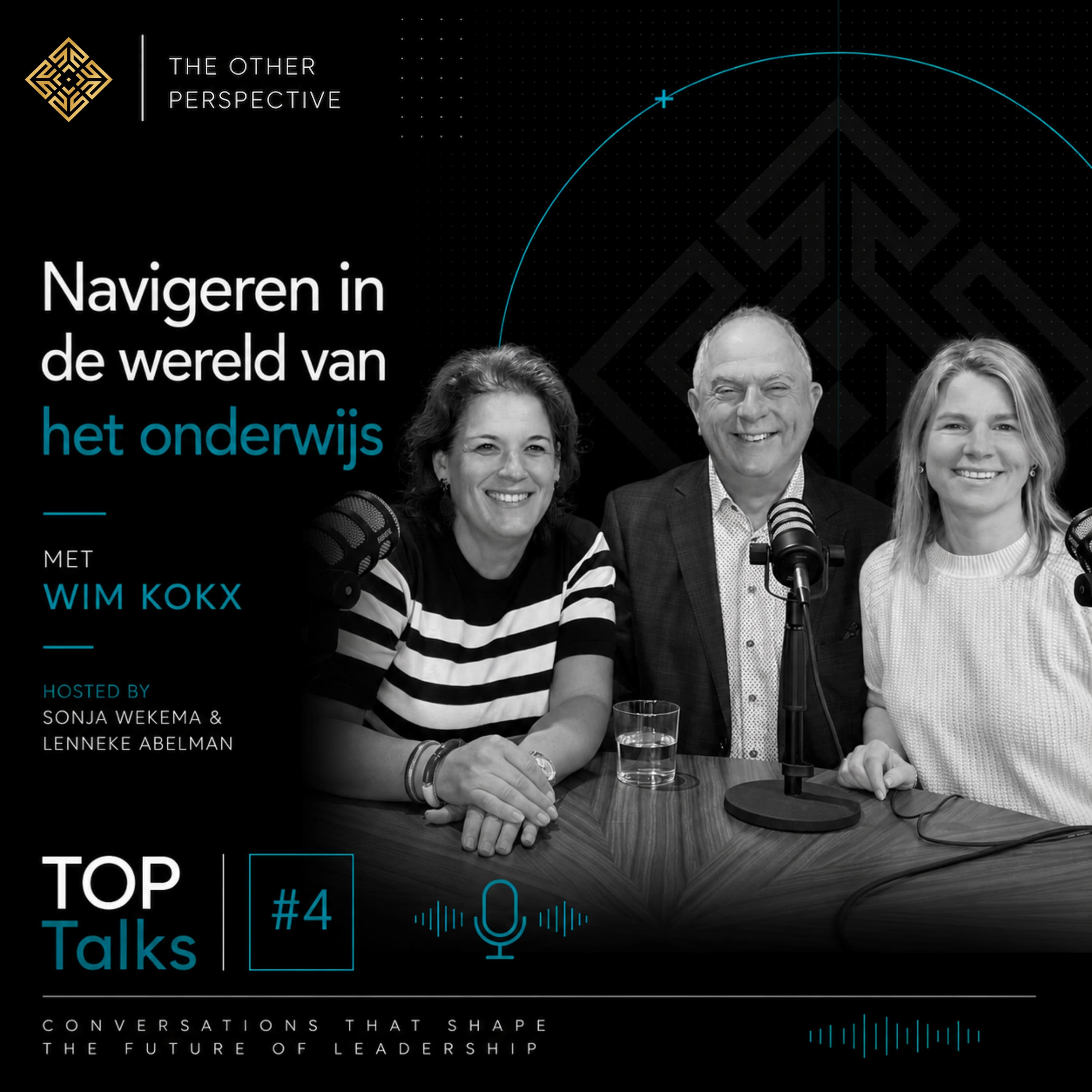
Over deze aflevering
Onderwijs is een speelveld vol belangen, beleid en beweging. Wim Kokx neemt Sonja Wekema en Lenneke Abelman mee in de praktijk van richting houden, scherpe keuzes maken en mensen meekrijgen in voortdurende verandering.
Luister verder
Aanbevolen afleveringen over verwante thema's
 00629:59·NL
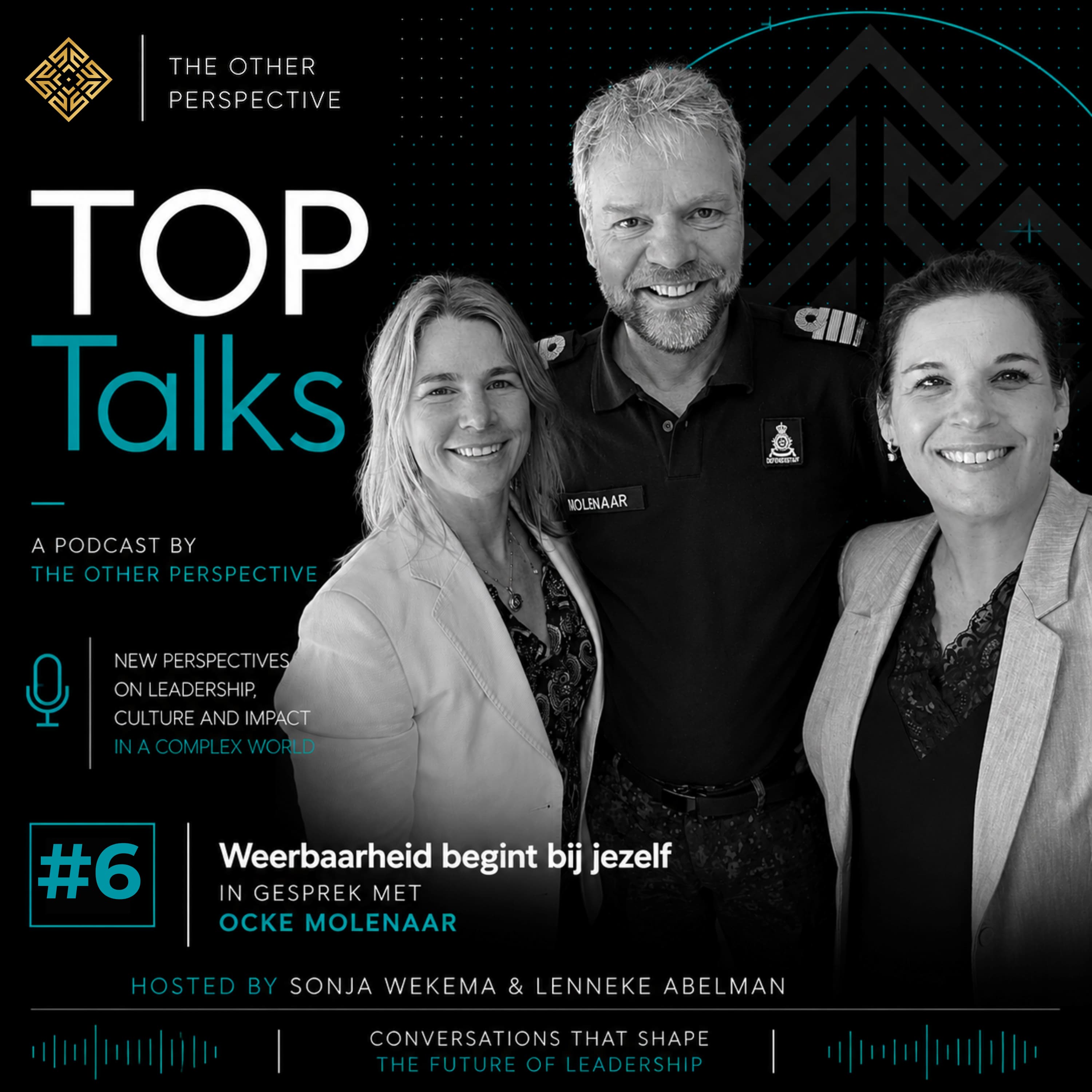
#6 Weerbaarheid begint bij jezelf met Ocke Molenaar
Hoe maak je een samenleving weerbaar in een wereld die steeds minder voorspelbaar wordt? Sonja Wekema en Lenneke Abelman spreken met Ocke Molenaar, hoofd Reservisten en Samenleving bij Defensie, over civiel-militaire samenwerking, bureaucratie als rem op verandering, en vertrouwen als kern van leiderschap.
LeadershipResilienceNLLuister 00838:40·NL
#8 Vrijheid in je hoofd met Gerard Penning
Hoe creëer je als leider een omgeving waarin mensen echt tot bloei komen? Sonja Wekema en Lenneke Abelman spreken met Gerard Penning — senior HR-leider met een indrukwekkende internationale loopbaan, onder meer als EVP HR voor de wereldwijde downstreamorganisatie van Shell. Over de vrijheid die je jezelf moet organiseren om integer te blijven, waarom nieuwsgierigheid meer is dan vragen stellen, en hoe je menselijke energie leest in een organisatie.
LeadershipCultureNLLuister
Transcript
Wim Kokx over navigeren in het onderwijs. Onderwerpen: leiderschap in publieke organisaties, verandering doorvoeren en het vasthouden van je koers.
Volledige transcriptie beschikbaar in het Nederlands en het Engels.
NLLees het volledige gesprek
Navigeren in het onderwijs (NL)
Wim Kokx over navigeren in het onderwijs. Onderwerpen: leiderschap in publieke organisaties, verandering doorvoeren en het vasthouden van je koers.
Sonja Wekema Welkom bij TOP Talks, de podcast van The Other Perspective.
Lenneke Abelman Welkom bij TOP Talks. Gezellig dat je er weer bent Sonja. En we zitten hier vandaag met Wim. Wim Kokx. We hebben je uitgenodigd en ik zal je heel even voorstellen. Wim is getrouwd met mijn nicht, dus ergens ver weg heet je dan aangetrouwde neef of zoiets hadden we bedacht. Was een hele leuke nieuwe term. Wim, je bent oud-leraar, schoolleider en schoolbestuurder. Dat is een hele mondvol. En je hebt een enorme hands-on mentaliteit en daar gaan we het vandaag vooral over hebben. Je hebt ontzettend veel ervaring in het opzetten van teams en scholen en het verbeteren daarvan, met name met als doel goed onderwijs voor de kinderen te verzorgen. Je zet je ervaring in als adviseur en als coach en in de meest recente opdrachten ben je betrokken bij het lyceum hier in Den Haag en ben je ook bezig met het op orde brengen van een prachtige VO-school in Sint-Eustatius. Dus daar ben je net van terug.
Wim Kokx Daar ben ik vrijdag van teruggekomen.
Lenneke Abelman Lekker uit de jetlag.
Wim Kokx Zeker.
Lenneke Abelman Je bent vooral gespecialiseerd in schoolculturen en het samenbrengen daarvan. En ook daarin gaan we vandaag wat meer over praten. Dus superleuk dat je er bent! Welkom! Vertel eens even wat meer over jezelf. Ik heb je net voorgesteld, maar wat hebben we nog niet verteld?
Wim Kokx Nou, die rollen die je net noemde, dat betekent dus dat ik na mijn studie sterrenkunde leraar natuurkunde ben geworden. Ik zal niet mijn hele cv doorlopen, maar uiteindelijk de schoolleiding ingerold. Rector geweest van een school in Zoetermeer, daarvoor conrector van een school in Den Haag. Uiteindelijk schoolbestuurder geweest voor meer dan tien jaar op een scholengroep in Vlaardingen-Schiedam, waar ik eindverantwoordelijk was voor acht scholen met alle onderwijstypes daarin. En twee jaar geleden besloten om voor mezelf te beginnen. Nu twee opdrachten achter de rug.
Lenneke Abelman En vanwaar dat besluit om voor jezelf te beginnen?
Wim Kokx Nou, ik was toen 62 en ik had daar meer dan tien jaar gezeten. Dat is voor die rol best lang, maar er waren ook wel ontwikkelingen die het steeds nieuw interessant maakten. Maar na tien jaar was toch ook de energie er wel uit, zowel voor mij als voor mijn team. Dus het leek me ook niet alleen voor mezelf, maar ook voor de organisatie beter dat ik daar wegging. Ik ben daar niet met gedoe weggegaan. Dat is allemaal een heel natuurlijk proces. En toen dacht ik: wat ga ik nu doen? Ga ik datzelfde trucje nog een keer doen? Of ga ik proberen mijn ervaring te delen met de plekken waar ze me kunnen gebruiken? En vandaar dat besluit om dat als zelfstandige te gaan doen.
Sonja Wekema Wat leuk! Ja, ik zat. Ik ben nogal geïntrigeerd door wat je zei dat je sterrenkunde hebt gestudeerd. En dat is misschien zelfs ook wel een mooie metafoor met het werk wat je nu doet. Van: hoe kan je sterrenkunde koppelen aan wat je nu ziet in het onderwijs?
Wim Kokx Ja, dat is wel heel ver weg. Sterren zijn ook best ver weg. Nee, dat is ook zo. Wat de voornaamste is wat zo'n studie oplevert, is dat je gewoon heel analytisch kunt werken. Ik heb wel in mijn carrière gemerkt dat dat hele bèta-dat ik zeker was toen ik begin twintig was, dat dat langzaam wat meer alfa geworden is in de intermenselijke dingen die je vanuit leidinggevende functies moet leren. Als je me dat op mijn vijfentwintigste had gevraagd, dan zou ik gezegd hebben: ik word vooral heel gelukkig als de Excel aan het eind van de dag klopt. En dat is niet meer zo. Ik heb andere dingen geleerd en andere dingen moeten doen. En dat heeft me tot een veel rijker mens gemaakt dan alleen maar dat hele bèta. Maar het analytische, dat zit er altijd wel in.
Sonja Wekema Ja, nou, ik zit meer te denken aan de sterren die misschien wel in het onderwijs en in de organisaties aanwezig zijn. Weet je wat wij veel zien, ook in het werk wat wij doen, is dat er best wel veel mensen zijn met talent. Alleen door de context waarin ze zitten of misschien wel door het onderwijssysteem komt het talent niet echt tot zijn recht. Die sterren was ik naar op zoek. Dat is volgens mij ook onderdeel van wat jij doet: er echt voor zorgen dat kinderen, misschien wel jongvolwassenen, uiteindelijk kunnen worden wie ze misschien wel zouden kunnen zijn.
Wim Kokx Nee, zeker. Dat heeft natuurlijk... Daar zitten de fases in mijn carrière die daar een andere insteek aan gegeven hebben. Daar waar ik het als leraar zelf rechtstreeks voor die kinderen deed en probeerde hen zo ver mogelijk te brengen, is die rol natuurlijk in de loop van mijn carrière veranderd, waarbij ik meer docenten ben gaan coachen die dat met kinderen deden. Dus ik ben steeds minder kinderen gaan zien. En steeds meer eerst docenten, daarna schoolleiders. En nu vaak ook bestuurders en toezichthouders. Waarbij voor mij wel steeds het doel achter blijft staan dat het uiteindelijk om die kinderen moet gaan. Dus dat ben ik niet verloren. Als ik nu met schoolleiders praat, moet het toch steeds wel over onderwijs en over kinderen gaan. Ik heb één keer een sollicitatiegesprek gehad met een rector op een school, en na een uur heb ik gezegd: nou, je gaat het niet worden. Zei die: waarom niet? Ik zei: nou, je hebt het woord leerling niet één keer laten vallen. En dan houdt het echt op, want dan ben je alleen maar met gremia bezig en met bestuursoverleg en allerlei overleggen. En zolang je niet scherp houdt voor jezelf dat het steeds om die kinderen gaat, ja dan ben je me wel kwijt.
Lenneke Abelman Hé en Wim, hoe heb jij jezelf de dingen eigen gemaakt? Want je zegt: ik ben eigenlijk vanuit een hele pure bèta waarbij de Excel moest kloppen steeds meer geswitcht. Hoe heb je dat gedaan? Hoe heb je dat aangepakt?
Wim Kokx Ja, dat was wel grappig. Toen ik laatst op de reünie van de oude middelbare school dit thema aansneed, zeiden ze: ja, maar dat had je toen ook al. Dus ik had het blijkbaar onbewust, maar ik was me niet bewust van het feit dat ik dat ook al een beetje in me had.
Sonja Wekema En wat had je toen al?
Wim Kokx Ja, dat het in de interactie met mensen ook iets is, en dat ik dat ook kan en heb. Dus blijkbaar zat dat al wel eerder in mij. Onbewust bekwaam. Maar ja, het komt ook gewoon omdat het op je pad komt. Ik zat in voorbereiding voor dit gesprek gisteren al te denken: wat is dan de rode draad? En voor mij was dat: dat ik in mijn ontwikkeling heb geleerd om situationeel leiderschap, zoals het dan netjes heet, om dat ook echt toe te passen en concreet te maken. En tegelijkertijd daarbij de ervaring, en dat leidt dan in mijn ogen weer tot intuïtie. Te weten, te zien wanneer dingen die op je pad komen incidenten zijn die je wel moet tackelen maar niet te groot moet maken. En wanneer het topje van de ijsberg is waarbij je echt moet instappen. Dus dat onderscheid tussen incidenten en topje van de ijsberg: dat is wel de rode draad in de dingen die ik gedaan heb en nog steeds doe.
Sonja Wekema Ja. Kan je daar iets meer over vertellen? Van: wat versta jij onder situationeel leiderschap? En wat is bijvoorbeeld zo'n topje van de ijsberg?
Wim Kokx Ja, situationeel leiderschap betekent: als ik kijk naar de banen die ik gehad heb en de opdrachten die ik nu doe, dan is het nog nooit gebeurd dat de opdracht was wat van tevoren bedacht was. Ik bedoel, mijn laatste opdracht: ik zou een directeur gaan ondersteunen en twee weken voordat ik daar kwam was de directeur ziek thuis gaan zitten. Dus dan krijg je toch meteen een andere opdracht. Toen ik in Vlaardingen-Schiedam kwam, waren dat een fusie van vier scholen Schiedam en vier scholen Vlaardingen die een bestuurlijke fusie ondergingen, en mijn opdracht was cultuur samenbrengen. Maar na drie maanden bleek dat we bijna failliet waren. En dan heb je toch iets anders te doen. En daarna pak je dat andere meteen wel mee. Maar een heel klein voorbeeld. Er waren twee scholen gefuseerd waarvan ik rector werd in Zoetermeer: een mavo met een havo-vwo. En daar moest ook een team van gemaakt worden. En ja, dan is het maar net wat op je pad komt. Het voorbeeld wat ik wil geven: op enig moment was er een open dag om leerlingen te werven in een vrij concurrentiegevoelig gebied. En na afloop zouden we wat gezellig wat drinken met een hapje erbij. De eerste jaren heb ik dat laten gebeuren, maar dat druppelde allemaal binnen, want niet iedereen was tegelijk klaar; na afloop moest er eerst opgeruimd worden. Toen heb ik in het tweede jaar, en dat is eigenlijk het voorbeeld waar ik naartoe wou, heb ik tegen de conciërges die daar de bar bedienden gezegd: er wordt pas iets gedronken op het moment dat ik het groene licht geef. Oké, dus op een gegeven moment zat daar de helft van het team en die zeiden: kom op met dat drankje. Nee, zei de conciërge, mag niet van Wim. Want toen ben ik naar de personeelskamer gegaan, want anders sluit je het onderwijsondersteunend personeel uit. Dat is ook een stukje teamvorming. En wat er gebeurde: de mensen van de kunstvakken hadden altijd heel veel opruimwerk en die kwamen dus altijd te laat, bijna aan het einde. Toen heb ik gezegd: nou luister, we gaan nog niks drinken, want we zijn nog niet allemaal klaar. En we gaan pas iets drinken als we allemaal klaar zijn. Dus jullie kunnen twee dingen doen: je kan hier wachten, of je loopt nu met me mee, dan gaan we de collega's helpen. Dan zijn we over 10 minuten terug. Nou, een paar volgden, de rest bleef een beetje mokkend zitten. Maar na 10 minuten was iedereen er en ik heb er verder geen ophef meer van gemaakt. Maar dat was voor mij wel zo'n topje ijsberg, want dat is een kleine interventie die iets leidt van: ja maar, we zijn hier één team. Dus dan is het iets groters dan alleen maar wachten op twee collega's die nog de beeldjes moeten opruimen. Je hebt een groter thema te pakken, namelijk: wij zijn hier één team.
Sonja Wekema Ja, en dit is nu een voorbeeld van een interventie die je hebt gepleegd. Wat was de reactie achteraf van deze groep?
Wim Kokx Ja, eigenlijk niet of niet veel. De mensen van de kunstvakken waren natuurlijk blij, want die werden erkend. Ik heb een andere interventie gedaan een keer waar het onderwijsondersteunend personeel echt wel in hun rol werd gebracht, waardoor zij ook hebben gemerkt dat ik ze serieus nam. En nog een heel ander stukje van het verhaal. Toen ik in Vlaardingen-Schiedam wegging was er groots afscheid met veel bobo's. Allemaal hartstikke leuk, maar wat ik vooral heel leuk vond: van alle acht scholen waren de conciërges er. Als ik een school binnenloop, dan ga ik echt niet meteen naar de rectorskamer. Dan praat je eerst met de conciërge, en dat is niet alleen maar de vorm, dat meen ik ook oprecht, want zij zijn ogen en oren in zo'n school. Nou, even als voorbeeldje.
Lenneke Abelman Ik vind het heel leuk om te horen waar jij enthousiast van wordt. En wij zeggen ook heel vaak in ons werk: als we bij een nieuwe organisatie binnenkomen, zorgen we ervoor dat we de secretaresses bijvoorbeeld heel goed kennen. Die weten precies wat er leeft en speelt binnen een organisatie. Die kunnen de cultuur haarfijn uitleggen. Heb je dat geleerd of was dit het stukje Wim dat er altijd al in zat?
Wim Kokx Nou, dat zat er altijd wel in. Omdat ik ook oprecht, en dat is niet gespeeld, niet aangeleerd: echt vind dat iedereen ertoe doet. Natuurlijk heb je andere rollen en andere verantwoordelijkheden, maar dat maakt het niet dat je een belangrijkere rol hebt. Ik bedoel, even heel flauw: als de rector er even twee weken niet is, gaat het echt door. Als de conciërge twee weken niet is, heb je een probleem.
Lenneke Abelman Ja, dus eigenlijk is die misschien wel belangrijker.
Wim Kokx Op een bepaald opzicht is dat zo.
Lenneke Abelman Iets wat je dan misschien zelf van vroeger hebt meegekregen? Zo'n patroon van je eigen ouders: iedereen doet ertoe.
Wim Kokx Ja, nu ga je een beetje psychologiseren. Dat mag wel. Kijk, mijn ouders waren niet hoogopgeleid. Mijn vader was schoenmaker, mijn moeder was huisvrouw en werkte in een winkel. Dus ja, je hebt meegekregen dat je in je ontwikkeling hebt mogen studeren, jezelf hebt kunnen ontwikkelen, dingen hebt mogen leren en ervaren, maar ook wel weet waar je vandaan komt. En dat maakt natuurlijk wel uit.
Lenneke Abelman En dat je elkaar met respect behandelt. Zeker.
Sonja Wekema Ja. En ik zit een beetje terug te denken aan wat je net zei: jij vindt het belangrijk dat mensen zich inclusief in het team voelen. Heb je dan ook een bepaalde methode, want op een gegeven moment zei je ook: na tien jaar was het genoeg, is het goed om weg te gaan? Laat je dan ook dit soort teams achter met een bepaald nieuw gedrag waarvan jij denkt: hé, dit heb ik dan toch maar meegegeven?
Wim Kokx Ja, ik denk wel ja en nee. Ja, omdat ik wel oprecht geloof dat de cultuur die je vanaf de top creëert tot ver in de haarvaten doorsijpelt. Dus dingen als respect en de waarden die je dan hebt, dat merk je wel. Maar wat voor mij altijd een dilemma is, is als je ergens weggaat: die waarden en vaardigheden zijn wel gebleven, maar of het een organisatie daarna goed gaat of niet goed gaat, dat vind ik altijd wel ingewikkeld. Als het goed gaat: fijn dat ik dat heb kunnen achterlaten. Ik zie ook wel regelmatig dat het daarna minder gaat. En dan kan je aan de ene kant denken: nou, dat heb ik dan goed gedaan en mijn opvolger niet. En toch doet dat wel pijn. Als het dan met een organisatie minder goed gaat waar je je met hart en ziel aan verbonden hebt gevoeld.
Lenneke Abelman Precies ja.
Lenneke Abelman Wim, we hebben veel te maken met een enorm complexe samenleving. Mensen weten soms ook niet meer precies wat ze ervan moeten vinden. En onderwijs is daar natuurlijk een grote rode draad in.
Wim Kokx Ja, zeker.
Lenneke Abelman Ik zie je een beetje lachen.
Wim Kokx Ja, omdat: net als bij voetbal. We hebben 18 miljoen bondscoaches. Maar we hebben ook 18 miljoen mensen die iets van onderwijs weten, al was het alleen maar het feit dat ze zelf onderwijs genoten hebben. Dan zijn ze ook ineens allemaal specialist. En dat is niet zo.
Lenneke Abelman Nee, maar wil je daar eens wat meer over vertellen? Wat zie jij gebeuren in die context? En als je eens een beetje mag vrij dromen: wat zou jij onderwijs van de toekomst wensen?
Wim Kokx Ja, het onderwijs van de toekomst zou veel meer op maat moeten zijn voor alle leerlingen. Veel meer gepersonaliseerd. Daar zijn we ook met een aantal scholen heel actief mee bezig geweest. We worden daarbij ondersteund door de Universiteit van Groningen die heel veel expertise op logistiek gebied hebben. Want dat gepersonaliseerde onderwijs moet je dan wel heel goed weten te organiseren. En ik merk dat als je er over hebt, er heel veel enthousiasme voor bestaat. Maar dat het in de uitvoering heel weerbarstig is. Ook omdat je te maken hebt met leraren aan wie dat in hun opleiding niet is bijgebracht. Dat moeten ze dan heel intrinsiek willen. Er zijn een aantal goede voorbeelden van. Agora onderwijs is een goed voorbeeld in Nederland, waar een aantal scholen leerlingen heel veel vrijheid geven om te ontwikkelen zoals ze zijn als mens. Daar zit de politieke cultuur een beetje tegen, want dan heb je het ministerie met alle goede bedoelingen en een inspectie die binnen een kader geframed wordt die zegt: ja, maar wij moeten nu opbrengsten gaan controleren. Deze kinderen hebben zich heel goed als mens ontwikkeld, maar als je op de harde criteria kijkt, is het net onvoldoende. Dus in het dromen zou dat allemaal een andere balans moeten vinden.
Lenneke Abelman Ja, ik herken het ook aan een van mijn vier kinderen, die zich heel erg sociaal ontwikkelt. Die weet van iedereen of er een potlood geslepen moet worden of een snotneus heeft. En wat minder bezig is met zijn eigen inhoudelijke ontwikkeling. Maar de sociale connecties zijn fenomenaal sterk. En als ik dan kijk naar hoe wij in organisaties ook toch mensen aantreffen die die sociale verbinding een beetje missen, denk ik dat dat soort elementen in het onderwijs best wel wat meer mogen worden aangestipt. Maar hoe veranderen we dat, Wim?
Wim Kokx Ja, dat vind ik voor mezelf ook ingewikkeld. Omdat op het moment dat je bij een organisatie komt, je die organisatie wil helpen. En als dan een inspectie van het onderwijs komt met harde criteria, dan heb je je daar op dit moment maar even toe te verhouden en help je ze om aan die criteria te voldoen, terwijl je eigenlijk de strijd wil voeren over die criteria. Ik heb acht jaar namens de VO-raad in het regulier overleg gezeten met de onderwijsinspectie. Ja, dat is wel heel weerbarstig. En ook zij zitten in de mangel van de politieke werkelijkheid, van een uitspraak van de Tweede Kamer waar ze zich maar toe te verhouden hebben.
Lenneke Abelman Maar ook die mensen hebben toch allemaal kinderen en kleinkinderen die in dit schoolsysteem aan het werk zijn?
Wim Kokx Ja, dat is ook zo. En toch komt daar dan uit... Neem maar even de focus die de laatste jaren zit op basisvaardigheden: taal, rekenen, ICT-vaardigheden en burgerschap. Dat wordt als zeer belangrijk geschetst. En dat is het ook. Maar voor je het weet is dat verworden tot het enige wat je moet doen. Want als je daar niet aan voldoet... Kijk, als je daaraan kunt voldoen terwijl je tegelijkertijd die sociale vaardigheden aanbrengt, dan is het allemaal prima. Maar in de praktijk is het een keuze, want je voldoet niet aan allebei tegelijk. En dan moet je dus aan die basisvaardigheden gaan werken om over het hoepeltje van de inspectie te springen, terwijl je dan de rest laat liggen.
Sonja Wekema Ja, ik denk één van de eerste dingen die je in dit gesprek vertelde, is dat jij altijd luistert naar mensen die wat hoger in het onderwijssysteem werken: of ze het woord leerling überhaupt noemen. En wat ik je nu hoor vertellen is ook: waar doen we het eigenlijk voor? De leerling lijkt echt uit het oog verloren te gaan.
Wim Kokx Ja, dat is ook zo.
Sonja Wekema Als er mensen luisteren die in het onderwijssysteem werken: ik ben zelf onderdeel van een ouderraad. Ik heb een moeder die altijd lerares is geweest, altijd aandacht voor de kinderen. Ze was superstreng in de klas, maar de kinderen belden vaak aan: komt onze juf buitenspelen? Dus de directe, duidelijke regels stellen maar ook het menselijke stuk: dat waardeerden de kinderen heel erg. Die balans lijkt nu de andere kant op te slaan. Als er mensen luisteren, wat zou je ze aanraden? Hoe kunnen ze hier een verandering in aanbrengen?
Wim Kokx Ja, dat zou mooi zijn en dat hebben we ook wel geprobeerd. Alleen dat is op systeemniveau heel lastig. Ik neem een voorbeeld. We hadden een school in Vlaardingen die heel veel leerlingen die een advies basisgerichte beroepsweg hadden naar kader liet gaan. Dat is één niveau hoger, maar daardoor kun je naar mbo-drie in plaats van naar mbo-twee. Dat is voor die kinderen beter, is voor hun arbeidsperspectief ook veel beter. En die kinderen deden dat ook goed: slagingspercentage boven de 95%. Alleen het criterium is het centraal examencijfer en dat was gemiddeld 6,04 en het moest 6,08 zijn. Dus scoorden we een min op dat criterium. Ze bleven ook nog eens af en toe zitten, deden er dus vijf jaar over. Maar we haalden wel dat hogere diploma. Dan had je twee criteria onvoldoende. Dan werd de school als onvoldoende beoordeeld. En dan kom je in het dilemma van: ja, wat gaan we nu doen? Gaan we onze poot stijf houden? De andere kant van het verhaal is: wij worden publiek gefinancierd, en de publieke financier, namelijk de overheid, die heeft een orgaan, namelijk de onderwijsinspectie, die komt kijken of jullie het goed doen. Daar wordt één denkfout gemaakt: de optelsom van de individuele leerlingen als criterium of een school het goed doet. Dat is echt een structurele denkfout. Maar goed, dat is wel het systeem waar je in zit.
Lenneke Abelman We hebben recent gezien een voorbeeld van de beruchte doorstroomtoets in groep acht, waarbij een bestuurder met lef in Noord-Holland zei: ik kan wetenschappelijk aantonen dat het niet valide is, dus ik ga hem niet afnemen. Die is uiteindelijk rechtstreeks door de minister gedwongen om het toch te doen. Dus ja, dan zit je vast in het systeem van publieke financiering.
Wim Kokx Precies. De overheid zegt: prima, als je het allemaal vindt. Succes! Ga lekker privaat gefinancierd. Ja, maar dat kan natuurlijk niet. Dus je zit in dat systeem.
Sonja Wekema Ja, en partijen die de lobby-kant oppakken... En wat ik las bij de BBC en allerlei andere nieuwsportalen: ook in Scandinavië zeggen een aantal landen: weet je wat, we gaan op een andere manier weer lesgeven. Het digitale stuk halen we uit de klas. We gaan ervoor zorgen dat kinderen weer echt met elkaar kunnen praten en dat ze kunnen leren schrijven. Minder afleiding.
Wim Kokx Ja, zeker. We hebben nu in Nederland dat alle middelbare scholen bijna collectief hebben afgesproken: we doen de telefoons uit de klas. Dat is uiteindelijk een beetje door de overheid geholpen maar door ons gevraagd. En je merkt dat het heel positief werkt. Leerlingen gaan weer met elkaar praten, ook in pauzes, zijn minder afgeleid. Dat werkt enorm goed. En tegelijkertijd is het ook wel een beetje zonde, want ze leren dus minder ICT-vaardigheden te gebruiken in de klas.
Lenneke Abelman Die zitten er wel in, hoor.
Wim Kokx Jawel, maar je zou ook willen leren dat ze omgaan met die continue druk van die telefoons en die social media. En dat leren ze nu niet.
Sonja Wekema Het is balanceren. Nou, als ik dan even kijk naar ook docenten die ik zo nu en dan spreek: hoe hou je de balans? Je moet jezelf ontwikkelen om überhaupt dit soort vaardigheden aan te kunnen leren. Dan betekent het ook dat je het zelf moet begrijpen. De klassen worden best groot, de regeldruk is best hoog. Wanneer en hoe gaan we dit met z'n allen doen? En is er voldoende geld? En wordt het op een goede manier bestuurd? Er zitten allerlei elementen aan vast. En wat je net al zegt: het is een systemisch vraagstuk. Alleen zitten de juiste mensen aan de juiste knoppen? Dat is natuurlijk best wel ingewikkeld.
Wim Kokx Ja, en een groep waar ik zelf toe behoord heb en die ik vind dat onderschat wordt of te vaak gebashd wordt, zijn de onderwijsbestuurders. Dat is vaak ook door de bonden geframed als: ja, de leraren die moeten het doen en dat is ook zo. Maar de bestuurders die ik ken, werken echt ook met hart voor die kinderen en proberen het beste te doen voor de hele sector. Die worden te vaak in mijn ogen in het verdomhoekje gezet van: ja, laat het maar aan de leraren over en dan komt het allemaal wel goed. Maar dat is niet zo, want juist die kunnen dan geen systemische verandering aanbrengen.
Lenneke Abelman Precies, die zitten veel meer op de kwaliteit van die inhoud. Maar je hebt ook iemand nodig die daar net op een andere manier overheen kan kijken en het totale plaatje ziet.
Sonja Wekema Wat zou je ze aanraden? Of heb je daar een idee over van: wat zou misschien kunnen helpen?
Wim Kokx Nou, over de inspectie: je zou willen dat ze meer discretionaire bevoegdheden krijgen, zodat ze echt het hele verhaal van die school kunnen zien. Van: ja, oké, er zijn twee indicatoren onvoldoende, maar kijk eens wat ze allemaal op die en die gebieden doen, dus geef ik ze toch een voldoende. Dat bijt een beetje met dat je ook wil dat ze voorspelbaar zijn en dat je niet van de nukken van een toevallige inspecteur afhankelijk bent. Dus ga je het systemisch regelen en daar zit je vervolgens weer in vast. Ik zou wel het vertrouwen in inspecteurs willen hebben, zodat je zegt: nou, kom maar naar mijn school kijken en kijk naar het totaalplaatje en durf af te wijken. Ik heb een paar inspecteurs gehad die dat ook echt durfden, maar dan heb je het wel over de senior inspecteurs die ook intern genoeg draagvlak hebben.
Lenneke Abelman Maar misschien is dat ook wel die gecomprimeerde experience, die ervaring die zo'n inspecteur met zich meebrengt en die ook de lef heeft om daar de persoonlijke noot aan te hangen. Zeker. Ik ben ook nog heel erg nieuwsgierig naar momenten, Wim, waarbij jij het soms even ook zelf even niet meer wist. De complexiteit of onzekerheid van dit soort systemen, want het is groot. En als dat er dan was: hoe ging je er dan mee om? Wat deed je?
Wim Kokx Ja, dat heb ik zeker gehad. Toen ik in Vlaardingen-Schiedam kwam: dat was een fusie, er waren in totaal vijf boekhoudsystemen met vijf grootboekrekening-schema's. Hadden geen idee hoe ze ervoor stonden. En na een paar maanden bleek dat we bijna failliet aan het gaan waren. Ja, en dan is het even een nachtje slecht slapen en de ochtend erna echt mezelf vrijmaken om op te schrijven: oké, wat moet er nu gebeuren? Met wie moet ik gaan praten? En dan, ja, dat is weer zo'n situationeel leiderschap: dan heb je dat maar te doen. Het was niet iets waarvoor ik aangenomen was. Maar dan is dat maar wat op je pad komt en wat je hebt te tackelen.
Lenneke Abelman En ga je dan ergens heen voor hulp of bedenk je het allemaal zelf?
Wim Kokx Dan bedenk ik zelf met wie ik moet gaan praten. Want dan krijg ik heel veel hulp. Toen is het lijstje van allemaal mensen. Dat was bij het ministerie, bij de VO-raad, collega's. Ik ben daarna heel veel op pad geweest om zoveel mogelijk adviezen bij elkaar te verzamelen. En één van de dingen die ik voor mezelf toen heel snel besloten heb: ik ga met één verhaal naar buiten. Want het kan heel verleidelijk zijn om het ene verhaal aan de ene partij te vertellen en het andere verhaal naar het personeel te zeggen: nou, het valt allemaal wel mee. En naar de overheid: het valt heel erg tegen, dus we hebben geld nodig. Ik heb toen besloten: dat ga ik niet volhouden, want ik weet morgen niet meer wat ik gisteren gedaan heb. Dus één verhaal naar buiten, consequent. Dan kan je je ook nooit vergissen. En dat helpt enorm.
Lenneke Abelman Dus heel transparant eigenlijk ook.
Wim Kokx Zeker. En transparantie is sowieso iets wat vaak voorkomt bij mij. Je kan niet altijd alles zeggen, want dan zeg je dat je het niet kan zeggen. En dat snapt iedereen.
Sonja Wekema Ja, maar dat durft niet iedereen.
Wim Kokx Ja, dat begrijp ik. Nee, ik bedoel: als je niet transparant over de inhoud kunt zijn, moet je transparant over het proces zijn en dan komt het weer goed. Want dan zeg je: ja, oké, ik kan het nu nog niet zeggen, maar we gaan nu deze stappen doen. En als we dan op dat punt zijn, kan ik het ook over de inhoud vertellen.
Lenneke Abelman Ja, dat vraagt ook om een stukje moed en lef om jezelf heel kwetsbaar op te stellen van: joh, dit is wat het is.
Wim Kokx Ja, maar dat heb ik wel. En ook als jullie vragen straks: waar heb je dat dan geleerd? Weet ik niet. Maar zowel in mijn relaties die ik met medezeggenschapsraden had als met mijn bestuur of later raden van toezicht: het heeft mij enorm geholpen dat ik ook mijn dilemma's kon delen. Toen ik in Vlaardingen-Schiedam kwam, had ik een fantastische raad van toezicht en daar kon ik ook gewoon zeggen: hier zat ik mee. Ik heb nu dit gekozen. En dan waren zij zo slim om mij door te vragen op dat dilemma en op de keuzes van: wat was je alternatief, wat waren je risico's? Dat zijn goede toezichthoudende vragen. En je merkt ook een belangrijk thema als ik met mijn collega-bestuurders praat: het gaat bijna altijd over de raad van toezicht omdat die te vaak de verkeerde vragen stellen en daarmee in de verkeerde rol komen. En dan gaan ze dus meesturen. Dan krijg je het beroemde verhaal: ja, je zit op mijn stoel. Als je als raad van toezicht de goede vragen stelt, dan hou je je bestuurder in de kracht. Dan kan hij ook open zijn, want die wordt daar niet meteen op afgerekend. En dan krijg je een mooie wisselwerking tussen de bestuurder en de toezichthouder.
Sonja Wekema Ja dus eigenlijk: als iedereen begrijpt wat zijn of haar rol is en zich daar ook aan houdt, en ook zegt: soms weet ik het niet, transparant daarin zijn. Ander punt wat ik je hoor zeggen is de zelfreflectie van: op het moment dat je zegt van ik ga hulp vragen, moet je wel weten waar je hulp voor nodig hebt. Hoe doe je dat? Want dat is ook iets wat tijd kost. Hoe werkt dat bij jou?
Wim Kokx Ja, dat klinkt misschien flauw, maar dat heeft te maken met gewoon heel goed en langdurig netwerken, waardoor ik gewoon heel veel hulplijnen heb. Ik weet ook wie ik wanneer kan bellen. Als ik op een VO-congres ben, het jaarlijkse grote congres waar alle schoolleiders en bestuurders bij elkaar komen, lukt het mij meestal niet om een workshop te volgen. Ik ben alleen maar aan het kletsen. Een babbeltijd. Ja, precies. En dat lijkt allemaal heel gezellig, maar dat is ook allemaal heel functioneel. Want als ik dan op een thema een keer iets heb, weet ik ook wel wie ik moet bellen. En omgekeerd gebeurt dat gelukkig ook vaak.
Lenneke Abelman Dat is eigenlijk superinteressant, want ik heb heel vaak discussie met mensen rondom netwerken en dat voelt voor sommige mensen als een soort vies ding. En dan zeg ik: nou ja, het is net-werk, dus het is ook gewoon wat je nodig hebt om te kunnen werken. En het zorgt ervoor dat je je eigen bubbels steeds groter maakt en breder, waardoor je ook die complexiteit veel makkelijker aan kunt.
Wim Kokx Precies, ja, nee dat is ook zo.
Lenneke Abelman Ik heb het ook altijd enorm naar mijn zin op die netwerken. Net nog beneden in de keuken heb ik ook even genetwerkt.
Sonja Wekema Het is ook de lange en de korte termijn doelstellingen, want dat hoor ik je ook vertellen gedurende het hele gesprek. Er zijn best veel mensen die, ook inherent aan hun baan of de manier waarop ze zelf zijn groot geworden, gewoon het kortetermijnstuk doen. Maar dan zijn er inderdaad wat jij ook zegt, de bestuurders bijvoorbeeld, of andere mensen die ook kijken naar het langetermijnelement en daar ook de rest misschien wel op besturen.
Wim Kokx Precies. Nogmaals, er zijn natuurlijk ook zwakkere broeders in ons kring, maar ik denk dat de meeste bestuurders wat die vooral goed kunnen is: snappen wat er op lange termijn nodig is en wat dat dan nu betekent. En omgekeerd: wat er nu gebeurt, wat heeft dat voor gevolgen voor de lange termijn? Ik denk dat dat ook het werk van bestuurders is en de meesten kunnen dat heel goed.
Lenneke Abelman Ja, en dat is niet alleen in onderwijsland.
Wim Kokx Nee, nee, dat is in principe in alle sectoren zo.
Sonja Wekema We hadden het net over de rol van toezichthouders en in ons voorgesprek sprak je over cruciale momenten in je carrière en ook het belang van tegenspraak. Kun je daar misschien iets over vertellen?
Wim Kokx Ja, de eerste baan die ik als leidinggevende had was: ik was conrector op een middelbare school. En na een paar dagen had de rector een besluit genomen wat ik niet zo handig vond. En toen heb ik voor mezelf bedacht: ga ik dit nu gewoon uitvoeren, of ga ik daar iets van zeggen? Toen dacht ik: ik heb dat heel bewust ervaren als een cruciaal moment. Van: ga ik vanaf nu, want ik weet niet welke rol ik in de toekomst ga krijgen, ga ik dat nu zeggen? Toen bedacht ik me: wat zou ik doen als ik rector van deze school was? Dan zou ik hopen dat mijn conrector naar me toe zou komen. Dus ik heb de stoute schoenen aangetrokken, niet wetende waar dat zou eindigen. Kamer van de rector ingelopen en gezegd: ja, hier. Ik vind het niet handig, of ik ben het er niet mee eens. Maar het moment dat je de stoute schoenen aantrekt en niet zegt: ik voer het maar gewoon uit. Maar ik ga vertellen wat ik ervan vind. Dat was hartstikke spannend. Maar dat was voor mij van: het is nu of nooit. Als ik het nu niet doe, dan ga ik het de rest van mijn carrière ook niet meer doen. Dus ik moet het nu durven.
Lenneke Abelman En Wim, was dat een afspraak die je met elkaar had gemaakt? Want jij zegt: als ik zelf later in die stoel zou zitten, dan zou ik willen dat mijn conrector dat ook doet. Maar dat kun je heel bewust afspreken met elkaar.
Wim Kokx Nee, dat was een afspraak die ik met mezelf had gemaakt. En daarna, in andere rollen, heb ik dit voorbeeld vaak gebruikt om anderen juist uit te nodigen om het te doen. Want in een twee-tier model waarbij je als directeur-bestuurder daarin zit: je hebt best wel veel macht. Dan moet je je tegenspraak organiseren, want anders gaat het fout.
Sonja Wekema Dan kan je voor de luisteraars en voor ons nog eens teruggaan naar dat moment dat je echt dacht van: oh, ik zit hier nog maar net, ik zie dat dit patroon zich ontvouwt en ik moet er wel wat mee. Maar ik vind het ook wel spannend. Hoe ging dat voor jou? Wat gebeurde er in je binnenste?
Wim Kokx Oh, van binnen gebeurde er van alles. Knoop in je maag. Dus dat was het. Maar dan inderdaad de stoute schoenen aantrekken en gewoon naar binnen gaan. En wat ik dan altijd doe, is benoemen wat ik zie en vervolgens wel bij de ander laten. Dus ik ga niet zeggen: je moet het anders doen. Maar: ik zie dit, ik vind dit. Ik-boodschappen zijn altijd fantastisch, want mensen kunnen het echt niet tegenspreken. En daarna zeggen: en daarna is het weer aan jou om te bepalen wat je ermee doet.
Sonja Wekema Ja. Dus je houdt het echt bij jezelf. En dan kijken van: oké, wat is de reactie? Het had natuurlijk ook heel anders kunnen aflopen. Had je daar ook over nagedacht?
Wim Kokx Ja, als je het heel pessimistisch bekijkt: even heel flauw gezegd had het me mijn baan kunnen kosten. Of op termijn, want dan verstoor je de relatie. Dus het klinkt allemaal mooi in boekjes: hard op de inhoud, soft on the people. Maar dat voelt niet zo. Het voelt alsof je ook de relatie op het spel zet. En in de relatie met deze rector is dat uiteindelijk heel goed gekomen en goed gebleven, en konden we hard op de inhoud zijn. Maar dat wist ik niet toen ik daar binnenstapte.
Sonja Wekema Nee. Wat was uiteindelijk de reactie van deze rector?
Wim Kokx Die rector heeft daar niet heel veel mee gedaan, maar het was wel een patroon wat zich daarna vaker heeft herhaald. Maar het heeft mij nooit weerhouden om het daarna wel te zeggen. En gelukkig waren er ook momenten dat er wel geluisterd werd en het wel veranderd werd.
Sonja Wekema Ja. Dus als je iets voelt van: hé, dit heb je te doen: schroom niet. Het is misschien een beetje spannend.
Wim Kokx Ja.
Sonja Wekema Maar als je er echt achter staat, doe het.
Wim Kokx Ja, nee zeker. En hoe hoger in de boom, het wordt steeds kwetsbaarder. Ook als bestuurder van een onderwijskoepel: er hoeft maar één ding fout te gaan in de organisatie en het kan jou je baan kosten. Maar dat mag je niet weerhouden om het goede te doen.
Sonja Wekema Ja mooi. Ik heb nog één vraag gekoppeld aan waar Lenneke jou aan het begin op ondervroeg. Als je gaat dromen, gekoppeld aan de leerlingen: als je kijkt naar welke vaardigheden, welke skills de kinderen van nu voor de toekomst nodig hebben en waar eigenlijk scholen mee bezig zouden moeten zijn. We hebben het net al even gehad over wel of niet digitaal werken. Wat zijn dan de elementen waarvan jij zegt: dit zie ik echt als heel belangrijk voor de toekomst?
Wim Kokx Ja, die zijn gelukkig als sector over nagedacht. Dat zijn samengevat de twenty-first century skills. Maar dat gaat inderdaad ook over samenwerken, IT-competenties, sociale vaardigheden. En natuurlijk ook die basisvaardigheden rekenen, taal en burgerschap. Die zijn beschreven en daar wordt gelukkig ook aandacht aan besteed. En daar zit dan wel die droom in: als we dat nu allemaal heel goed doen, en dan, dan zijn we weer bij die harde indicatoren: durf dan te vertrouwen in het feit dat die kinderen de goede dingen aan het leren zijn waar zij in de toekomst verder mee kunnen.
Lenneke Abelman Ja, want dat weten we eigenlijk allemaal niet, hè? Het gaat zo hard.
Wim Kokx Nee, het is een verhaal wat ik al heel lang kan vertellen, omdat het iedere keer toch weer verandert. Maar wij zijn nu kinderen aan het opleiden voor beroepen die nu nog niet bestaan. En dat vraagt om die vaardigheden. Laat ze maar zo uitrusten dat ze tegen die toekomst bestand zijn. Beter dan dat we ze nu precies vertellen wat ze later moeten doen. En dat is straks niet zo.
Lenneke Abelman Nee, nee, echt leren dansen met die wicked world. Precies. Nou, ik vond het ontzettend leuk dat je hier aan tafel zat. Dank je wel voor je tijd.
Wim Kokx Graag gedaan! Ik vond het heel leuk om hier te zijn.
Sonja Wekema Ja. Nou, misschien tot een volgende keer. Zeker. Want ik denk dat er nog veel meer in zit.
Wim Kokx Daar zitten nog meer verhalen in.
Lenneke Abelman Dit was TOP Talks. Als dit gesprekje een gedachte, een vraag of een inzicht opleverde, deel het dan met een collega in je team of reageer op LinkedIn. Leiderschap groeit in gesprek, niet in isolatie. Wil je op de hoogte blijven? Abonneer je dan op TOP Talks via Spotify, Apple Podcast of waar je ook luistert. En volg The Other Perspective op LinkedIn voor meer informatie over leiderschap in een complexe wereld. Tot de volgende keer!
---
ENShow transcript
Navigating education (EN)
Wim Kokx on navigating the world of education. Topics: leadership in public organisations, driving change and holding your course.
Sonja Wekema Welcome to TOP Talks, the podcast by The Other Perspective.
Lenneke Abelman Welcome to TOP Talks. Great to have you here again Sonja. And today we're here with Wim. Wim Kokx. We've invited you and I'll give a brief introduction. Wim is married to my niece, so somewhere far removed you're like an honorary nephew or something we came up with. Quite a nice new term. Wim, you're a former teacher, school leader and school board director. That's quite a mouthful. And you have an enormous hands-on mentality, which is mainly what we're going to talk about today. You have an enormous amount of experience in building up teams and schools and improving them, with the primary goal of providing good education for the children. You are putting your experience to use as an advisor and as a coach, and in your most recent assignments you're involved with the lyceum here in The Hague and are also working on bringing order to a wonderful secondary school on Sint-Eustatius. So you've just returned from there.
Wim Kokx I came back from there on Friday.
Lenneke Abelman Nicely jet-lagged.
Wim Kokx Indeed.
Lenneke Abelman You're primarily specialised in school cultures and bringing them together. And we'll be talking more about that today too. So really great to have you here! Welcome! Tell us a bit more about yourself. I've just introduced you, but what haven't we said yet?
Wim Kokx Well, the roles you just mentioned mean that after my studies in astronomy I became a physics teacher. I won't go through my entire CV, but I eventually moved into school leadership. I was headmaster of a school in Zoetermeer, before that deputy headmaster of a school in The Hague. Eventually a school board director for more than ten years at a school group in Vlaardingen-Schiedam, where I had final responsibility for eight schools covering all types of education. And two years ago I decided to go out on my own. Two assignments under my belt since then.
Lenneke Abelman And what prompted that decision to go out on your own?
Wim Kokx Well, I was 62 at the time and I'd been there for more than ten years. That's quite long for that role, but there were also developments that kept making it newly interesting. But after ten years the energy was also kind of gone, both for me and for my team. So it seemed better not only for myself, but also for the organisation, that I would leave. I didn't leave with any drama. It was all a very natural process. And then I thought: what am I going to do now? Am I going to do the same trick again? Or am I going to try to share my experience with the places where they can use me? And that's why I decided to do that as an independent.
Sonja Wekema How lovely! Yes, I'm quite intrigued by what you said about having studied astronomy. And that might even be a nice metaphor for the work you're doing now. How do you connect astronomy to what you now see in education?
Wim Kokx Yes, that's quite a stretch. Stars are also pretty far away. No, that's true too. What a study like that mainly gives you is that you can work in a very analytical way. I have noticed in my career that that very science-oriented side that I certainly had when I was in my early twenties has slowly become more arts-oriented in the interpersonal things that you have to learn from leadership roles. If you'd asked me that at twenty-five, I would have said: I'm mostly very happy when the Excel spreadsheet balances at the end of the day. And that's no longer the case. I've learned other things and had to do other things. And that has made me a much richer person than just all that science. But the analytical element, that's always there.
Sonja Wekema Yes, well, I'm thinking more about the stars that might be present in education and in organisations. You know what we see a lot, also in the work that we do, is that there are quite a lot of people with talent. But due to the context they're in, or perhaps because of the education system, the talent doesn't really get to shine. Those were the stars I was looking for. And I think that's also part of what you do: genuinely making sure that children, perhaps young adults, can ultimately become who they might be able to be.
Wim Kokx Yes, certainly. That has... There are phases in my career that have given that a different angle. Where as a teacher I was directly doing that for the children and trying to bring them as far as possible, that role naturally changed over the course of my career, where I started coaching more teachers who were doing that with children. So I was seeing fewer and fewer children. And increasingly first teachers, then school leaders. And now often also board directors and supervisory board members. Whereby for me the underlying objective has always remained that it ultimately has to be about those children. So I haven't lost that. When I now talk with school leaders, it still has to always be about education and about children. I once had a job interview with a headmaster at a school, and after an hour I said: well, you're not going to get it. He said: why not? I said: well, you haven't mentioned the word student even once. And then it's really over, because then you're only busy with governance bodies and board consultations and all kinds of meetings. And as long as you don't keep it sharp for yourself that it's always about those children — well, then you've lost me.
Lenneke Abelman Hey and Wim, how did you teach yourself things? Because you say: I actually started from a very pure science background where the Excel had to balance, and I've gradually switched more. How did you do that? How did you approach it?
Wim Kokx Yes, that was funny. When I was recently at the reunion of my old secondary school and raised this theme, they said: yes, but you already had that then. So apparently I had it unconsciously, but I wasn't aware that I already had a bit of that in me.
Sonja Wekema And what did you already have then?
Wim Kokx Yes, that it's also about the interaction with people, and that I can do that and have that. So apparently that was already there in me earlier. Unconsciously competent. But yes, it also just comes because it comes your way. I was in preparation for this conversation yesterday already thinking: what is the common thread? And for me it was: that in my development I learned to apply situational leadership — as it's properly called — and to really make it concrete. And alongside that, the experience. And that leads in my eyes to intuition. Knowing, seeing when things that come your way are incidents that you do need to tackle but shouldn't make too big. And when it's the tip of the iceberg where you really need to step in. So that distinction between incidents and tip of the iceberg: that is the common thread in the things I've done and still do.
Sonja Wekema Yes. Can you say a bit more about that? What do you mean by situational leadership? And what is, for example, such a tip of the iceberg?
Wim Kokx Yes, situational leadership means: if I look at the jobs I've had and the assignments I'm doing now, it has never happened that the assignment was what had been envisaged beforehand. I mean, my latest assignment: I was going to support a director, and two weeks before I arrived the director had gone home sick. So you immediately get a different assignment. When I arrived in Vlaardingen-Schiedam, there was a merger of four schools from Schiedam and four schools from Vlaardingen that were undergoing a governance merger, and my assignment was to bring the cultures together. But after three months it turned out we were almost going bankrupt. And then you have something else to do. And then you take that other thing along straight after. But a very small example. Two schools had merged of which I became headmaster in Zoetermeer: a MAVO with a HAVO-VWO. And a team also had to be built out of that. And yes, then it's just whatever comes your way. The example I want to give: at some point there was an open day to recruit students in a fairly competitive area. And afterwards we would have some nice drinks with some food. In the first years I let that happen, but it all trickled in because not everyone was finished at the same time; after the open day things first had to be cleared up. Then in the second year, and this is really the example I was heading towards, I said to the caretakers who were manning the bar: nothing gets drunk until I give the green light. Okay, so at some point half the team was sitting there saying: come on, give us those drinks. No, said the caretaker, not allowed by Wim. So I then went to the staffroom — incidentally I started calling it the staff room rather than the teacher's room, otherwise you exclude the support staff. That's also a bit of team-building. And what happened: the people from the arts subjects always had a lot of clearing up to do and always came last, almost at the end. Then I said: listen, we're not going to drink anything yet, because we're not all done. And we're only going to drink when we're all done. So you can do two things: you can wait here, or you walk with me now and we'll go help the colleagues. We'll be back in 10 minutes. Well, a few followed, the rest stayed sitting there grumbling a bit. But after 10 minutes everyone was there and I didn't make any more fuss about it. But for me that was such a tip of the iceberg, because that's a small intervention that leads to something: yes, but we're one team here. So then it's something bigger than just waiting for two colleagues who still have to put away some sculptures. You've got hold of a bigger theme, namely: we are one team here.
Sonja Wekema Yes, and this is an example of an intervention you carried out. What was the reaction afterwards from this group?
Wim Kokx Yes, actually not much. The people from the arts subjects were of course happy, because they were recognised. I did another intervention once where the support staff was really put in their role, which meant they also noticed that I was taking them seriously. And another completely different part of the story. When I left Vlaardingen-Schiedam there was a big farewell with many bigwigs. All very nice, but what I found especially wonderful: from all eight schools the caretakers were there. I mean, that's something that really warms me and makes me think: yes, that's the connection I managed to build with them. I mean, when I walk into a school, I really don't immediately go to the headmaster's room. You first talk with the caretaker, and that's not just a formality, I genuinely mean it, because they are the eyes and ears in such a school. Well, just as an example.
Lenneke Abelman I find it really lovely to hear what you get enthusiastic about. And we also often say in our work: when we come to a new organisation, we make sure we get to know the secretaries really well. They know exactly what's going on and happening within an organisation. They can explain the culture in minute detail. Did you learn that or was this the Wim that was always already there?
Wim Kokx Well, that was always there. Because I also genuinely, and this is not put on, it's not learned behaviour: I truly believe that everyone matters. Of course you have different roles and different responsibilities, but that doesn't mean you have a more important role. I mean, just to put it plainly: if the headmaster is away for two weeks, things really carry on. If the caretaker is away for two weeks, you have a problem.
Lenneke Abelman Yes, so actually that one is perhaps even more important.
Wim Kokx In a certain respect that's true.
Lenneke Abelman Something you maybe picked up from earlier in your own life? That kind of pattern from your own parents: everyone matters.
Wim Kokx Yes, now you're getting a bit psychological. That's fine. Look, my parents weren't highly educated. My father was a shoemaker, my mother was a housewife and worked in a shop. So yes, you do grow up with the fact that you've been able to study, to develop yourself, to learn and experience things, but also knowing where you come from. And that does make a difference.
Lenneke Abelman And that you treat each other with respect. Certainly.
Sonja Wekema Yes. And I'm thinking back a bit to what you just said: you find it important that people feel included in the team. Do you also have a method, because at some point you also said: after ten years it was enough, is it good to leave? Do you then also leave behind these kinds of teams with a new behaviour of which you think: hey, I did manage to give them that?
Wim Kokx Yes, I think yes and no. Yes, because I genuinely believe that the culture you create from the top percolates through to every single corner of an organisation. So things like respect and the values you have — you can notice that. But what is always a dilemma for me is when you leave somewhere: those values and skills have stayed, but whether an organisation does well afterwards or not — I always find that difficult. If it goes well: great that I was able to leave that behind. I also regularly see that things go less well afterwards. And then you can think on one hand: well, I did that well and my successor didn't. And yet that does hurt. When an organisation that you felt connected to with heart and soul then doesn't do so well.
Lenneke Abelman Exactly yes.
Lenneke Abelman Wim, we have a great deal to do with an enormously complex society. People sometimes no longer know quite what to make of things. And education is of course a major common thread in all that.
Wim Kokx Yes, certainly.
Lenneke Abelman I see you smiling a bit.
Wim Kokx Yes, because: just like with football. We have 18 million national team coaches. But we also have 18 million people who think they know something about education, if only because they went to school themselves. Then they're suddenly all specialists too. And that's not the case.
Lenneke Abelman No, but would you like to say a bit more about that? What do you see happening in that context? And if you might dream a little freely: what would you wish for education of the future?
Wim Kokx Yes, education of the future would need to be much more tailored to all students. Much more personalised. We've also been very actively working on that with a number of schools. We're supported in that by the University of Groningen, which has a lot of expertise in logistics. Because that personalised education has to be very well organised. And I notice that when you talk about it, there's a lot of enthusiasm for it. But that in practice it's very resistant. Also because you're dealing with teachers who weren't taught this in their training. They have to really want it intrinsically. There are a number of good examples of it. Agora education is a good example in the Netherlands, where a number of schools give students a lot of freedom to develop as human beings. The political culture is a bit resistant to that, because then you have the ministry with all good intentions and an inspectorate that's framed within a framework, saying: yes, but we now have to check outcomes. These children have developed really well as human beings. But if you look at the hard criteria, it's just below the mark. So in the dream, all of that would need to find a different balance.
Lenneke Abelman Yes, I recognise it in one of my four children too, who develops very socially. Who knows about everyone whether a pencil needs sharpening or someone has a runny nose. And who is less focused on their own content development. But the social connections are phenomenally strong. And when I look at how in organisations we also encounter people who are somewhat missing that social connection — I think those kinds of elements in education could well be highlighted a bit more. But how do we change that, Wim?
Wim Kokx Yes, I find that difficult for myself too. Because at the moment when you come to an organisation, you want to help that organisation. And then when the education inspectorate comes with hard criteria, you currently just have to relate to those and help them comply with those criteria, while you actually want to fight about those criteria. I was a member of the regular consultations with the education inspectorate for eight years on behalf of the VO Council. Yes, that is very resistant. And they too are caught in the squeeze of political reality, of a statement by parliament that they just have to relate to.
Lenneke Abelman But those people too all have children and grandchildren in this school system?
Wim Kokx Yes, that's true. And yet what comes out of that is... Take the focus that in recent years has been on basic skills: language, arithmetic, ICT skills and citizenship. That's presented as very important. And it is too. But before you know it, that has come to mean the only thing you need to do. Because if you don't comply with that... Look, if you can comply with that while simultaneously bringing in those social skills, then it's all fine. But in practice it's a choice, because you can't comply with both at the same time. And then you have to work on those basic skills to jump through the inspectorate's hoop, while you just leave the rest aside because you can't do otherwise.
Sonja Wekema Yes, I think one of the first things you mentioned in this conversation is that you always listen to people who work higher up in the education system: whether they actually mention the word student. And what I hear you saying now is also: who is it actually all for? The student seems to genuinely be getting lost from view.
Wim Kokx Yes, that's true too.
Sonja Wekema If there are people listening who work in the education system: I'm myself part of a parent council. I have a mother who was always a teacher, always focused on the children. She was super strict in the classroom, but the children often rang the doorbell: is our teacher coming outside to play? So direct, clear rules setting but also just the human element. The children appreciated that enormously. That balance seems to be tipping the other way now. If there are people listening, what would you advise them? How can they bring about a change here ?
Wim Kokx Yes, that would be wonderful and we have also tried that. But it's very difficult at the system level. Let me take an example. We had a school in Vlaardingen that was putting a lot of students who had a recommendation for the lower vocational track into the next level up. That's one level higher, but it means you can go to level 3 vocational training instead of level 2. That's better for those children, and much better for their employment prospects. And those children also did well: pass rate above 95%. Only the criterion is the central exam result and that averaged 6.04 and it had to be 6.08. So you score a minus on that criterion. They also repeated a year occasionally, so they took five years. But they did get that higher diploma. Then you had two criteria below the mark. Then the school was assessed as unsatisfactory. And then you're in the dilemma of: well, what are we going to do now? Are we going to stand our ground? But the other side of the story is: we are publicly funded, and the public funder, namely the government, has a body, namely the education inspectorate, that comes to check whether you're doing well. One thinking error is made there: the sum of individual students as the criterion for whether a school is doing well. That is truly a structural thinking error. But well, that is the system you're in.
Lenneke Abelman We've recently seen an example of the notorious flow-through test in year 8, where a courageous board director in North Holland said: I can scientifically demonstrate that it's not valid, so I'm not going to administer it. That person was ultimately directly forced by the minister to do it anyway. So yes, then you're stuck in the system of public funding.
Wim Kokx Exactly. The government says: fine, if you think that. Good luck! Go ahead with private funding. But that's not possible of course. So you're in that. You're in the system.
Sonja Wekema Yes, and parties that take up the lobbying side... And what I read at the BBC and all kinds of other news portals: in Scandinavia too, a number of countries are saying: you know what, we're going back to teaching differently. We're removing the digital element from the classroom. We're going to make sure children can really talk to each other again and learn to write. Less distraction.
Wim Kokx Yes, certainly. We've now recently seen in the Netherlands that virtually all secondary schools have collectively agreed: we take the phones out of the classroom. That was ultimately helped along a bit by the government but requested by us. And you notice it works very positively. Students start talking to each other again, even in breaks, are less distracted. That works enormously well. And at the same time it's also a bit of a shame, because they're learning fewer ICT skills to use in class.
Lenneke Abelman Those are there though.
Wim Kokx Yes, they are. But you'd also want to teach them to deal with that constant pressure of those phones and that social media. And they don't learn that now.
Sonja Wekema It's a balancing act. Well, if I look at teachers I speak to from time to time: how do you maintain the balance? You have to develop yourself just to be able to teach these skills. And that also means you have to understand it yourself. Classes are getting quite large, the regulatory pressure is quite high. When and how are we going to do this all together? And is there enough money? And is it being managed well? There are all kinds of elements attached to it. And as you said: it's a systemic question. Only: are the right people at the right levers? That's quite difficult.
Wim Kokx Yes, and a group that I've belonged to myself and that I think is underestimated or bashed too often, is the school board directors. That's often framed by the unions as: yes, the teachers are the ones who need to do it, and that's true. But the board directors I know are genuinely also working with heart for those children and trying to do the best for the entire sector. They are too often in my eyes put in the corner of: yes, just leave it to the teachers and then everything will be fine. But that's not the case, because precisely then they can't bring about systemic change.
Lenneke Abelman Exactly, they're much more focused on the quality of the content. But you also need someone who can look at it in a different way and see the total picture.
Sonja Wekema What would you advise them? Or do you have an idea about what might help?
Wim Kokx Well, regarding the inspectorate: you'd want them to get more discretionary powers, so they can really see the whole story of that school. Of: yes, okay, there are two criteria below the mark, but look at what they're doing in all these other areas, so I'll still give them a pass. That conflicts a bit with also wanting them to be predictable and not wanting to be dependent on the whims of a random inspector. So then you regulate it systemically and there you get stuck again. I would want to have the trust in inspectors, so you say: well, come and look at my school and look at the total picture and dare to deviate. I've had a few inspectors who also really dared to do that, but then you're talking about the senior inspectors who also have enough internal support to be able to stand their ground.
Lenneke Abelman But perhaps that's also that compressed experience that such an inspector brings with them and who also has the courage to put their personal stamp on it. Certainly. No, that's true too. I'm also very curious about moments, Wim, where you yourself sometimes didn't know anymore. The complexity or uncertainty of these kinds of systems, because it's big. And when that happened: how did you deal with it? What did you do?
Wim Kokx Yes, I've certainly had that. When I came to Vlaardingen-Schiedam: there were in total five bookkeeping systems with five general ledger schemas. They had no idea how they were financially positioned. And after a few months it turned out we were almost going bankrupt. Yes, and then it's a night of bad sleep, and the morning after genuinely freeing myself up to write down: okay, what needs to happen now? Who do I need to go and talk to? And then, yes, that's again such situational leadership: you just have to do it. It wasn't something I was hired for. But then that's just what comes your way and what you have to tackle.
Lenneke Abelman And do you go somewhere for help or do you figure it all out yourself?
Wim Kokx Then I figure out myself who I need to go and talk to. Because then I get a lot of help. Then there's the list of all kinds of people. That was at the ministry, at the VO Council, colleagues. I then went out a lot to collect as many pieces of advice as possible. And one of the things I very quickly decided for myself then: I'm going to go out with one story. Because it can be very tempting to tell one story to one party and say to the staff: well, it's all not so bad. And to the government: it's very bad, so we need money. I then decided: I can't keep that up, because I won't remember tomorrow what I said yesterday. So one story going out, consistent. Then you can also never make a mistake. And that helps enormously.
Lenneke Abelman So very transparent actually.
Wim Kokx Certainly. And transparency is something that generally comes up a lot with me. You can't always say everything, because then you say you can't say it. And everyone understands that.
Sonja Wekema Yes, but not everyone dares to do that.
Wim Kokx Yes, I understand that. No, I mean: if you can't be transparent about the content, you have to be transparent about the process and then things will be fine again. Because then you say: yes, okay, I can't say it yet now, but we're going to take these steps now. And when we reach that point, I'll be able to tell you about the content too.
Lenneke Abelman Yes, that also requires a bit of courage and guts to actually put yourself in a very vulnerable position of: hey, this is what it is.
Wim Kokx Yes, but I do have that. And also if you ask later: where did you learn that? I don't know. But both in my relationships with participation councils, and with my board or later supervisory boards: it has helped me enormously that I could also share my dilemmas. When I came to Vlaardingen-Schiedam, I had a fantastic supervisory board and there I could just say: this is what I was wrestling with. I've now made this choice. And then they were smart enough to ask me further about that dilemma and about the choices: what was your alternative, what were your risks? Those are good supervisory questions. And you also notice an important theme when I talk with my fellow board directors: it almost always goes about the supervisory board because they too often ask the wrong questions and thereby come into the wrong role. And then they start co-steering. And then you get the famous story: yes, you're sitting in my chair. If as a supervisory board you ask the right questions, then you keep your board director in strength. Then they can also be open, because they're not immediately held accountable for it. And then you get a beautiful interplay between the board director and the supervisory board.
Sonja Wekema Yes so actually what I hear you saying is: if everyone understands what their role is and also adheres to that, and also says: sometimes I don't know, being transparent about that. Another point I hear you making is the self-reflection of: at the moment you say you're going to ask for help, you do have to know what you need help with. How do you do that? Because that's also something that takes time. How does that work for you?
Wim Kokx Yes, that sounds maybe simplistic, but it has to do with simply networking very well and for a long time, so that I have a lot of lifelines. I also know who I can call when. If I'm at a secondary education conference, the annual big conference where all school leaders and board directors come together, I usually don't manage to follow a workshop. I'm just chatting away. A good chat. Yes, exactly. And that all seems like it's just very sociable, but it's all very functional too. Because if I then have something on a theme at some point, I also know who to call. And fortunately the reverse also happens often.
Lenneke Abelman That's actually super interesting, because I often have discussions with people about networking and that feels to some people like a somewhat dirty thing. And then I say: well, it's net-work, so it's just what you need to be able to work. And it ensures that you keep making your own bubbles bigger and broader, which means you can then handle that complexity much more easily.
Wim Kokx Exactly, yes, no that's true too.
Lenneke Abelman I always have a great time at those networks too. Just downstairs in the kitchen I was also networking a bit.
Sonja Wekema It's also the long and short-term objectives, because I also hear you telling that throughout the whole conversation. There are quite a lot of people who, also inherent to their job or the way they grew up, just do the short-term thing. But then there are indeed, as you also say, the board directors for example, or other people who also look at the long-term element and perhaps also steer the rest on that.
Wim Kokx Exactly. Again, there are of course weaker elements in our circle too, but I think what most board directors are especially good at is: understanding what is needed in the long term and what that means now. And conversely: what is happening now, what does that have for consequences for the long term? I think that's also the work of board directors and most of them do it very well.
Lenneke Abelman Yes, and that's not only in education.
Wim Kokx No, no, in principle in all sectors it should be that way.
Sonja Wekema We were just talking about the role of supervisory board members and in our pre-conversation you spoke about crucial moments in your career and also the importance of dissent. Could you say something about that?
Wim Kokx Yes, the first job I had as a manager was as deputy headmaster at a secondary school. And after a few days the headmaster I reported directly to had made a decision I didn't think was very smart. And then I thought through for myself: am I just going to execute this, or am I going to say something about it? Then I thought: yes, I've very consciously experienced this as a crucial moment. Of: from now on, since I don't know what role I'll get in the future, am I going to say this now? Then I thought: what would I do if I were headmaster of this school? I would hope that my deputy headmaster would come to me. So I steeled myself, not knowing where that would end. Walked into the headmaster's room and said: yes, here. I don't think this is smart, or I don't agree with it, or whatever. But the moment that you steel yourself and don't just say: I'll just execute it. But: I'm going to say what I think about it. Because I find that exciting. That was really very exciting. But for me it was: it's now or never. If I don't do it now, I'm not going to do it for the rest of my career either. So I have to try and dare to do it now.
Lenneke Abelman And Wim, was that an agreement you had made with each other? Because you say: if I were in that chair later myself, I would want my deputy headmaster to do that too. But you can actually consciously agree on that with each other.
Wim Kokx No, that was an agreement I made with myself. And afterwards, in other roles, I often used this example to specifically invite others to do the same. Because in a two-tier model where you're in as a director-board executive: you have quite a lot of power. Then you have to organise dissent for yourself, because otherwise it goes wrong.
Sonja Wekema Then can you, for the listeners and for us, go back to that moment where you really thought: oh, I'm only just here, I see this pattern unfolding and I have to do something with it. But I also find it exciting. How did that go for you? What happened inside you?
Wim Kokx Oh, inside all kinds of things were happening. Knot in your stomach. So that was it. But then indeed steel yourself and just go in. And what I always do then is name what I see and then leave it with the other person. So I'm not going to say: you have to do it differently. But: I see this, I think this. I-messages are always fantastic, because people genuinely can't contradict them. And after that say: and then it's up to you to decide what you do with it.
Sonja Wekema Yes. So you really keep it with yourself. And then see: okay, what is the reaction? It could of course also have gone completely differently. Had you thought about that too?
Wim Kokx Yes, if you look at it very pessimistically: just to put it plainly, it could have cost me my job. Or in the long run, because then you disrupt the relationship. So it all sounds lovely in books: hard on the content, soft on the people. But it doesn't feel that way. It feels as though you're also putting the relationship on the line. And in the relationship with this headmaster it ultimately worked out very well and stayed good, and we could be hard on the content. But I didn't know that when I walked in there.
Sonja Wekema No. What was ultimately the reaction of this headmaster?
Wim Kokx That headmaster didn't do very much with it, but it was a pattern that subsequently repeated itself more often. But it never stopped me from saying it afterwards. And fortunately there were also moments when there was listening and things were changed.
Sonja Wekema Yes. So if you feel something of: hey, this is what you have to do — don't hesitate. It might be a bit exciting.
Wim Kokx Yes.
Sonja Wekema But if you really stand behind it, do it.
Wim Kokx Yes, certainly. And the higher up the ladder — it becomes increasingly vulnerable. Also as a board director of a school group: one thing just needs to go wrong in the organisation and it can cost you your job. But that shouldn't stop you from doing the right thing.
Sonja Wekema Yes, beautiful. I have one more question linked to what Lenneke asked you at the beginning. If you start to dream, linked to the students: if you look at which skills, which capabilities the children of today need for the future and which all schools should be working on. We've already briefly talked about whether to work digitally or not. What are the elements of which you say: yes, you know, I really see this as very important for the future?
Wim Kokx Yes, those have fortunately been thought about as a sector. That's summarised under the twenty-first century skills. But that indeed also covers collaboration, IT competencies, social skills. And of course also those basic skills of arithmetic, language and citizenship. Those are described and fortunately attention is being paid to them. And the dream lies in that: if we all do that really well now, and then — we're back at those hard indicators — dare to trust the fact that those children are learning the right things that they can go further with in the future.
Lenneke Abelman Yes, because we actually all don't know, do we? It's moving so fast.
Wim Kokx No, it's a story I've been able to tell for a long time already, because it keeps changing each time. But we are now educating children for jobs that don't yet exist. And that calls for those skills. Just equip them in such a way that they can handle that future. Better than precisely telling them now what they need to do later. And that won't be the case.
Lenneke Abelman No, no, really learning to dance with that wicked world. Exactly. Well, I found it enormously enjoyable that you sat at our table. Thank you very much for your time.
Wim Kokx My pleasure! I really enjoyed being here.
Sonja Wekema Yes. Well, perhaps until next time. Certainly. Because I think there's much more in there.
Wim Kokx There are more stories in there.
Lenneke Abelman This was TOP Talks. If this conversation sparked a thought, a question or an insight, share it with a colleague in your team or respond on LinkedIn. Leadership grows in conversation, not in isolation. Want to stay up to date? Then subscribe to TOP Talks on Spotify, Apple Podcast or wherever you listen. And follow The Other Perspective on LinkedIn for more on leadership in a complex world. Until next time!